


Report: Russia Develops Untraceable Method to Disable Subsea Cables
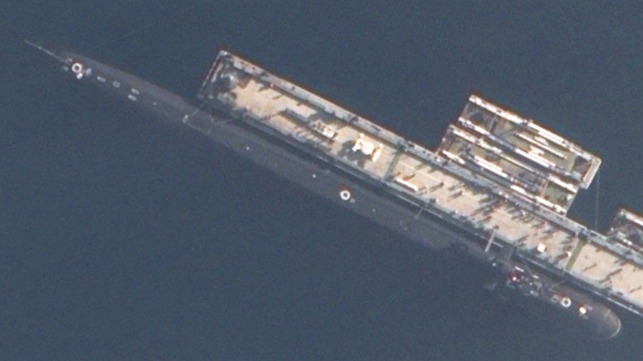
A joint NATO military operation has uncovered evidence of a new sabotage method developed by Russia's top-secret subsea warfare institute for sabotaging fiber-optic cables on the seabed - a method that reportedly leaves no trace. A defining characteristic of Russian "hybrid warfare" is difficulty of attribution, creating threat and menace while preserving ambiguity, and a means of disabling cable communications without leaving any sign would be a significant leap ahead - far less attributable than physical cable-cutting or anchor-dragging.
Two Western officials told Reuters that NATO forces had tracked Russian subs to a region off the coast of Svalbard. The vessels were associated with GUGI, the Main Directorate of Deep Sea Research, a spy-submarine outfit that reports directly to the Russian Ministry of Defense.
According to the officials, the Russian operation was a trial run to "simulate" the use of a "destructive" technology. A NATO task force intercepted this exercise and prevented its completion.
The report adds detail to a previous announcement from the British government dating back several months. In April, the UK claimed that it had disrupted Russian plans to conduct "nefarious" activity over critical subsea fiber optic cables. Like the event referenced by Western officials more recently, the plot described by Britain was attributed to GUGI assets supported by regular Russian Navy forces.
The month-long operation started when British forces detected an Akula-class Russian attack sub in Arctic waters last month. Working with Norwegian partners, the UK military tracked the sub; further detections established that the Akula's mission was to distract from the movements of other Russian undersea assets belonging to GUGI. The Type 23 frigate HMS St. Albans and oiler RFA Tidespring deployed to monitor the activity. Once it was clear that the advantage of secrecy was lost, the Russian subs headed for home, according to the UK.

that matters most
Get the latest maritime news delivered to your inbox daily.
GUGI's activities are shrouded in secrecy; some of its submersible assets have never been seen by the public, only referenced in literature or photographed from a long distance. Its capabilities center on a small fleet of submarine-carried, deep-diving mini-subs that are purpose-built for subsea espionage and sabotage.
The best-known of these vessels is the Losharik, a nuclear-powered sub built of spherical titanium pressure hulls with capability to reach 6,000-8,000 feet of depth. The vessel suffered a fire in 2019, prompting a rare public acknowledgement of its operations and a memorial for the fourteen crewmembers killed.
