
Maryland Reaches Settlement in Principle with Owner/Operator of Dali
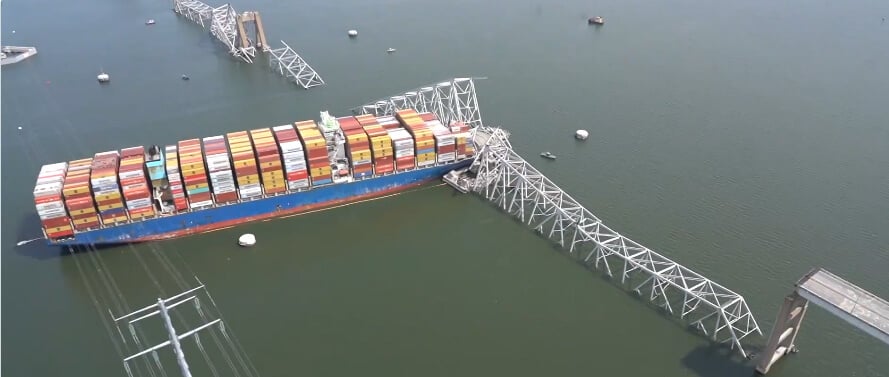
The State of Maryland announced that it has reached a settlement in principle with the owners and operators of the containership Dali for the 2024 destruction of the Francis Scott Key Bridge. Details of the settlement were not announced, with the state saying terms were being finalized but that it resolves a significant portion of its claims, specifically against Grace Ocean and Synergy Marine.
Maryland had filed in U.S. District Court alleging that the disaster was the result of “negligence, mismanagement, and the reckless operation of a vessel that was not seaworthy and should never have left port.” The Attorney General’s office was making claims on behalf of the Maryland Transportation Authority (MDTA), the Maryland Port Administration (MPA), and the Maryland Department of the Environment (MDE), for the destruction of the bridge, harm to the Patapsco River and the surrounding environment, lost revenue, and the economic losses sustained by Maryland and its residents.
“The Dali’s crash into the Key Bridge disrupted the Port of Baltimore, devastated livelihoods, and sent economic shockwaves across our state that are still being felt today,” said Attorney General Anthony Brown. “Our work is not finished, but this settlement is an important step toward making Maryland whole.”
While the settlement in principle will resolve the claims against Grace Ocean and Synergy Marine, the attorney general’s office highlighted that it does not resolve any claims the state may have against HD Hyundai, the builder of the Dali.
It marks a key step in the case, as Judge James Bredar has pushed all parties to be ready for a June 1 start of the bench trial. In the first phase, Judge Bredar will hear the arguments by the owner and operator to limit its liability, citing a 175-year-old law. If upheld, they would be able to limit the liability to the value of the ship and its cargo, approximately $44 million. The second portion of the trial would consider the individual claims.
While Maryland has settled, the civil case also includes the city of Baltimore, the families of the six victims of the bridge collapse (a road work team), and many businesses that claimed financial injury in the aftermath of the collapse.
Grace Ocean, Synergy, and their insurance companies have already settled claims made by the U.S. Coast Guard and the federal government for the cost of the cleanup and recovery operations. The companies settled a $102 million claim with the U.S. Justice Department in October 2024. At the time, the companies said the settlement was not indicative of any liability, which they expressly reject for the incident that led to the collapse of the Francis Scott Key Bridge.
Earlier this month, it was revealed that the insurance company that underwrote the coverage of the bridge for Maryland had settled with Grace Ocean and Synergy Marine. It agreed to pay the companies $350 million, the same amount that it had previously paid the state as the maximum coverage for the bridge.

that matters most
Get the latest maritime news delivered to your inbox daily.
During the most recent status meeting at the court, the judge acknowledged there could be additional settlement agreements announced in the coming weeks, but admonished all parties to be ready for the trial date. He said the schedule had to be the top priority.
During the trial, the defendants are expected to draw from the evidence collected by the National Transportation Safety Board, U.S. Coast Guard, and other investigators. They cannot use the NTSB conclusions but have access to the information that formed the NTSB report, as well as the hundreds of hours of depositions, including from crewmembers who have been detained in Baltimore pending the trial.
Maryland continues to assert that the efforts to replace the bridge are now moving forward, although cost estimates have soared to more than $5 billion. The replacement is expected to be completed by 2030.