
Maersk Temporarily Retreats from Red Sea Sailings for Two Routes
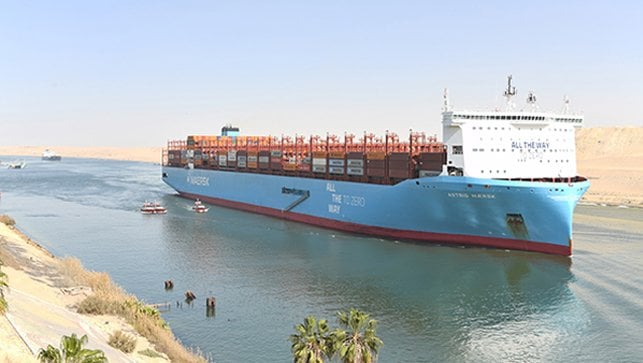
Maersk informed customers today, February 27, in an alert that it is retreating from its move back to the Suez – Red Sea corridor for two of its routes, including sailings for its Gemini Cooperation with Hapag. The company called it “temporary adjustments,” citing “unforeseen constraints,” but it is likely to have wider implications for the broader industry's return to routes through the Red Sea.
“We are currently experiencing unforeseen constraints arising from the wider operating environment in the Red Sea region. After conversations with our security partners, it is clear that these constraints are making it challenging to avoid delays in regard to passage through the area. Therefore, we have made the decision to reroute some of our upcoming sailings on the ME11 and MECL services from Trans Suez to Cape of Good Hope,” the company advised customers.
The announcement reflects changes for the next three sailings each eastbound and westbound for the company’s independent route (MECL) that connects Saudi Arabia and the Middle East to the U.S. East Coast. It lists sailing through mid-March as diverting to the Cape of Good Hope and rounding Africa while saying it continues to prioritize the Trans-Suez route as it is the fastest, most sustainable, and most efficient for customers.
Possibly more significant for the industry, the next three westbound sailings and four eastbound sailings of Maersk vessels on a Gemini Cooperation route are also diverting back to the Cape of Good Hope. This service (ME11) connects India and the Middle East to the Mediterranean.
Maersk says it is sharing the changes for the next three weeks so that customers can adjust their supply chains. Customers will be receiving updated transport plans shortly, it advises.
The change comes just over two weeks after the first Maersk vessel completed the first eastbound route transit through the Suez – Red Sea corridor for the return of the ME11 route. Masesk had tested the Suez Canal and Red Sea with its first sailings in January.
The company emphasized that the return of both the Gemini service and its independently operated routes depended on security in the region and that the transits would “be secured by naval assistance.” It further said the service would “remain dependent on the ongoing stability in the Red Sea area and the absence of any escalation in conflicts in the region.”

that matters most
Get the latest maritime news delivered to your inbox daily.
Earlier this week, the European Council confirmed that it was extending its protection mission, Operation Aspides, for another year to the end of February 2027, however, with a slightly lower budget. Ships can request Aspides assistance, but the operation only has three warships available to provide escorts through the region. In the past, CMA CGM has cited the delays it experienced waiting for available assistance for its sailings.
The Suez Canal Authority was anxious to encourage the resumption of the routes to highlight the stability in the region. While the Houthis have issued some regional threats, they have not attacked a merchant ship since last September. However, the U.S. has been building up its naval presence in the Middle East and has threatened action against Iran, which has raised regional tensions.