
Last-Minute Israeli Strike Throws Hormuz Deal Into Doubt
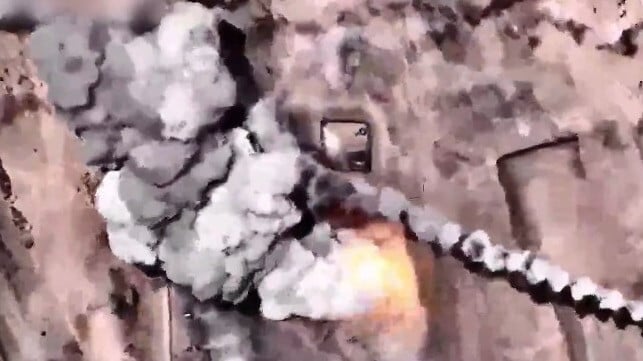
Hours after a White House announcement of a pending ceasefire deal with Iran, hope appeared to ebb once more after Israeli forces conducted a large-scale counterstrike on Beirut, responding to missile attacks by Hezbollah and breaching a "red line" for the Iranian regime. Iran's IRGC signaled that it would launch retaliatory strikes on Israel imminently.
"This is a clear attempt by Israel to sabotage the President’s deal and drag the United States back into war," a diplomat close to the talks told Fox News.
"It is so bad — I couldn't believe it. An hour before we are supposed to sign the deal," Trump told Axios' Barak Ravid. "Why did [Israely Prime Minister Benjamin Netanyahu] have to do a ____ attack? I was so pissed off. I let him know. He has no ____ judgement. I let him know that."
Iran reacted to the strike on Beirut - home of its Lebanese proxy force, the terrorist organization Hezbollah - in the same manner it has previously, with announcement of a counterattack.
"The Zionist aggression on Dahiya [southern Beirut] has once again shown that America either does not have the will or the ability to fulfill its obligations," said Iran's top negotiator, speaker of the parliament Mohammad-Bagher Ghalibaf. "If you do not have the will and ability to fulfill your obligations, it is not possible to talk about continuing on the path."
Multiple analysts and Israeli officials have noted that the terms of the deal - as leaked by Iran and the U.S. - might not be in Israel's best interests. "Nobody is happy with this. We understand it is not good for us, and that it harms Israeli interests. What is troubling is that Israel cannot influence it," one senior Israeli official told reporter Shaiel Ben-Ephraim. "Iran has smelled that it can achieve things by force, and it will use that against its neighbors and against us."

that matters most
Get the latest maritime news delivered to your inbox daily.
The precise text is not public, but the general outline contains many of Iran's demands. The hardline IRGC is now firmly in charge in Tehran; in its account of the details, the agreement would give Iran access to $25 billion in its own frozen overseas funds, suspend US sanctions on Iran's oil sales, and allow Iran to rebuild its ballistic missile stockpile. It reportedly allows Iran to keep its high-enriched uranium and down-blend it locally to lower concentrations - contrary to initial U.S. insistence that the HEU be removed to the United States - and, further, leaves the details of that program for 60 days of further debate. The Trump administration insists that Iran will not get "cash" from the deal, and that Iran will pledge not to develop a nuclear weapon (a longstanding Iranian promise that predates the current conflict).
"Factoring in the renewed Lebanese dimension, the growing criticism inside Iran, lingering doubts about U.S. commitments, President Trump’s shifting positions, and Israel’s insistence on conditions that are unlikely to be met, a U.S.-Iran deal continues to resemble a mirage," Al Jazeera senior correspondent Ali Hashem commented. "The deeper obstacles are not procedural but structural, rooted in conflicting expectations, mutual distrust, and competing regional priorities. Any agreement may survive long enough to create hope, but history suggests it may not take long before it begins to unravel once again."