
Op-Ed: Iran's Floating Storage is Sinking Fast
It is clear now that even if an agreement is signed between the United States and Iran imminently, it will only establish an agenda to be negotiated over the next few months. Israel is not party to the potential agreement and has the capacity to act independently should negotiations proceed in a way that jeopardizes Israeli national security. There are also a series of contentious issues that could cause any extended ceasefire to break down should the negotiations reach an impasse. During the negotiations, both the United States and Iran, for different reasons, will want to maintain progress — but Iran faces far greater economic, fiscal and, ultimately, political peril if the negotiations were to collapse, because it is in imminent danger of losing the oil revenues that have so far kept its government machine running.
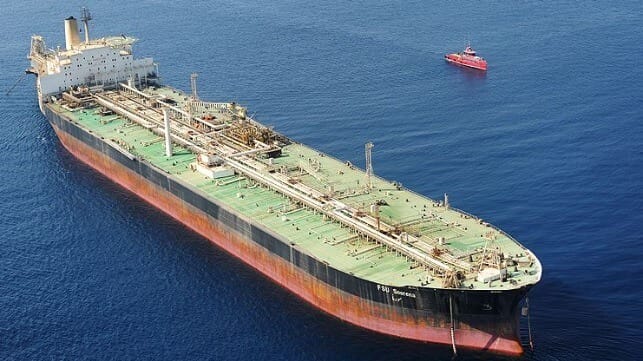
After the US Navy imposed its blockade on Iranian ships and ports on April 13, Iran was able to continue selling oil — not only from the stockpile it had built up for just such a contingency, but also from laden ships that were still on their way to import terminals in China. These ships have mostly discharged, and Chinese importers are now drawing heavily on the Iranian reserves held afloat in Asia.
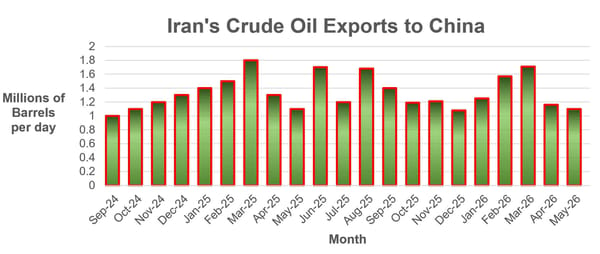
China has for many years bought about 90% of Iranian oil exports. Chinese purchases over the last month have fallen considerably, and what China has bought has come almost entirely from the stock built up before the war and held afloat off China and Malaysia. (CJRC/Kpler data)
According to Kpler statistics, Iranian oil stocks held afloat appear to have declined from 192 million barrels in mid-April to about 140 million barrels at the end of May, of which about half is trapped inside the US naval blockade. The roughly 50-million-barrel drawdown over the last month appears to have come almost wholly from the stock held afloat off Malaysia and China.
If this trend continues through June, and another 50 million barrels are taken from the stock off Malaysia and China, then that reserve will be nearing empty. The Iranians are in trouble whatever transpires, as even if oil afloat within the US blockade is released, it will still take time to ship it to Asia. Any delay in reopening the Strait and lifting the blockade will merely prolong the damage to Iranian revenues and make matters even worse.
Whether the blockade is lifted or not, Iran is therefore likely to start suffering significant financial pressures by the end of June, unless it can persuade its friends to extend it credit. A shortage of revenue affects the ability of the Iranian government to soften the impact of the war on Iranian consumers by offering increased subsidies and handouts, which are important factors in maintaining social stability. In resolving the situation, the Iranians can no longer depend on the guile of their dark fleet operators and sanctions evaders; the US Operation Economic Fury is making it a much more perilous undertaking to evade US sanctions, and in the offing are further seizures of Iranian oil held afloat in sanctioned tankers or blockade runners.
Reinforcing this picture, there have been no substantial loadings at Kharg Island for several weeks now. At the Kooh Mubarak Single Point Mooring, no tanker has been seen loading since June 1, reflecting only sporadic use of the facility and probable restrictions on the flow of crude reaching the terminal from the collection point at Goreh in Bushehr Province.

that matters most
Get the latest maritime news delivered to your inbox daily.
Others will be affected, but not to the degree that Iran will. Oil consumers, suffering from the loss of 14 million barrels per day of oil that used to come through the Strait of Hormuz, appear to have adjusted to the shortfall, which has been compensated for by US reserve drawdowns and by the rise in price, which has curbed demand. China does not appear to have used much of its strategic reserve and has enough to keep going without major economic upset for several more months; in any case, China generates about 85% of its energy needs from its own internal resources, including nuclear, coal and wind power. Supply of LNG, where demand is more inelastic, presents more of a problem if the Strait stays closed for longer, but traders in London think current prices have not yet risen high enough to bring about significant demand destruction — in other words, the market can still absorb more difficulties ahead.
Within Iran itself, these difficulties are not being aired publicly. Instead, Paydari and IRGC hardliners have been ramping up their bombast and defiance in a coordinated propaganda campaign, to disguise the danger and to bolster the Iranian negotiating position. This should not be interpreted as confidence, but rather as an awareness of what peril lies ahead unless a settlement can be achieved quickly with the United States, whose negotiating position is much stronger than is generally assumed.
