


HD Hyundai and Anduril Demonstrate Autonomous Vessel for US Navy
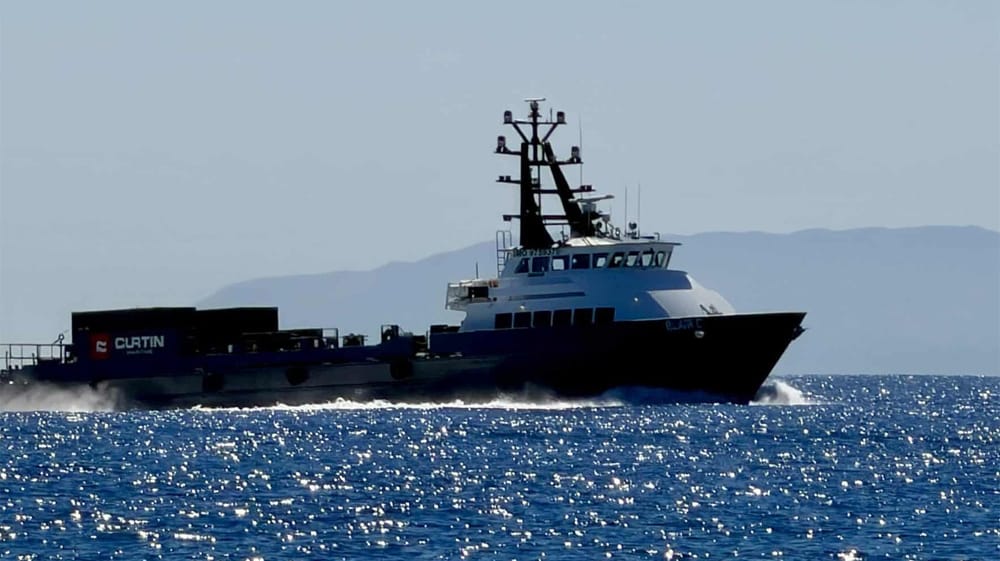
South Korean shipbuilder HD Hyundai and the U.S.-based venture-backed defense company Anduril are reporting a breakthrough with the first demonstration of autonomous ship technology in U.S. waters. The test was conducted as a demonstration for the U.S. Navy and is based on a two-year partnership between the companies to merge shipbuilding expertise with AI and autonomous technology.
The test was conducted near Long Beach, California, and involved a 368-ton offshore support vessel formerly operated by the U.S. Navy. The demonstration lasted for approximately 3.5 hours and included the U.S. Navy, ABS (American Bureau of Shipping), the South Korean Navy, and South Korea’s Defense Acquisition Program Administration.
The vessel was equipped with an autonomous navigation platform, VAOne, developed by HD Kosea Shipbuilding & Offshore Engineering, integrated with the Anduril Lattice software platform. The company reports that Lattice “delivers AI-enabled sensor fusion, mission autonomy, distributed network management, and command and control for robotic systems.”
According to the statement released by the companies, the trial demonstrated autonomous navigation, changes in mission assignments, coordinated operations involving multiple vessels, and emergency responses to system failures. Shore-based control stations monitored the operations in real time.
“The demonstration was meaningful because it confirmed the uncrewed vessel’s ability to carry out complex missions and respond to various real-world scenarios that could occur after deployment,” Chang Kwang-pil, senior executive vice president at HD Korea Shipbuilding & Offshore Engineering, said in a press statement describing the demonstration.
HD Hyundai and Anduril announced a partnership two years ago focusing on autonomous military systems and weapons. Anduril, founded in 2017 by a group of tech entrepreneurs, has drawn favor with the Trump administration because of its integration of AI (Trump calls it Super Intelligence) into its platform. The company, which is also working on weapons systems, last week announced a major Pentagon contract and plans for a new manufacturing facility in Baltimore to develop components for the nuclear submarine program.
When they announced the partnership in 2024, Hyundai and Anduril said they would pursue collaborative efforts to design, develop, and produce new and different types of autonomous naval systems for the United States, the Republic of Korea, and their allies and partners. Since then, they also announced plans for a new class of Autonomous Surface Vessels designed for the U.S. Navy’s Modular Attack Surface Craft (MASC) program. They said the vessels would also be adapted for commercial applications.
HD Hyundai is pursuing multiple opportunities to increase its exposure and work with the U.S. Navy and defense sectors. Anduril is reported to see the partnership as an opportunity to enter the South Korean defense market.
The companies said they are currently jointly building an unnamed vessel at one of HD Hyundai’s shipyards in Ulsan, South Korea. They anticipate the vessel will undergo sea trials off the United States as early as next month.

that matters most
Get the latest maritime news delivered to your inbox daily.
Last week, the U.S. Navy confirmed that it is increasing its use of unmanned vessels, which have also played a role in the Persian Gulf in the war with Iran. It said that the USS Theodore Roosevelt Carrier Strike Group had, for the first time, sailed with a midsize unmanned surface vessel as part of the strike group.
