

Cruise Ships Are Increasing Their Use of Shore Power
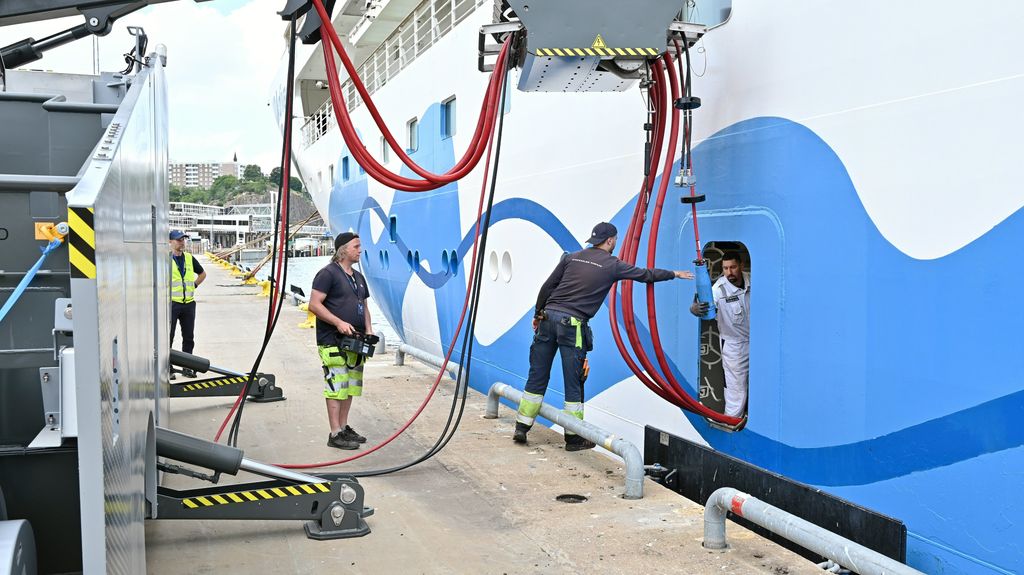
The cruise industry is at the forefront of the push to transition shipping to more sustainable operations, with shore power playing a key role in these efforts. Recognizing the emerging mandates and the strong push by local communities to cut emissions, modern cruise ships are being built with shore power capabilities, building on a trend that began more than 20 years ago.
In 2000, the port of Gothenburg, Sweden, introduced shore power at a Ro-Ro terminal. Soon thereafter, in 2001, Juneau, Alaska, brought shore power to North America. Other ports have followed, such as Vancouver, Canada, which in 2009 became the third port in the world to offer shore power. More recently, PortMiami has introduced its first shore power capabilities, and even older, inner-city ports, such as the Manhattan Cruise Terminal in New York City, are now working to introduce shore power.
Princess Cruises was the first cruise line to connect a ship to Juneau's shore power system. Showing the growth in shore power capabilities, Carnival Corporation, of which Princess is one brand, today leads the industry with approximately 74 percent of its fleet with shore power capabilities.
The electrical hookup, an alternative to the use of marine fuel, is seen as a major step in reducing tons of carbon emissions spewed into the air from ships running their massive engines while idling at ports. Cruise ships are often docked in the heart of major cities, making them especially visible and often a target of environmentalists and other groups.
The cruise industry, however, is responding to the challenges. The industry trade group Cruise Lines International Association (CLIA) has emerged as a major supporter of shore power. As the representative of the industry, it has set a target of zero emissions by 2050. It projects that by 2039, 80 percent of its member fleet will be equipped with shore power capabilities. CLIA reports there are already 193 ships equipped to connect to shore power, and by 2039 approximately 239 ships are expected to be in service with shore power capability.
Part of the drive toward shore power is coming from regulation. As part of Europe’s Fit for 55 decarbonization regulations, major ports in Europe will be required to have shore power by 2030. Cruise ships are among the first ships required to adopt the technology, but it also requires extensive investments from the ports and power utilities to meet the requirements.
In the U.S., there are approximately 10 primary ports offering shore power for cruise ships, and in Canada, four ports. Mid-sized cruise vessels can use anywhere from 7 to 12 megawatts of power while docked, and larger vessels up to 16 megawatts to run their entire electrical systems. To put that into perspective, and according to available information, one megawatt of power from a utility grid can provide continuous power for 600 to 1,000 homes depending on the size of the house and climate conditions.
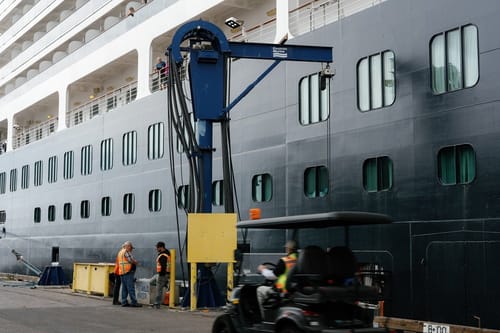
Port of San Diego was another early adopter of the technology and is now expanding it to other parts of its port (Port of San Diego)
The cost of installing high-voltage systems, however, is high, running into many millions of dollars.
In 2009, Canada Place, at the Port of Vancouver, was the first port in Canada and the third globally to install shore power. The cost was approximately $9 million, but the port highlights that both cruise ships and container vessels can now connect to its shore power.
“Today, cruise and container terminals at the port both offer the technology, which has helped prevent an estimated 55,000 tonnes of greenhouse gas emissions (CO2) since 2009—equivalent to taking more than 12,850 gasoline-powered cars off the road for a year,” says Carla McGregor, Senior Construction Project Specialist at the Vancouver Port Authority.
But since that first installation at Vancouver, the situation has changed with the growing size of cruise ships. An increase in port calls over the years has meant that many visiting cruise ships berth out of alignment with the three existing connection stations.
“Our Canada Place Shore Power Expansion Project aims to boost connection rates across the terminal’s east and west berths by one-third and see more than 75 percent of all cruise ship calls to the Port of Vancouver able to plug in and access B.C.’s hydroelectric grid,” McGregor said.
Work is expected to be finished ahead of next cruise season on Vancouver’s expansion of its shore power capabilities. The port’s outlets can supply ships with up to 14 MVA (MegaVolt-Ampere) with shore power.
The upgrades will increase the total number of shore power stations from three to five and increase opportunities for alignment between ships’ shore power connection systems. As a result, the overall shore power connection rates are expected to increase by 35 percent across the terminals' east and west berths, enabling approximately 90 additional calls to be powered by low-emissions energy each year.
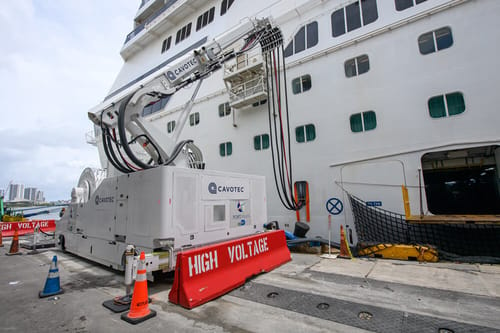
PortMiami added the capability at its terminals, but currently only three ships can be connected at one time due to the amount of power available off the grid (PortMiami)
Port Miami, with five cruise terminals and a longtime cruise homeport, can now plug in three ships simultaneously. Miami-Dade County's Shore Power Program cost an estimated $125 million ($25 million per terminal) to install, with the first connections in 2024. Today, the port is one of 40 seaports globally to offer shore power at least at one berth.
A port spokesperson said there are no current plans to increase Miami’s shore power program. Power restrictions with the local utility are an issue, and there are no discussions presently underway to discuss the issue.
The Port of Halifax on Canada’s East Coast is the first and only port in Atlantic Canada to install shore power capability. Port spokesperson Lori MacLean said in 2025, Port Halifax connected 46 vessel calls to shore power out of a total of 184 calls, representing nearly 25 percent of the cruise calls last season.
However, the demand for shore power is pushing the port for an additional plug. MacLean said, “The Halifax Port Authority is in the process of adding a second shore power system for cruise ships at the port. This work is being supported through broader green shipping and port decarbonization initiatives.”
The Port of Seattle, with a booming cruise business to Alaska, had 330 ship calls in 2026 and set a record with 66 percent hookup to shore power. Seattle power is aiming for 100 percent for 16 homeport vessels by 2028.
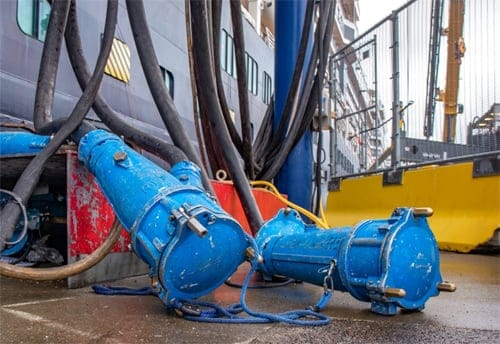
Port of Seattle is expanding its shore power availability as it aims by 2028 to reach 100 percent usage among its homeported cruise ships (Port of Seattle)
“As we celebrate another record-breaking season, we're equally proud of our progress towards a more sustainable maritime future through expanded shore power use and investments in cleaner maritime operations. Together with our cruise line partners, we're demonstrating that economic growth and environmental stewardship can go hand in hand,” said Sam Cho, Seattle Port commissioner.

that matters most
Get the latest maritime news delivered to your inbox daily.
With the ongoing global fight against climate change, the above sample of ports indicates the cruise industry’s focus on doing its part to bring clean air to port surroundings. Going forward is essential but will be a costly but necessary process.
“The deployment of shoreside electricity (SSE) infrastructure at a port is a multi-million dollar investment project,” states CLIA. “SSE is a core element of many local public policies to improve air quality and reduce noise levels for the wider benefit of mobility infrastructure, but also of some national decarbonization strategies. As such, it is essential that SSE projects, like other public infrastructure development initiatives, benefit from the financial support of national and local authorities.”