
Croatian Army Works to Free Grounded Roman Ship Replica
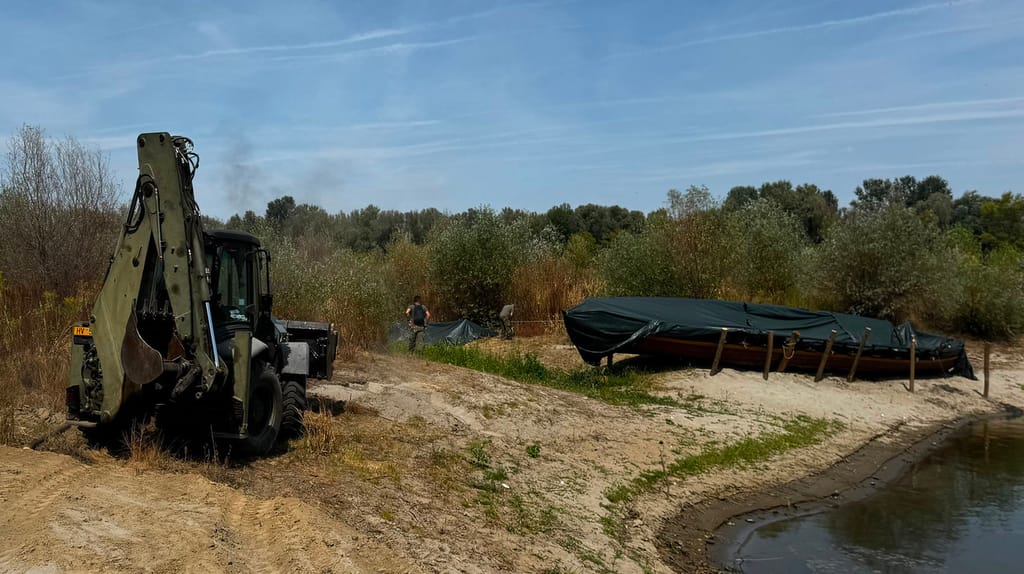
An unprecedented drop in water levels across much of Europe’s inland waterways, driven by a prolonged heat wave and severe drought, is continuing to have damaging effects — the latest being the stranding of a replica Roman ship in Croatia.
Authorities in Croatia said the vessel, a Roman ship replica belonging to Germany’s University of Erlangen-Nuremberg (FAU), was left stranded on a sandbank in the Drava River near Osijek, where water levels have fallen to their lowest point in nearly two centuries.
The Croatian Army was deployed to save the boat, which faced the risk of permanent damage and even complete loss if it were not recovered in time.
The 18-meter boat, which weighs about five tons, was built a few years ago by FAU with European Union funding. It is used for reconstructing ancient methods of maritime trade on the Danube and Drava, and is currently based in Osijek, where it is kept in cooperation with the Archaeological Museum in Osijek.
While FAU has a fleet of three replica Roman vessels, the Danuvina Alacris is the only one built as part of the EU Interreg DTP project “Living Danube Limes.” (The Danube Limes is the historical term for the Roman imperial border along the Danube.) The boat was launched in 2022 after a construction phase lasting nearly a year and a half, and it is a full-scale replica of the river craft the Romans used along the Rhine and Danube from the first century AD onward. With no roads, only ships on the rivers could carry troops, goods and news between distant regions and the frontier in the north.
After three years traveling the Danube and its tributaries in Austria, Slovakia and Hungary, the Danuvina Alacris returned to FAU’s boatyard for a complete overhaul in October last year. She returned to the water in April to continue research through which FAU is seeking to better understand Roman boat-building methods and how ancient vessels behaved in the water.
Together with the other two boats in FAU’s fleet, the Danuvina Alacris is used for research into ancient waterways and the reconstruction of historical navigation routes along the Danube and Drava rivers.
With water levels on the Drava at extreme lows because of the heat, the boat grounded, prompting members of the Guards Armored Mechanized Brigade of the Croatian army to undertake a delicate salvage operation. The army had to work in demanding terrain in an operation intended to prevent further damage and preserve the ship’s structure.

that matters most
Get the latest maritime news delivered to your inbox daily.
“This engagement shows that the Croatian Armed Forces, in addition to its basic task, has capabilities that can be made available to civilian institutions in various circumstances. In this case, it is support in the protection of a valuable specimen that serves the research and presentation of ancient cultural heritage,” the Croatian army said in a statement.
Meanwhile, the low waters of the Danube are revealing all kinds of historical secrets, from unexploded WWII-era and 19th-century ordnance in Hungary to a lost Nazi riverboat fleet in Serbia. Given Europe’s long history of conflict in the last two centuries, citizens have been cautioned not to handle any possible cannon rounds, bombs or grenades found on the newly-dry riverbanks.
