
Fertility Rate Curbs Japanese Shipbuilding Boom
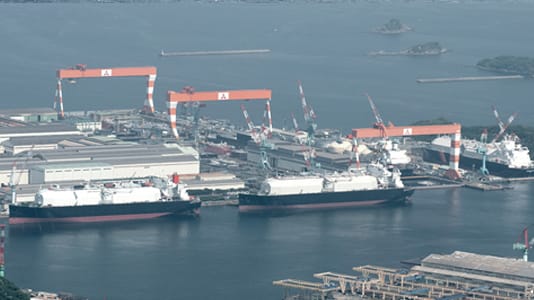
The Japanese government’s plan to double domestic shipbuilding capacity by 2035 is creating a wave of investment in the sector, attracted by the prospect of sharing a government injection of $6.5 bn in funding and tax incentives. The plan being advanced by the government of Japanese Prime Minister Sanae Takaichi seeks to reverse a decades-long decline in shipbuilding, and forms part of a wider strategy to revive the world’s fourth biggest economy by investing in 17 key security-related areas which in turn will boost Japan’s ability to defend itself. Alongside shipbuilding, the government is also seeking to build stand-alone capability in Artificial Intelligence and semi-conductor design and manufacturing.
According to OECD figures, the Japanese shipbuilding industry held 11% of the global market in 2024, behind China’s 71% and South Korea’s 17% for South Korea. Notwithstanding having slipped in the global rankings, Japan has retained niche market share in the sophisticated segment where vessels must meet demanding compliance or technical requirements, whereas China has gone for a low-cost, high-volume model.
From its heyday in the 1970s, when Japan built about half of the world’s ships, over the last 20 years Japanese yards have suffered a gradual erosion in orders, forcing midsized yards to diversify into other sectors and into ship-repair work. The historical strength of shipbuilding in Japan was built on its need as an isolated global trading island to have a large merchant marine. The Takaichi plan to revive shipbuilding is built on the same premise and on the need to foster sovereign strategic capabilities, the relevance of which has been emphasized by military expansionism in China, but also by the Trump tariff wars and conflict in the Gulf.
Progress with rolling out the plan has been seen in a number of areas.
Namura Shipbuilding is planning to build a dry dock for large vessel construction at its site in Imari Bay on the northwestern coast of Kyushu, north of Nagasaki. The dry dock is to be completed by 2035. Namura in the interim is planning to revive the building of LNG carriers, with Imabari Shipbuilding on Shikoku and Kawasaki Heavy at Kobe planning to do likewise, such that Japan will be producing between three and five LNG carriers per year.
Expansion of merchant shipbuilding is competing for scarce numbers and skills in shipyard labor forces with orders for warships. Mitsubishi Heavy Industries for example have taken three-ship orders for Mogami Class frigates this year, both from the Royal Australian Navy and the Japan Maritime Self-Defense Force (JMSDF). Japan Marine United is busy rolling out new Sakura-class offshore patrol vessels, and there is an active and well-funded program to keep the over 100-strong JMSDF fleet refurbished and replaced as necessary.

that matters most
Get the latest maritime news delivered to your inbox daily.
Shortage of the necessary skilled workforce is behind this year’s 15% fall in shipbuilding orders, despite the push from Tokyo. Imabari Shipbuilding president Yukito Higaki has said his yards are struggling to meet Japanese replacement orders, let alone having the capacity to take up the rising demand for export orders or having spare capacity to help with the backlog of US Navy repair and refurbishment work. So his company, like others, is intensifying its search for labor-saving technology as well as recruiting skilled workers from overseas.
Even so, it has been estimated that Japanese shipbuilders will need an additional 12,000 workers if they are to meet the target of doubling tonnage delivered. Japan’s dramatically falling birthrate - which hit a record low of 1.14 in 2025 - is shrinking the size of the available workforce every year, and labor shortages are likely to be the biggest impediment to the government’s shipbuilding expansion plans.
