
Chemical Concerns Pause Plan to Dredge North Carolina Port Channel
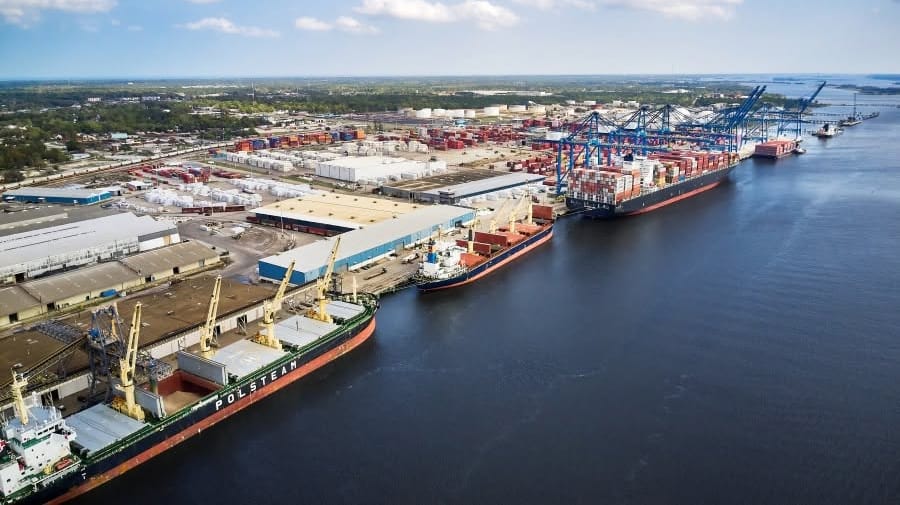
Local media in North Carolina are reporting that concerns about potential so-called “forever chemicals” are causing the North Carolina State Ports Authority to delay consideration of a long-planned dredging project for the Port of Wilmington and its channel. WilmingtonBiz first reported that the Ports Authority had sent a letter to the U.S. Army Corps of Engineers asking that consideration of the project be suspended for further consideration.
Located on the U.S. Southeast Coast, Wilmington highlights that it is one of the few regional ports with readily available berth and storage areas for containers and general cargo. It had a strong year in FY26, having “moved a total of 4.4 million short tons of bulk and breakbulk cargo, finishing the year consistent with budget expectations and slightly ahead of last year’s performance,” the authority reported in July. Containers are currently a modest part of the port’s overall operation, with a capacity of 600,000 TEU, but it is stronger in reefer containers, especially moving tropical fruit. It has seven container cranes and a total of nine berths and also handles Ro-Ro operations.
The Port of Wilmington sits 26 miles inland, reached by transiting the Cape Fear River. It maintains a 42-foot channel, but advocates have long called for deepening it to 47 feet. The reports point out that neighboring and competing ports such as Norfolk, Charleston, and Savannah have deepened their channels to handle larger vessels.
The US Army Corps of Engineers has been studying the project for the Port of Wilmington and in June released its environmental impact statement. News reports said it acknowledged contaminants in the river upstream from the port but said it was unclear if there was silt containing chemicals in the harbor or downstream that would be dangerous from the dredging. It left it to the state to determine those concerns. The Corps concluded dredging would not impact drinking water contaminant concentrations.
Environmentalists have long argued against the project, saying it would release harmful chemicals. Business North Carolina also writes that the state’s governor, Josh Stein, is “not keen on the project.”
One concern could be the estimated $1.4 billion cost, of which the state would pay $344 million, Business North Carolina reports. It says that there were calls to get the federal government to pay up to 75 percent of the cost.

that matters most
Get the latest maritime news delivered to your inbox daily.
The State Ports Authority highlights that its 2031 Strategic Plan calls for growing refrigerated volumes, capitalizing on high-quality general cargo opportunities and building a stronger, more diversified operation. The Strategic Plan is focused on capturing breakbulk and project cargo opportunities, with it saying NC Ports is determined to be the default gateway for bulk materials serving North Carolina, including agriculture, forestry products, and building materials.
The plan, however, was created with the 41-foot channel, and based on the potential chemical issues, the Ports Authority chief wrote the Corps to suspend further consideration. It said that further decisions would require “sound science and rigorous research.”
