
CENTCOM Says Iran Attempts to Intimidate Shipping with False Reports
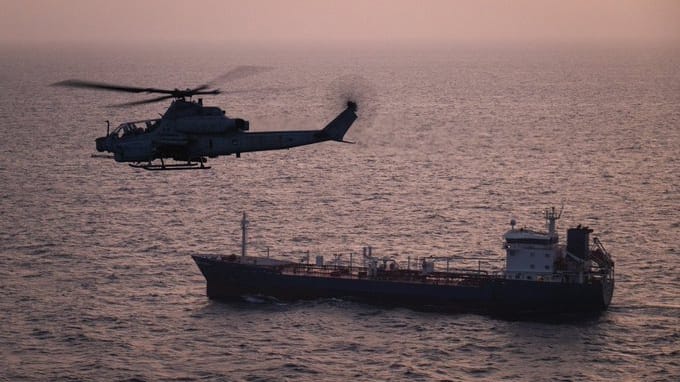
Iran continues to make multiple claims about stopping vessels transiting the Strait of Hormuz while insisting that the only passage possible is on the route under its supervision. CENTCOM issued another of its “fact check” statements saying “it is yet another IRGC attempt to intimidate regional commercial shipping through disinformation.”
The Islamic Revolutionary Guard Corps issued a statement on Monday, August 31, asserting that “supertanker passing through the southern route” had been forced to come to a stop. It said the vessel had struck two sea mines, which had resulted in a large fire. It did not provide details about the tanker but said, “other vessels that attempt to violate IRGC’s security rules would face the same fate.” It asserted that it is mandatory to follow Iranian regulations.
CENTCOM did not deny that vessels have been struck in the Strait but denied mine strikes. It comes after CENTCOM last week declared the Strait had been completely demined. Overnight, it said it struck two Iranian launchers on Larak Island before they could launch mines.
It came after United Kingdom Maritime Operations said on Sunday it had received a delayed report of a tanker being hit by an unknown projectile while inbound overnight on Friday into Saturday. Iran’s WANA News, which is closely linked to the IRGC, issued a follow-up report saying the tanker had been “tracked down” and asserted that it ran aground near Oman after the explosion. It also pointed out it was the third attack this week on a commercial tanker in the Strait of Hormuz. It highlighted the strike on the Kuwaiti tanker Al Salam II on August 25 and the Liberian-flagged Metro Venetian on August 24.
Analysts are identifying the tanker that was struck on Saturday. Both Martin Kelly of EOS Group and TankerTrackers.com said it was the Kuwaiti-flagged product tanker, Burgan (46,330 dwt). Kelly also pointed out that it was the second Kuwaiti vessel struck in 48 hours. On Sunday, he wrote that Iran was using small boats and a searchlight to identify tankers attempting to transit on the Omani route.
It is part of a larger IRGC campaign to assert control over the Strait. Iran’s Mehr News Agency is quoting the IRGC as saying that 30 vessels have been prevented from transiting the Strait since August 22. It said, however, that in 2026 more than 1,500 oil tankers and 1,700 commercial vessels had made the transit by using the designated route after informing Iranian authorities and paying the required transit fee.
Adding to the reports, on Monday, the Hormozgan Ports and Maritime Department also said it had stopped a bulk carrier for allegedly making an illegal discharge in the Strait. It said the vessel, which was carrying sugar, discharged a mixture of oil, engine room bilge water and sludge into the Strait. Iran claimed to be cleaning up the discharge.
Kelly said the U.S. attacks were in response to at least 10 vessels having been attacked in the Strait of Hormuz. They were the first strikes by the U.S. in August on Larak, but Iran responded by firing missiles toward U.S. bases in Kuwait and Jordan.

that matters most
Get the latest maritime news delivered to your inbox daily.
Donald Trump told reporters during the day on Monday, “We will be hitting Iran … very hard” in response to the attacks on the U.S. bases. He repeated his claims that Iran is a failed nation, writing online, “They have no Navy, they have no Air Force, they have no currency, they are not paying their soldiers or police, inflation is at 300 percent, and their leadership is in total disarray and incapable of properly representing the country.” This was after Trump posted a fanciful AI-generated video showing “Iran's Kharg Island being blown to smithereens."
With tensions increasing, weekend traffic in the Strait of Hormuz continued to decline, according to data from Kpler cited by Reuters. It says there were just five ships per day, mostly smaller gas carriers. It was down from 14 vessels on Friday, including large crude oil tankers.
