
The Modular Pivot: Repurposing Containers as Strategic Infrastructure
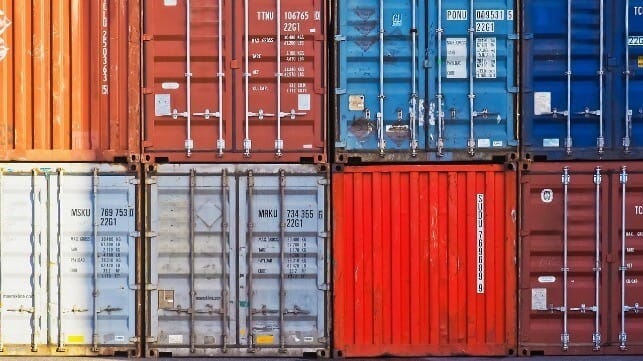
The intermodal container is one of the most impactful innovations of the last century. As the international standard for ocean, rail, and road transport, shipping containers form the backbone of our modern globalized economy.
The economic logic that standardized the global supply chain is now being applied to the fixed-asset challenges of land-side operations. The strength, simplicity, portability, and cost-effectiveness of shipping containers has been noted by non-maritime sectors, who have realized that containers can be utilized in myriad other ways. Intermodal containers are fast becoming infrastructure staples: neat, modular, readily available, and able to plug gaps and meet needs where other solutions fail.
From moving cargo to building capacity
The container standardization that revolutionized global trade in the 1950s is now helping to solve key 21st-century infrastructure challenges. With economies and markets more connected and competitive than ever, speed of deployment, scalability, and capital efficiency are paramount. As infrastructure, shipping containers address these multi-faceted requirements.
Built to handle harsh ocean conditions and with a lifespan measured in decades, containers offer incredible strength and durability. They are standardized, readily available, and cost-effective, ensuring fast, global adoption of new use cases. And their modular nature means they can be used as interlocking components to create large, complex, and specialized structures.
The international standard for transporting cargo is fast becoming the international standard for building capacity, storage, and usable space.
Port optimization: enhancing terminal agility
The use of shipping containers as infrastructure began in ports. With unfettered access to containers, ports are uniquely positioned to repurpose unused units as they see fit. While spare containers have long been used as supplementary storage, modern terminals are increasingly turning to them for on-site infrastructure: integrated power substations, automated gatehouses, temporary offices, and more.
The simplicity and portability of containers make them ideal for short-term uses, while their adaptability and longevity also make them just as valuable for long-term applications. A key use case is in port expansion projects, where containers can form everything from site offices to space-efficient storage. Here they relieve the port of the need to install permanent, high-capex infrastructure that will ultimately be brought down when the project is completed.
Industrial integration and remote site operations
The portability of intermodal containers, and their unique ability to arrive pre-assembled to some of the most remote places on earth, make them an alluring piece of infrastructure for the mining industry. The sector has led the way in customizing containers for worker accommodations, remote site offices, even off-grid power generation and storage. Similar use cases apply to the construction industry, where shipping containers form the basis of temporary storage and site offices.
By leveraging the inherent modularity of the intermodal unit – and its capacity for bespoke engineering – project managers are increasingly adopting 'plug-and-play' systems. This approach allows for the off-site integration of complex industrial components, which can then be deployed to remote locations with minimal on-site civil works. The result is a significant compression of project lead times and a reduction in the logistical volatility typically associated with remote infrastructure development.
Rapid deployment powering resilience and disaster response
A more recent infrastructure use case for intermodal containers is in rapid deployment scenarios. With the twenty-foot equivalent unit (TEU) forming the basis of the world’s transport infrastructure, containers are now being fitted out for a range of fast responses.
Humanitarian logistics is a prime example. Customized shipping containers have become a catalyst for recovery efforts, used as mobile hospitals, command centers, and temporary housing. Ports have long served as the primary staging grounds for rapid deployments during global crises, and the institutional knowledge port authorities bring further enhances the speed with which emergency aid and infrastructure are dispatched.
The pace and cost-effectiveness of container-based emergency deployments, and the ability to place containers almost anywhere with flat ground, allows them to outperform the "stick and brick" builds that were previously the default in disaster recovery efforts.
The sustainability dividend of container-based infrastructure
In order to be used in global logistics, intermodal containers must be rated "cargo worthy" (CW): a valid CSC plate is confirmation that the container is structurally sound and meets strict standards for stacking, lifting, and transit. But containers that fall short of these standards and reach the end of their transport service life are still perfectly usable as infrastructure.
This makes shipping containers a truly sustainable building material. The rating below CW is "wind and watertight." WWT-rated containers are structurally sound enough for most non-transport uses, and a second life as infrastructure saves them from slowly rusting away into obsolescence. They also help with scope 3 emissions reporting, such as by minimizing the environmental footprint of industrial development, which traditionally relies on carbon-intensive materials like concrete and steel.
The future of global modularity
A consequence of current global volatility is that "fixed" infrastructure is becoming a liability. Modularity presents a compelling solution to any number of challenges, from rising sea levels to moving borders.
The rise of non-transport container usage hints at a future in which infrastructure is "liquid": able to be moved, scaled, or repurposed according to shifting geopolitical, economic, and humanitarian needs.
For maritime and industrial leaders, intermodal containers should no longer be thought of as a cost, a line item, a way of moving goods from A to B. They’re a strategic infrastructure asset, and one with the potential to deliver unprecedented adaptability across a wealth of sectors.
 Andreas Atrott is the director and founder of Containerbase Pty Ltd. He has more than 15 years of experience in the container industry, starting with a stint at Kuehne + Nagel, and now operates container supply companies in both Germany and Australia.
The opinions expressed herein are the author's and not necessarily those of The Maritime Executive.
