


One Tanker's Dash to Darwin Shows Australia's Thin Margins for Energy
[By John Coyne]
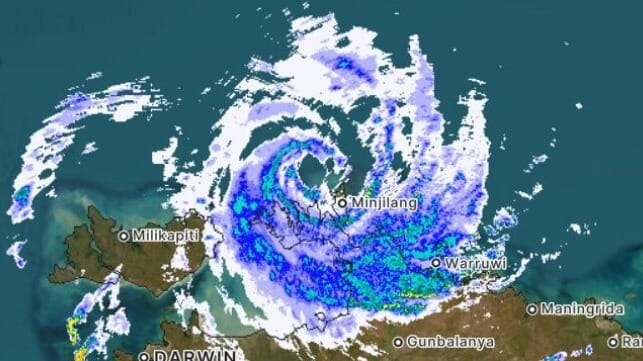
A tanker sprinting against the clock to beat a cyclone shouldn’t be a national-security storyline—but last week it became one. As Tropical Cyclone Fina tracked toward the Top End, port authorities expedited the arrival of an inbound fuel tanker into Darwin Harbour to avoid a likely shutdown that would have delayed deliveries and left the region exposed to immediate supply constraints.
What’s needed now is a clear-eyed admission that Australia’s fuel system, optimized for thin inventories, rapid turnover and global shipping reliability, cannot withstand the continuous, concurrent and cascading risks that shape today’s strategic environment.
The Australian Broadcasting Corporation report captured the industry relief as the tanker arrived before conditions deteriorated. Ports stayed open, roads remained passable, and fuel kept flowing. But the real lesson wasn’t the operational success; it was how close we came to a preventable disruption. An early-season cyclone threatened the nation’s multibillion-dollar supply chain. And Australia didn’t avoid a crisis through resilient design but by luck.
For years, I have argued, across reports, compendiums and Strategist articles, that Australia’s fuel security arrangements are built on assumptions that no longer hold. They presume stable markets, smooth logistics, cooperative geopolitics and predictable weather. Yet the environment surrounding Australia is the opposite: volatile, contested and increasingly shaped by overlapping shocks. Cyclone Fina exposed, again, what industry experts, defense planners and supply-chain analysts have warned for years: our fuel architecture is acutely vulnerable.
The more worrying issue is that market forces aren’t fixing this, and corporate risk registers aren’t capturing it. Markets optimize for efficiency, not national resilience. Lean inventories, narrow margins and globalized sourcing make commercial sense until a disruption cascades across ports, shipping routes and refining capacity. In fact, competition has driven the system in the wrong direction: there are fewer suppliers, tighter stock levels and greater dependence on international shipping. Businesses adjust to risk; they do not eliminate it. National capability, however, requires elimination.
Recent warnings paint the same picture. Analysts quoted across several news outlets described Australia’s fuel reserves as ‘dangerously low’, ‘dire’ and ‘beyond what a modern economy should tolerate’. Procurement experts cautioned that even a short disruption to northern ports could have forced rationing, suspended aviation operations and triggered a broader economic slowdown. One summed it up bluntly: Australia is ‘rolling the dice—every day.’
Global dynamics only amplify these pressures. Conflicts in the Middle East and Eastern Europe, insecurity in the South China Sea, piracy in the Red Sea and chronic under-investment in global refining have tightened markets and increased volatility. Shipping chokepoints, from the Strait of Hormuz to the Strait of Malacca, are now live theaters for geopolitical signalling. Even minor disruptions trigger price spikes and constrained availability. Australia, importing more than 90 percent of its fuel, sits at the fragile end of that system.
Compounding all this is the accelerating effect of climate extremes. Cyclones are becoming more intense and less predictable. Heat stress is degrading rail infrastructure. Flooding is cutting key freight corridors for weeks. These risks do not queue politely; they stack. A cyclone in the north, a refinery outage in Asia and a shipping delay in Singapore need only coincide for Australia’s fuel system to be pushed beyond its narrow tolerance. Fina should be seen not as an anomaly but as a preview.
Australia needs a structural shift from a just-in-time model to a just-in-case posture. And it requires three reforms.
First, we need a diversified and assured supply. Australia must expand long-term offtake agreements with trusted producers, pursue regional refining partnerships and reduce exposure to vulnerable sea lanes. Critical minerals policy offers a model: treat energy security as an industrial ecosystem, not as a commodity transaction.
Second, we need meaningful strategic stockholdings. Australia’s reserves, spread poorly across the continent and far below International Energy Agency requirements, aren’t sufficient to sustain the nation through a multi-week disruption. Storing fuel in the US Strategic Petroleum Reserve is no substitute for physically locating fuel in Australia. Northern Australia, given its centrality to defense, mining and disaster response, remains dramatically under-stocked. Darwin, Townsville and Karratha all require additional tankage and minimum stockholding mandates. This would not be market distortion; it would be guaranteeing national continuity.
Third, we need geographic redundancy. Cyclones will close ports. Floods will cut highways. Heat will disrupt rail. Building resilience means developing alternative distribution pathways, multi-port contingency arrangements and emergency logistics capacity. A diversified national fuel network will cost more—but far less than the economic and strategic consequences of a major supply failure.
The government has taken important steps: supporting domestic refineries, investing in infrastructure and updating regulatory settings. But our current posture still assumes that luck will intervene before a crisis does. That assumption grows weaker every year. A modern, advanced economy should not depend on weather windows to maintain uninterrupted access to fuel.
The events around Cyclone Fina offer a simple truth: Australia got away with it this time. The tanker made it in. The port stayed open. The system held—just. But extrapolating success from luck is a strategic error. In an era defined by geopolitical flare-ups, supply-chain fragility and climate extremes, Australia must prepare for the risk that next time, everything happens at once.
Fuel security is not an energy policy issue. It is a national security requirement. It underpins defense readiness, food supply, transport, emergency response and economic stability. It is the oxygen of a modern nation-state.

that matters most
Get the latest maritime news delivered to your inbox daily.
We can keep rolling the dice. Or we can finally build the resilient fuel system that a country such as Australia demands, given its geography, economy and strategic exposure.
John Coyne is director of ASPI’s National Security Programs. This article appears courtesy of The Strategist and may be found in its original form here.
The opinions expressed herein are the author's and not necessarily those of The Maritime Executive.
