


Industry Coalition Calls for a Framework for Offshore Charging for SOVs
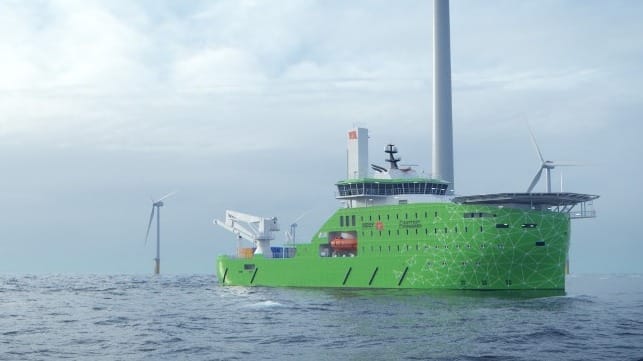
The Offshore Charging Working Group, a broad coalition from across the offshore wind and maritime value chain, is working to address the remaining barriers to decarbonising offshore service operations through the electrification of service operation vessels (SOVs) and crew transfer vessels (CTVs).
The group has concluded that early design consideration and commercial clarity on access to offshore power for charging are the key outstanding challenges.
The Offshore Charging Working Group brings together vessel owners, technology providers, industry organisations and is supported by tier 1 wind farm developers, reflecting a shared ambition to enable electric CTV and SOV operations within offshore wind farms. Industry readiness to deploy zero-emission vessels is growing, provided a clear and workable policy framework is in place.
The group has engaged with The Crown Estate, the UK Department for Energy Security and Net Zero (DESNZ), and Low Carbon Contracts Company (LCCC), highlighting the need for design allowance during early FEED phases, clarity on offshore power access, pricing treatment under the Contracts for Difference (CfD) scheme, and physical access to offshore charging infrastructure.
“Technology is no longer the limiting factor. What industry needs now is clear, practical guidance from authorities to enable offshore charging to move from concept to delivery,” says Øystein Huglen, representing Maritime CleanTech in the working group.
A detailed proposition paper outlining practical policy enablers for offshore charging will be published shortly.
The products and services herein described in this press release are not endorsed by The Maritime Executive.
