


Video: U.S. Marines Board Falsely-Flagged Tanker in Gulf of Oman
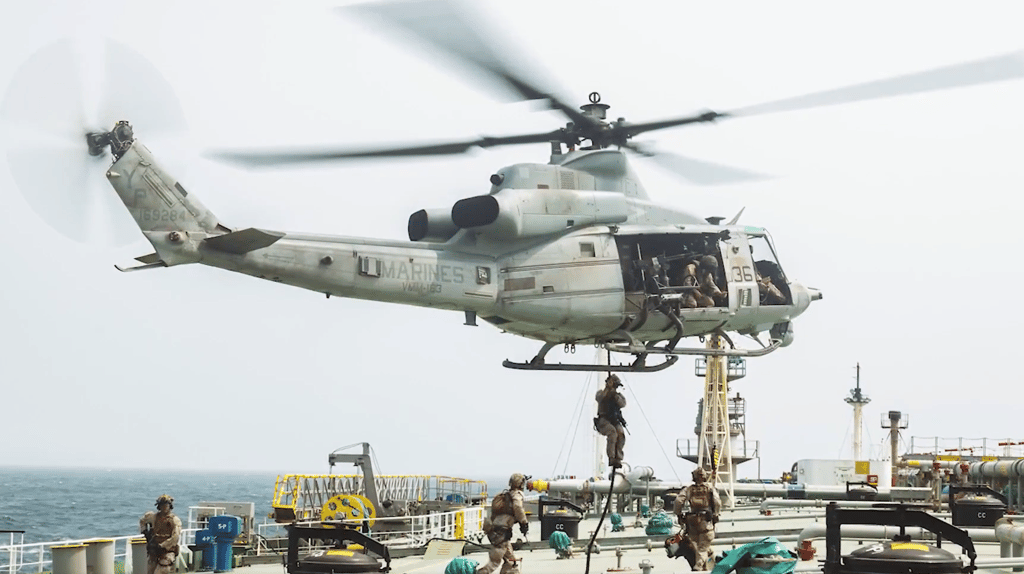
On July 16, the USS Boxer Amphibious Ready Group intercepted and boarded a "shadow fleet" VLCC in the Gulf of Oman, part of the large-scale effort to enforce the Trump administration's newly-reinstated blockade on Iranian seaports.
U.S. Marines from the 11th Marine Expeditionary Unit used helicopters to access the deck of the 300,000 dwt tanker Wen Yao in the Gulf of Oman. The operation was a flag verification boarding, according to U.S. Central Command.
U.S. Marines from the 11th Marine Expeditionary Unit conduct a verification boarding aboard M/T Wen Yao in the Gulf of Oman, July 16.
— U.S. Central Command (@CENTCOM) July 16, 2026
As of today, American forces have redirected 3 commercial vessels trying to run the blockade, disabled 1 that didn’t comply, and boarded 1 to… pic.twitter.com/vbjArHuLaO
Wen Yao is falsely flagged in San Marino, according to her Equasis record. Though the tanker's most recent name is Chinese, she is owned and operated in Dubai, a popular hub for shadow fleet shipmanagement.
Wen Yao is fully laden with a cargo of Iranian fuel oil, and her crew took several curious steps while under pursuit by U.S. forces, according to TankerTrackers.com. She changed her name and her flag repeatedly on the 16th, ending up as the "Azhin" and flying an Iranian flag by the time of the boarding.
The boarding is one of several actions that the Navy has taken to divert Iran-bound traffic since the restart of the blockade. Three vessels have been redirected with warnings; one was disabled with Hellfire missiles; and one has now been boarded.
"The Strait of Hormuz and the surrounding waters remain free and open, except for vessels attempting to violate America’s steel wall blockade," said Central Command in a statement late Thursday.
In addition to the vessel interdictions, Iranian state media outlets claim that American forces destroyed two road bridges connecting the Iranian port of Bandar Abbas to inland locations to the west. Up until recently, Central Command has refrained from striking civilian infrastructure targets in Iran. Anecdotal reports indicate that a bridge in Hormozgan and a rail station west of Bandar Abbas were also hit. In a statement, CENTCOM confirmed that it had launched strikes on "military logistics infrastructure."
 Stay on Top of the Daily Maritime News The maritime news
that matters mostGet the latest maritime news delivered to your inbox daily.
BREAKING: The US has just struck a key Iranian road bridge connecting Bandar Abbas to other cities inland, dropping it into the Shur River.
— The Hormuz Letter (@HormuzLetter) July 16, 2026
The strike has killed at least 2 people, injured 4, and caused power outages in the area. pic.twitter.com/2upBg8b1vi
Between strikes, boardings and escalatory rhetoric, the tensions between Iran and the U.S. are having a material effect on commercial transit volume, according to Kpler. Crude and condensate cargoes through the Strait of Hormuz are down to just four million barrels per day, a sharp reversal from the recovery seen during the ceasefire. Loadings have fallen by half in recent days, setting back GCC states' plans for normalizing production. "The larger test is whether Gulf producers can establish a repeatable loading cycle, rather than move cargo only between periods of escalation," assessed Kpler.
