
U.S. Details Arctic Infrastructure Needs
The U.S. Committee on the Marine Transportation System has published A Ten-Year Prioritization of Infrastructure Needs in the U.S. Arctic which presents a framework for addressing Arctic infrastructure gaps.
The report makes 43 recommendations covering waterways management, physical infrastructure, information infrastructure, response services and vessel operations.

that matters most
Get the latest maritime news delivered to your inbox daily.
 The most immediate recommendations are:
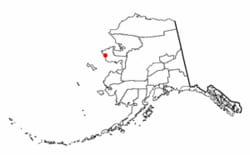
• Designate Port Clarence as an Arctic Maritime Place of Refuge.
• Review Port Clarence facilities to assess whether adequate support facilities are available at Port Clarence or in the region for a ship in need of assistance.
• Support Arctic Waterways Safety Committee efforts to bring stakeholders together
• Leverage existing data-sharing frameworks, such as Data.gov, the Alaska Regional Response Team, and Alaska Ocean Observing System, to facilitate waterways planning and response to environmental emergencies.
• Leverage international partnerships supporting waterways coordination.
• Work with stakeholders to coordinate research efforts to de-conflict research within commercial and subsistence use areas.
• Designate M-5 Alaska Marine Highway Connector to connect the Arctic Ocean and the western section of the Northwest Passage.
• Prioritize the need for Arctic port reception facilities to support international regulatory needs and future growth.
• Expand Arctic coastal and river water-level observations to support flood and storm surge warnings.
• Review U.S. Arctic maritime commercial activities to identifying major infrastructure gaps that should be addressed to promote safe and sustainable Arctic communities.
• Co-locate new Continuously Operating Reference Stations and National Water Level Observation Network stations to significantly improve the Arctic geospatial framework with precise positioning and water levels.
• Improve weather, water, and climate predictions to an equivalent level of service as is provided to the rest of the nation.
• Implement short-range, sea-ice forecasting capability.
• Place hydrography and charting of the U.S. maritime Arctic among the highest priority requirements for agency execution.
• Advance Arctic communication networks to ensure vessel safety.
• Finalize the Port Access Route Study for the Bering Strait and continue efforts to provide routes for vessel traffic in the U.S. Arctic.
• Expand partnerships to provide new satellite Automatic Identification System (AIS) capabilities for offshore activity information.
• Continue collaboration with State and local authorities to ensure readiness of Arctic maritime and aviation infrastructure for emergency response and Search and Rescue (SAR).
• Continue coordination through international fora to provide significant opportunities for engagement across the Federal Government and the international Arctic response community.
• Support Pan-Arctic response equipment database development, best practices recommendations, and information sharing for continued development of guidelines for oil spill response in the Arctic.
• Develop a plan to transport critical response equipment from the contiguous U.S. into the Arctic area in the event of a catastrophic event.
• Evaluate facilities currently available on the North Slope for use as seasonal staging areas by those engaged in readiness exercises or research.
• Expand U.S. icebreaking capacity to adequately meet mission demands in the high latitudes.
• Update domestic law to implement the mandatory provisions of the Polar Code and the Convention on Standards of Training, Certification and Watchkeeping for Seafarers.
• Examine existing training and safety standards applicable to the U.S. fishing fleet with respect to the new Polar Code requirements.
The report is available here.
