


Ukraine Closes Down Trade in Sea of Azov, Affecting Both Russia and Iran
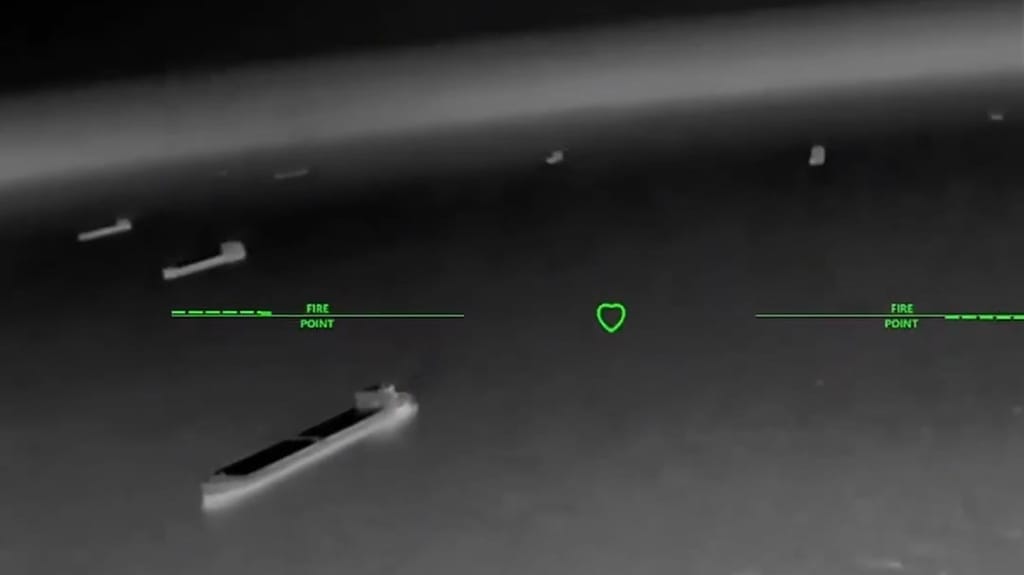
Ukraine’s ongoing strategic air and sea campaign to tighten the screws on Russia economically has taken a further leap forward in recent days, background to an announcement on July 10 by Ukrainian President Zelensky that a new Long Range Command had been established within the Ukrainian Armed Forces structure, solely to prosecute long-range warfare on Russian strategic targets. The new command will attack Russian targets globally, and its first operation may have been the attack on July 9 carried out against the largest oil refinery in Russia at Omsk, at a range of 1,860 miles.
At lesser range, Ukraine’s Unmanned Systems Forces (USF) has been striking dozens of Russian vessels in the Sea of Azov. Among many others, Vanguard listed nine of the vessels hit as the Palau-flagged Chelsea-6 (IMO 9386160), Russia-Flagged tanker Aura (IMO 9624316), Russian-flagged tanker Sanar-1 (IMO 9332389), Russian-flagged tanker Ilya Repin (IMO 9640504), Panama-flagged tanker Galiaskar Kamal (IMO 9820776), Russian-flagged tanker Penelope (IMO 9631163), a possibly Russian-flagged tanker Venera-3, the tug Alfeo (IMO 9631163) and the Russian-flagged chemical tanker Mercury (IMO 9261170).
As of Monday, the number of ships that the Ukrainian USF claims to have struck in the Sea of Azov since July 5 stands at 105 vessels, primarily tankers.
— July 13, 2026
Not surprisingly, the Russian authorities have responded by closing down sea traffic in areas where vessels might be particularly vulnerable to Ukrainian attack. Specifically, this includes transits through the Kerch Strait and the barrier systems protecting the Kerch Bridge, and on the Volga-Don canal and river system.
Vessels on internal Russian canal and river system are particularly vulnerable, as AI-equipped drones need only scan a narrow and well-plotted water course to find a plethora of targets, which moreover if struck also may founder in a way which interrupts navigation for other ships. With agile, AI-supported battlefield targeting systems like Delta that Ukrainian home-grown companies such as Trident and ZIR System have developed, swarms of drones allocated to particular sectors can be re-tasked in flight as targets are successfully dealt with and as air defense systems are identified.
It is not clear how long the Russian authorities can disrupt the economy by closing down the vast internal river and canal system, the pride and joy of Soviet central planning, which can accommodate the transit of a Baltic Fleet corvette past Moscow to reach the Caspian even in winter. Even before the Russians come up with a defensive response, the Ukrainians are likely to have developed an innovation to render it neutral.
The implications of this recent powerful Ukrainian offensive, on top of the ongoing campaign to hit Russian oil export terminals, cannot be underestimated. The restrictions on vessels crossing the Kerch Strait, and presumably to traffic over the bridge as well, puts further pressure on the sustainment of Crimea, now increasingly a burden rather than Putin’s proudest war seizure. Internal trade across southern Russian will be affected.
The Volga-Don system feeds into commerce across the Caspian Sea, so Iran will lose a channel which they thought that they might have been able to rely on. Ukraine has successfully attacked naval targets in the Caspian before, and will likely be emboldened to widen its target set in an expansion and continuation of this most recent campaign.

that matters most
Get the latest maritime news delivered to your inbox daily.
The pressure on the Caspian route adds to Iran’s logistical difficulties. The Iranian rail route to China through Inche-Buren via Turkmenistan has been disrupted, with a key bridge on the Transnational North-South Corridor near Aqqala taken down by an American airstrike. Just about the only free routes into Iran are now through Turkey and its main border crossing at Bazargan; Turkey might want to desist from helping the United States’ enemies if it wants a long-sought supply of F-35 fighters.
Further afield, the managers of the Panama and Suez Canal, and those responsible for narrows with high trade volumes, such as the Bosporus and the English Channel, ought now perhaps to be looking how they would keep traffic flowing in the face of offensive capabilities which have been proven to be cheap, accurate and difficult to defeat.
