


U.S. Southern Command Carries Out Lethal Strike on Suspected Drug Boat
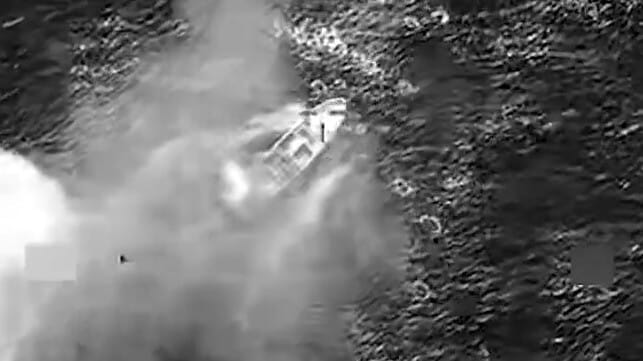
U.S. Southern Command has destroyed another drug smuggling boat in the Eastern Pacific, the second such strike under the command of Gen. Francis L. Donovan (USMC). Two were killed in the attack, and one smuggler was left alive.
The vessel in question was a go-fast with three outboards at the stern and visible packages in the cockpit. Video provided by Southern Command appears to show that it was hit by at least two explosions, bringing it to a halt.
The U.S. Coast Guard was notified of the status of the sole survivor so that it could start a search and rescue response. A service spokesperson told The Hill that the Ecuadorian maritime rescue coordination center is running the SAR response, with support from the USCG.
The latest attack brings the total number of boats hit by Southern Command's Air Force assets to at least 38, with at least 130 suspects killed and two rescued. A third survivor from a strike in January was never found and is presumed lost at sea.
The strikes remain controversial: the monthslong campaign has raised questions about the legality of killing men who were once considered criminal suspects but have recently been reclassified by the White House as "narco-terrorists." Congress has not provided a use of military force authorization for the operation; the actions have been criticized by many legal experts at home and abroad, and may fall under the jurisdiction of the International Criminal Court.

that matters most
Get the latest maritime news delivered to your inbox daily.
The Trump administration claims that the strikes (and a simultaneous ramp-up in nonlethal Coast Guard law enforcement interdictions) have increased the price of cocaine in all markets north of Colombia, reversing a years-long trend of cheaper and more abundant supplies on U.S. streets.
"Cocaine is getting more expensive . . . not only more expensive in the U.S., but we're seeing it become more expensive at first stops. So more expensive in Puerto Rico, more expensive in the Dominican, more expensive once it lands in Guatemala and Honduras and Central America," DEA administrator Terry Cole told CBS last year.
