


U.S. Navy Test-Launches an Iranian Drone Clone From a Ship's Helideck
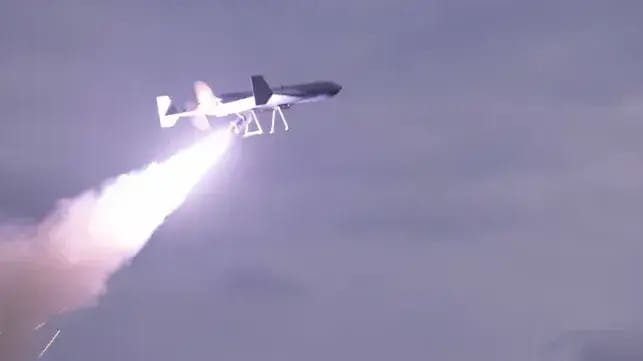
Iran has perfected the high-volume, low-cost suicide drone with the Shahed-136, a small piston-engined one way attack drone used by Iranian and Russian forces. Thousands have been built and launched at Ukrainian bases, seaports, powerplants and apartment blocks, to devastating effect. Since the ubiquitous Shahed is combat-proven and easy to mass-produce, the U.S. Navy and Marine Corps are skipping clean-sheet R&D and are testing an American adaptation of the infamous Iranian design.
On Tuesday, the Independence-class littoral combat ship USS Santa Barbara (LCS-32) launched a LUCAS-brand variant of the Shahed-136 from her helicopter deck. The device was prepared and dispatched by a specialized drone squadron, "Task Force Scorpion Strike," which is assigned to introduce new unmanned systems to Central Command.
Like the original Shahed, LUCAS can be launched in multiple ways from multiple platforms. It can lift off with rocket-assisted takeoff, as used aboard USS Santa Barbara, or a vehicle-mounted catapult can give it a boost. Once airborne, it will perform a variety of tasks, including surveillance and one-way strike. Weaponization and automated target recognition are in the works for future development. (Currently the payload is an inert mass for testing.)
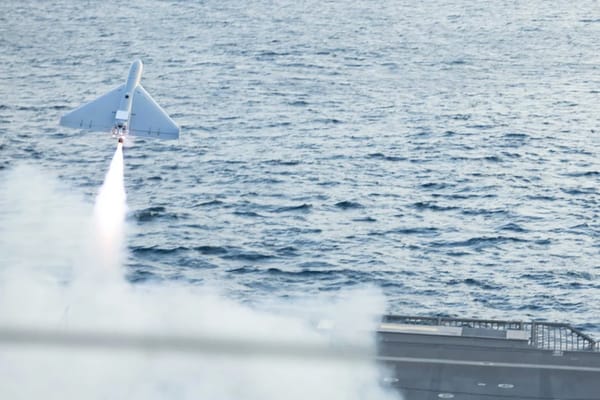
USS Santa Barbara launches a LUCAS drone (USN)
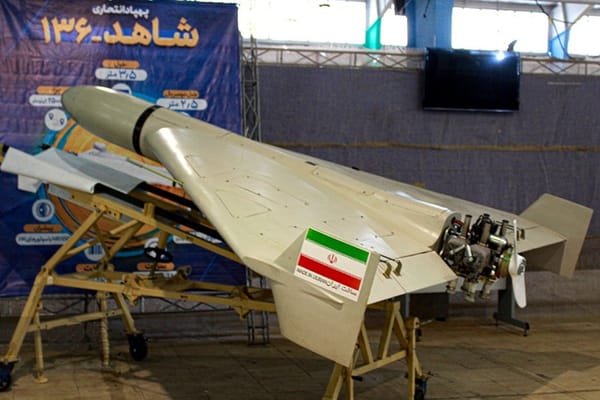
The original Iranian Shahed-136 (Tasnim)
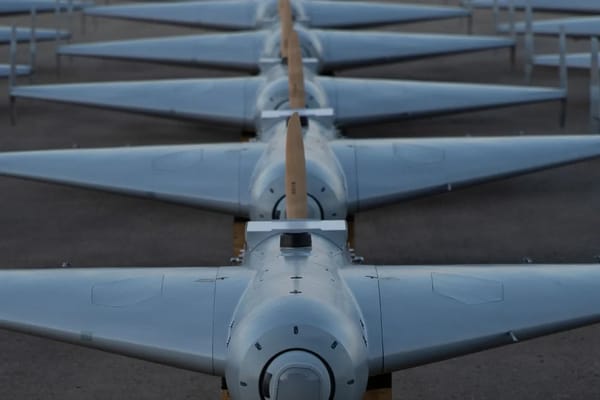
Multiple LUCAS drones prepared for testing at Yuma Proving Ground (USMC)
For the Pentagon, the Shahed's appeal is in its simplicity and manufacturability, the same qualities that have endeared it to Russian operators. "There is a price point that we want to produce a lot of these in a rapid fashion," said Col. Nicholas Law, a senior Pentagon R&D officer, in a statement earlier this month. "It’s not a single manufacturer: it’s designed to go to multiple manufacturers to be built in mass quantities."
The LUCAS device was created by American drone company SpektreWorks, and is a reverse-engineered and scaled-down copy of the Iranian original. The addition of a flat-panel terminal on the tail provides a beyond-line-of-sight satcom uplink, allowing remote monitoring and control in contested environments. Most remarkable of all, the SpektreWorks device's cost is reported to be in the same price range as Iran's original version, which is believed to be in the low- to mid-five digits.

that matters most
Get the latest maritime news delivered to your inbox daily.
For the Navy, a deck-launched Shahed variant is a new way to add lightweight, long-range strike capability onto small platforms like the LCS, which has limited organic capability for that mission set. The Independence-class is currently slated to fill a patrol and minesweeping role in Central Command; as a platform of opportunity for Shahed drone launches, it would be able to do more.
“This first successful launch of LUCAS from a naval vessel marks a significant milestone in rapidly delivering affordable and effective unmanned capabilities to the warfighter,” Vice Adm. Curt Renshaw, commander U.S. Fifth Fleet, in a statement announcing the launch.
