


U.S. Coast Guard Cutter Pairs With B-52 Bombers for Maritime Strike Trials
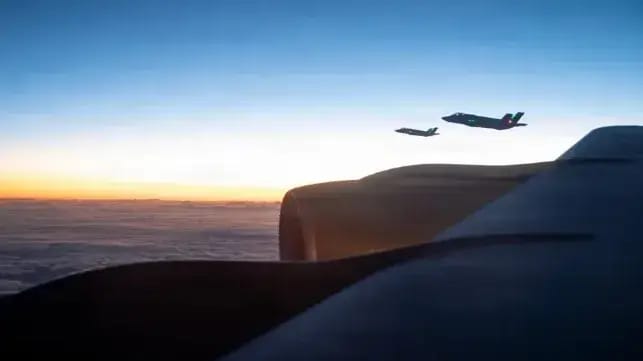
U.S. Alaskan Command has completed a rare joint exercise involving U.S. Air Force bombers and a U.S. Coast Guard cutter in the Gulf of Alaska, combining the USCG's presence and targeting capabilities with the USAF's weaponry.
The operation involved the National Security Cutter USCGC Kimball, B-52 bombers from the 2nd Bomb Wing, and four F-35 Lightning II fighters from the 354th fighter wing, plus two aerial tankers and an HC-130 search and rescue aircraft. The operating route took the bombers through Alaska and into the area of operations for Indo-Pacific Command.
During the exercise, Kimball and unspecified U.S. Navy assets provided targeting information for the bombers, which the Air Force crews used for long-distance target acquisition and a simulation of weapons engagement. Alaskan Command said in a statement that the exercise tested out standoff strike capabilities, suggesting a simulated missile launch. The B-52 is capable of deploying the Harpoon and LRASM, among other antiship munitions, and can carry them in large quantities.
"Homeland Defense operations in the Alaskan Theater of Operations is Alaskan Command’s number one priority," said USAF Lt. Gen. Robert Davis, commander, Alaskan Command. "Our ability to integrate with multiple combatant commands and homeland defense partners demonstrates the capabilities necessary to safeguard the northern approaches to the United States."

that matters most
Get the latest maritime news delivered to your inbox daily.
The announcement is a rare one for the U.S. Coast Guard, which usually emphasizes its work in search and rescue or law enforcement rather than kinetic maritime strike. The decision to publicize the exercise sends a message about U.S. intentions to defend maritime sovereignty in the North Pacific and Bering Sea, where Russian and Chinese forces have operated with increasing frequency in recent years.
In time of war, the Coast Guard is often absorbed into the Navy and dispatched on patrol or combat missions to engage with enemy forces. In peacetime - including limited military operations, like the Persian Gulf War and Operation Iraqi Freedom - it has a tradition of independence from the Pentagon, which enables its civil regulatory and administrative functions.
