


Scotland Plans Stopgap Work to Save Troubled Ferguson Shipyard
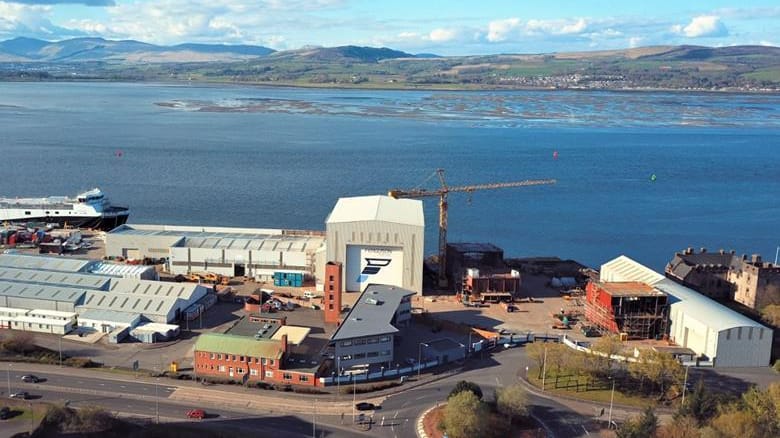
The Scottish government announced in Parliament that it has a new stopgap plan to keep the financially troubled Ferguson Marine shipyard in Glasgow operational and to save a workforce that was facing layoffs in the coming months. The yard, which went into receivership in 2019 and is owned by the government, is finishing its last commercial assignment and said a month ago that it would start voluntary layoffs as it begins a period of transition and seeks future work.
The shipyard is the last of a long tradition of building on the Clyde and in Glasgow, but like so many yards has fallen on to hard times. The size of the facility limits its ability to compete for work, including many of the contracts to build replacement ferries for the government-owned CalMac.
The yard’s troubles were further compounded by the disastrous project to build the LNG-fueled ferries Glen Sannox and Glen Rosa for CalMac. The project is years behind schedule and incurred large cost overruns. Glen Sannox finally got into service, but there are persistent reports of problems. Last week it was reported that the vessel had experienced a gas leak and that it is still operating on conventional fuel. Her sister, Glen Rosa, recently left the yard, preparing for her delivery before the end of 2026, a decade behind the originally anticipated schedule.
Scotland’s Transport Secretary Stephen Flynn announced the newest plan to keep the yard going and maintain employment during this transition period. He spoke out in Parliament, reporting that the government has authorized an unspecified amount of working capital as part of a plan to build tugboats on speculation. Media reports say Flynn told the lawmakers the yard will build an unspecified number of tugboats using a prepackaged design. It is suggested the yard might partner with Damen, or another company, and then would use its design to build the tugs. The tugs would also be offered for sale, as they do not have any firm orders or buyers at this time.
The plan immediately came in for a new round of political criticism. Opposition party members cited the lack of detail and noted it follows an announcement in March promising four contracts for Ferguson. The prior plan called for the yard to be given no-bid contracts to build two small ferries for CalMac and, for the government, a Marine Protection Vessel (MPV) and a Marine Research Vessel (MRV).
The yard currently has no further commercial work after the delivery of Glen Rosa. In August, management said it would ask for up to 70 employees to agree to a voluntary separation from the yard, which is about a quarter or more of the workforce.

that matters most
Get the latest maritime news delivered to your inbox daily.
The government previously provided a lifeline to the yard in the form of a subcontractor role on the UK’s new Type 26 frigate. Ferguson, along with Malin Abram and Coastworks, was awarded contracts to build three structural units for the Royal Navy’s HMS Birmingham, the fourth ship of the Type 26 frigate program being executed by BAE Systems. Ferguson reported in July that it had delivered its blocks to the project.
Government officials defended the plan to give the four orders to Ferguson while admitting it has been delayed. The reports are that they are continuing to review the projects to ensure they do not violate any subsidy regulations, as they would be awarded without a bidding process. Critics point out that even if the contracts are finalized, the ships will require a year or more of design work before construction begins.
