


Running Out of Options: Conflict Restricts Saudi Oil Exports
Saudi Arabia has traditionally been the beacon of stability within OPEC. It is the Middle East's largest producer, reliably supplying markets in Asia and Europe through long-term contracts. Unlike most OPEC members and other oil producers, Saudi Arabia would maintain significant spare production capacity. This enabled the leaders in Riyadh to manage global oil markets as its main "swing producer." Saudi Arabia's size, reserves and political stability made it the natural leader of the OPEC cartel. However, much has changed in recent months. The Kingdom has entered a severe geopolitical and economic crisis as a result of the U.S. war against Iran and the closure of critical oil export infrastructure. In this Tanker Opinion, we'll discuss recent events and the impact they have on the tanker market.
A few statistics will put the importance of Saudi Arabia in context. Prior to the Iran war, Saudi Arabia was the third largest crude oil producer in the world, behind only the United States and Russia. It has the planet's second largest proven oil reserves (after Venezuela).
The Saudis also made a significant push into refining. The country has dramatically grown its refinery throughput over the last 25 years. It is now the 6th largest refiner in the world with a domestic capacity of 3.3 Mb/d. In addition, Saudi Arabia owns significant stakes in international joint-venture refineries in countries like China, South Korea and Malaysia.
The Saudis also control one of the largest oil tanker companies in the world. Bahri, the national shipping company of Saudi Arabia, is one of the largest owners/operators of VLCCs.
The conflict between the U.S. and Iran has severely impacted the Kingdom's oil sector and economy. Although Saudi Arabia is not a direct combatant, it is deemed to be a U.S. ally, and its energy infrastructure and military bases are being systematically targeted by Iran and Iran-aligned groups. After the start of the conflict, Iran targeted transits through the Strait of Hormuz and seaborne exports from countries inside the Arabian Gulf were severely restricted.
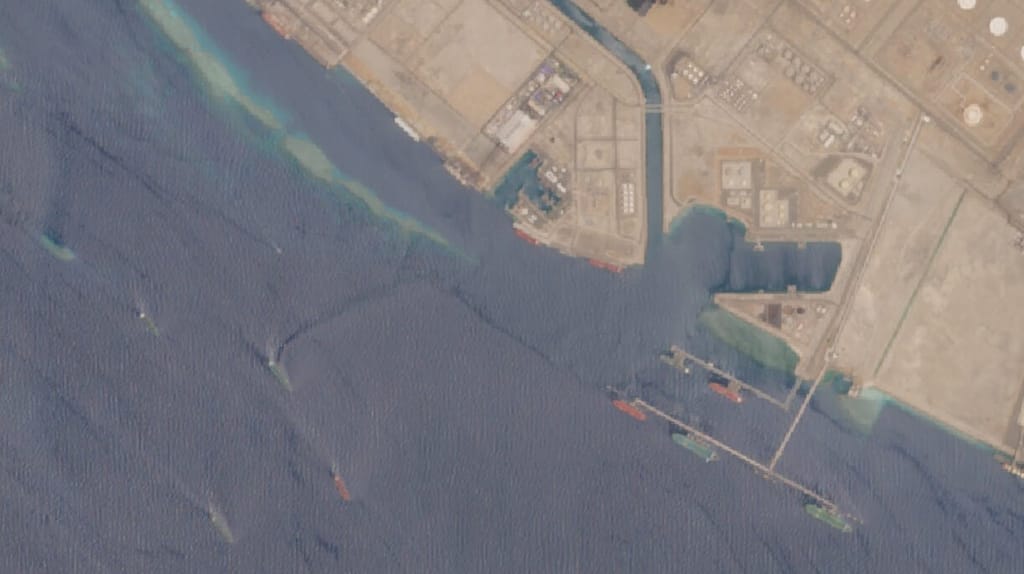
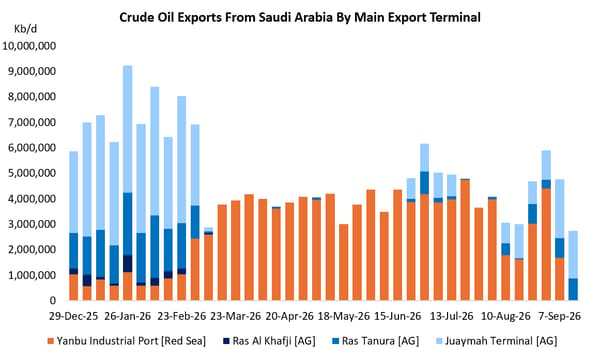
While Saudi Arabia's exports suffered, it had another option to bring its oil to market. It was able to divert a significant portion of its crude oil exports (around 5.0 Mb/d) through the East-West pipeline to the port of Yanbu on the Red Sea. However, this alternative route was not without risks. To export crude from Yanbu to Asia, tankers needed to pass through the Bab el-Mandeb strait, which is controlled by the Houthis, an Iran-backed rebel group in Yemen that has a long-running feud with Saudi Arabia. On July 20, Houthi rebels launched a Red Sea blockade targeting all vessels carrying Saudi export barrels. As a result, tankers loaded with Saudi crude were forced north toward Egypt's Suez Canal and Sumed pipeline.
The situation worsened this month, when the East-West pipeline was attacked and damaged with drones by Iran-backed militias, forcing Saudi Aramco to shut it down. Full restoration of the pipeline could take several weeks. Running out of options, Saudi Arabia has pivoted back to loading oil from their terminals in the Persian Gulf.
Courtesy Vortexa / Poten
So, what is next? The global oil market is tight as it is and can ill afford to lose another 4-5 Mb/d of supply. The pipeline will be repaired, but significant risks remain as long as the underlying conflicts are not addressed. It is impossible to defend all critical energy infrastructure in the region from attacks by Iran and its proxies. However, neither a military nor a diplomatic solution seems close at the moment.
The tanker market is benefiting from the current situation. The escalating conflict has created more risks, uncertainties and dislocations in the market and spiked freight rates to unprecedented levels. Tankers are waiting to load in Yanbu, at Sidi Kerir (the export terminal of the Sumed pipeline in the Mediterranean) and in the Gulf of Oman, uncertain if/where barrels are available for export.
The VLCC shuttle trade, organized by the Emiratis to move oil from inside the Arabian Gulf to the Gulf of Oman, is the only way for Middle East exporters to get at least some of their oil to market. Obviously, this shuttle service is not as efficient as loading the oil in the Gulf and transporting it directly to the importers. It remains a workaround that requires a lot more ships. At the same time, the Hormuz transits remain vulnerable to Iranian attacks, while the ship-to-ship transfers off the coast of Oman are not without risks either.

that matters most
Get the latest maritime news delivered to your inbox daily.
This analysis appears courtesy of Poten & Partners.
