


Report: U.S. Coast Guard Awaits Specialized Team to Board Third Tanker
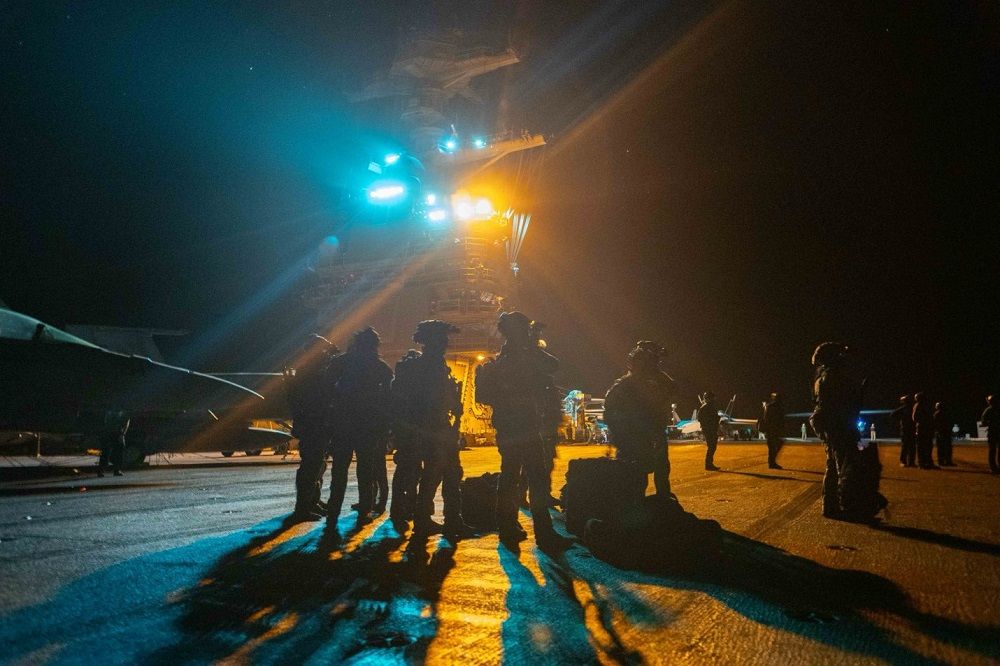
U.S. officials say that the U.S. Coast Guard's "pursuit" of the sanctioned VLCC Bella 1 will come to a conclusion after a team of boarding specialists arrives on scene. The service's cuttermen and law enforcement detachments (LEDETs) are skilled at interdicting small craft, but boarding a noncompliant vessel on the high seas requires the specialized skills of a Maritime Security Response Team (MSRT), the counterterrorism SWAT units that the service created after the 9/11 attacks.
On Saturday, American forces began chasing a tanker linked to Venezuela's oil exports, the third attempt at an interdiction this month. The vessel has been identified as the Bella 1, a stateless, sanctioned tanker with a past in the Iranian oil trade. Bella 1 was in ballast and approaching Venezuela, and it was the first ship that the U.S. targeted before it loaded a cargo.
Bella 1 declined to submit to a boarding and reversed course, U.S. officials told the New York Times on Sunday. The Coast Guard continued its pursuit of the ship, according to the Times, and on Monday President Donald confirmed that a chase was ongoing.
The Bella 1 is a VLCC with a deadweight in excess of 300,000 tonnes, and has a sea speed commensurate with her design. AIS data provided by Pole Star shows that over the past year, the tanker has rarely exceeded 12 knots. This is less than half of the speed required to outrun a U.S. Coast Guard cutter or a U.S. Navy surface combatant, and more than a few analysts have suggested that American forces should be able to conclude the "pursuit" in short order.
The delay in boarding is not the result of difficulty in catching up to the tanker, two officials told Reuters. The service only has two active MSRTs, and those personnel are otherwise occupied. They have already captured two shadow fleet tankers this month, and the arrested vessels require onboard oversight and possible crew augmentation for their journeys to U.S. waters. The first tanker has already arrived off Galveston.
Specialized Marine Corps and Navy units (like U.S. Navy SEAL teams) have world-class skills for boarding, search and seizure missions, but they lack the Coast Guard's legally-authorized law enforcement capabilities. Meanwile, standard Coast Guard units lack the SEALs' fast-roping skills for opposed boardings, officials said.
So far, the services have not employed a pure Navy or Marine Corps unit to secure the vessel, followed later by a Coast Guard officer who could conduct legal procedures in a noncombat environment. Instead, the "pursuit" elements are waiting for an MSRT to be freed up to board the Bella 1 in international waters of the Atlantic, moving further from Venezuelan shores at a likely rate of 200 nautical miles or more per day.

that matters most
Get the latest maritime news delivered to your inbox daily.
The shortage of resources is a long-running theme for the Coast Guard. Congress and successive administrations have often viewed the agency's budget as a pay-for, a lower-priority item when compared to other missions - with consequences for readiness. Its eldest oceangoing patrol vessels are passing their 60th anniversaries in service, and it faces a persistent manning shortfall.
"The Service is now stretched thin, with significant workforce shortages and aging, underfunded assets that often cannot meet mission requirements. The Coast Guard’s current organizational structure and reactive posture are no longer adequate to meet current and emerging challenges," commandant Adm. Kevin Lunday told a House committee earlier this year. Recent improvements in recruitment numbers will help going forward, as will a massive cash infusion for fleet recapitalization under the One Big Beautiful Bill Act.
