


Report: Israeli Regulator and Union Threaten Sale of Zim to Hapag
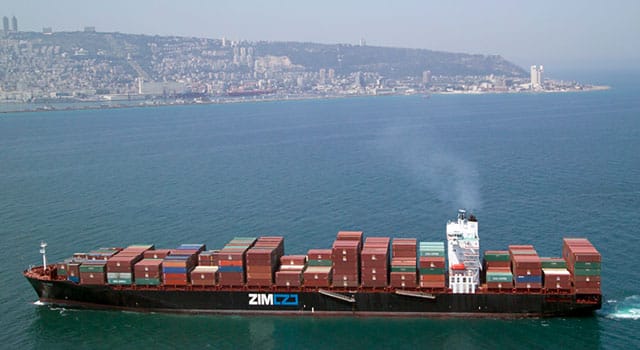
Reports from Israel continue to cite pockets of opposition to the agreement to sell Zim to Hapag-Lloyd in a deal valued at $4.2 billion and then split it into domestic and international operations. Zim has long held a unique position, viewed as a national asset, and many believe it is critical to the security of the Israeli state.
Zim dates back to the formation of Israel, and in its 80-year history, it has been a means of transporting cargo for the Jewish state. In the early days, Zim brought immigrants and the displaced people of Europe to settle in Israel. It maintained passenger service into the 1970s and grew as cargo and then container shipping company. While it has been restructured and went public in 2013, it has remained an Israeli asset.
The news outlet Calcalist, which broke the news of the agreement with Hapag-Lloyd, continues to report on the pockets of opposition, including from critical segments of the government. It writes that Transportation Minister Miri Regev may be attempting to block the transaction. Regev is also seeking, it says, inter-ministerial discussions with the Government Companies Authority, the holder of the Golden Share in Zim.
As part of the agreement to let the company go public just over a decade ago, the Government received the Golden Share, which gives it the authority to approve any sale or change in control of the company above 35 percent ownership. Key stipulations include that Zim must remain an Israeli company, with its headquarters and operational center in Israel. The CEO and chairman must also be Israeli citizens. The company has to have at least 11 vessels, which can be requisitioned by the state in times of emergency.
Calcalist reported on February 19 that it has seen a draft position paper from the Government Companies Authority that concludes “the state may not be able to approve the deal.” Calcalist notes that the final terms have not been submitted for approval to the authority, but based on media reports, there is concern that the terms are “inconsistent with the Golden Share.”
Hapag’s solution is to split Zim with a deal to sell the 16 company-owned vessels, the brand, and the Israeli operations to the country’s largest private equity fund manager, FIMI. A new Zim would be created for the trade routes serving Israel, and with access to Hapag and the Gemini Cooperation with Maersk.
FIMI founder and CEO Ishay Davidi is reported to be saying they recognize the strategic importance of Zim. They are committed to building a stable Israeli company.
The news outlet, however, says there are concerns about the change in the legal structure of the company. Analysts also note that the new Zim would be a small company, dependent on its international relationships, at a time when the industry is consolidating in the hands of a few giants. News reports also highlight the investments by Qatar and Saudi Arabia in Hapag-Lloyd.
At the same time, the union representing about 800 Zim employees in Israel fears large layoffs. It says it received minimal commitments for possibly as few as 120 people, with the others all facing layoffs. The union asserts that the board was not responding to it in the last two weeks, and it was given a last-minute notification without securing job protection.
The union immediately started a two-day “warning strike,” and despite assertions in the media that Hapag was protecting the jobs, the union says it moved to a full strike as of February 18.

that matters most
Get the latest maritime news delivered to your inbox daily.
Oren Caspi, chairman of the workers’ union, told Calcalist, “Ships are already standing idle, and damage is accumulating. We will paralyze the company if necessary.”
Calcalist reports that the general strike includes office workers in Israel. It says it has also expanded to disruptions across the company’s operations, including loading and unloading of vessels.
