


Positioning of Unladen Tankers Signals Shipping's Risk-Reward Calculations
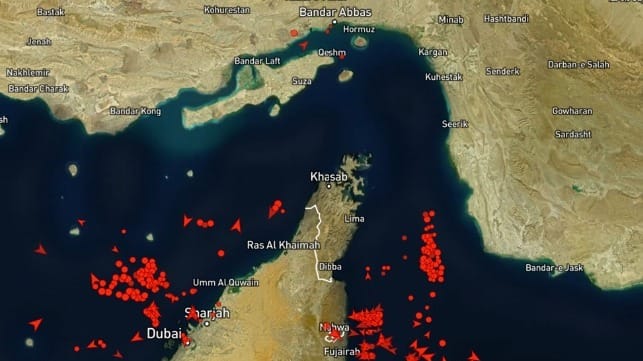
Shipowners and managers, and ultimately ship masters, have the ultimate responsibility for assessing risk to their vessels and their cargoes. Governments may be keen to persuade operators that the coast is clear, in support of attaining political objectives, but captains always need to be the final arbiter, not the least because lives are at risk.
Hence the behavior of tankers, in particular those with freedom of movement outside the Gulf, gives an indication of how the non-government world is assessing the potential course of the ongoing war with Iran.
If unladen tankers give up holding off Fujairah and Oman, then it is because they assess the risk of loading from terminals on the Gulf of Oman outweighs the reward of record profits to be had from Mideast-to-Asia voyages - or, alternatively, that there is little prospect of the Straits of Hormuz being opened up in the short term. For such tankers, the commercial choice then is to sail away and to find cargoes elsewhere.
From insiders in the oil and gas trading community, it appears that some regard it as too risky to load at present. But most of the unladen tankers off Fujairah and Oman are still sticking around, implying that ship owners and managers consider there is a good prospect of the Iranian grip over the Straits of Hormuz being broken soon. There are for example 17 unladen LNG carriers currently loitering in the Gulf of Oman off Ras al Hadd, numbers not depleted by more than one or two who have given up waiting. This implies there is confidence that the American war plan will move - once local air superiority is achieved - to suppressing the still-active drone threat.

that matters most
Get the latest maritime news delivered to your inbox daily.
The Iranian threat extends well beyond the immediate Strait of Hormuz area, as it appears that Iran has the wider objective of closing down all oil and gas movements within the region, presumably with the objective of mobilizing oil and gas consuming nations - and China in particular - to press for a cessation of hostilities.
This threat the Gulf nations are having to deal with on their own, with the Americans clearly having their hands full dealing with the primary threat from Iran. But it seems extraordinary that Western nations, and other consumer nations in Asia, do not consider that their national and economic security interests need to be protected and defended from these Iranian attacks. On the contrary, the British Prime Minister, for example, speaking in the House of Commons on March 4, appeared to be only concerned with evacuating British citizens from the area - seemingly unconcerned about the lack of Royal Navy presence in the Gulf or capability to defend other British interests and those of historic and economic partners.
