
Op-Ed: Ships Should Meet the Polar Code Before Entering Canadian Arctic
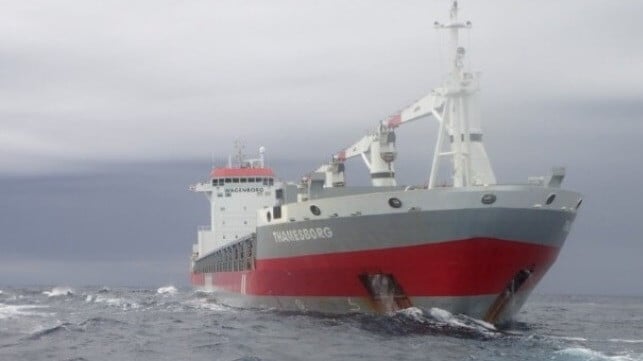
The United Nations International Maritime Organization (IMO) adopted the Polar Code in November 2014 to reduce loss of life at sea caused by inadequate preparedness for operations in polar regions, which are more isolated and challenging than lower-latitude waters. The Code entered into force on January 1, 2017 and initially applied to seagoing vessels of 500 gross tonnage (GT) and above, as well as certain vessel classes such as cruise ships. On January 1, 2026, the IMO expanded the categories of ships that must comply with the Code to include fishing vessels of 24 meters and above, pleasure yachts of 300 GT and above, and cargo vessels between 300 and 500 GT operating in polar waters.
The Polar Code sets standards for ship design and construction, crew qualifications, onboard safety equipment, operations, training, and environmental protection in polar waters. Although the initial version did not resolve all challenges of polar navigation, it represented a major step forward. It specifically calls for a high standard of design and performance for survival equipment, recognizing the unpredictable weather, isolation, and lack of infrastructure in both the Canadian Arctic and Antarctic, where search and rescue (SAR) assets may be several hours, if not days, away.
In 2023, the International Organization for Standardization (ISO) published ISO 24452:2023, “Ships and marine technology — Personal and group survival kit for use in polar water,” which specifies minimum design and performance requirements for personal and group survival kits used under SOLAS and the Polar Code. The Code defines “maximum expected time of rescue” as the time used for designing equipment and systems that provide survival support, and states that this period shall never be less than five days. In 2025, the United States Coast Guard confirmed the requirement that survival equipment for polar operations must support at least five days of survival.
Maritime traffic is increasing in the Canadian Arctic. Shrinking polar ice, attributed to global warming, is a major driver of rising marine activity, but other factors are also making the Northwest Passage more attractive: water restrictions affecting the Panama Canal, ongoing security issues in the Red Sea, tensions with Russia and its Northern Sea Route, and persistent ocean piracy in other key choke points. Combined with growing mining activity, these trends are leading to more traffic in Canada’s Arctic waters, thereby increasing the risk to a fragile environment with a short vertical food chain on which many Inuit rely for subsistence, as well as elevating the potential for loss of life in a region with extreme weather and minimal infrastructure.
The greatest concern is not the traditional annual community resupply shipping companies, which are experienced operators that typically meet Polar Code requirements, but rather those with limited arctic experience, including adventurers and superyachts. Too many of these vessels arrive poorly prepared for a hostile operating environment. Increasing numbers of cruise ships are entering the waters of the Arctic Archipelago to experience the fabled Northwest Passage, and cruise ships running aground in Canada is no longer a theoretical scenario, as several groundings have already occurred in Nunavut.
The cruise ship Hanseatic ran aground in 1996 because the bridge team deviated from the prepared navigation plan and relied on a navigation buoy left from the previous season that had shifted. The MV Clipper Adventurer grounded near Kugluktuk in 2010 with its forward-looking sonar inoperable. The Akademik Ioffe, a retrofitted icebreaker operated as a cruise vessel, ran aground in 2018 about 78 nautical miles north-northwest of Kugaaruk, after the officer of the watch was multitasking, the helmsman was fully occupied steering, and no other crew were assigned to monitor the echo sounders and maintain lookout, with the echo sounder alarms turned off. Even among seasoned arctic operators, several fuel tankers have grounded in the Canadian Arctic, including the Mokami in August 2010, the MV Nanny in February 2012 and again in 2014, and the Kivalliq W in October 2022.
These events illustrate failures in navigation practice, equipment readiness, and bridge resource management that the Polar Code is intended to address; had those ships fully met the standards and practices now required by the Code, these accidents might have been avoided.
Serious maritime incidents—loss of propulsion, allisions, steering failures, groundings, and fires—occur worldwide on a daily basis, and a loss of steering or power in confined or coastal waters can rapidly lead to disaster. The destruction of the Francis Scott Key Bridge in Baltimore by the container ship MV Dali demonstrated how quickly events can escalate when a large ship loses controllability near critical infrastructure.
Another instructive example occurred off the coast of Norway when the cruise ship Viking Sky lost power in a storm. On March 18, 2019, Viking Sky issued a mayday call after experiencing engine problems in heavy seas off Norway’s western coast, with 1,370 passengers and crew onboard. In very rough conditions, the vessel began drifting toward the coast, and the sea state was too severe to safely launch lifeboats. A large-scale helicopter evacuation was initiated, and in very challenging conditions, about 400 passengers were airlifted to safety before the crew managed to restart one engine and steer the ship away from danger. Dozens of people were injured, and several required hospitalization. Had the vessel grounded, waves could have repeatedly smashed the hull against the shore, potentially forcing passengers and crew to abandon ship into frigid waters without adequate protection. The Norwegian Safety Investigation Authority later criticized Viking Sky, noting that the vessel came within roughly one ship’s length of grounding.
In the Canadian Arctic, SAR resources are often many hours or even days away. When the Clipper Adventurer grounded near Kugluktuk, it took 42 hours for a Canadian Coast Guard vessel to arrive on scene. Vessels responding to distress in the Arctic must typically proceed slowly because of ice-infested waters, harsh weather, and the fact that much of the Arctic Archipelago is only partially charted to modern standards.
Canadian Forces SAR aircraft are based in southern Canada, including Canadian Forces Bases Winnipeg, Trenton, and Halifax. Aircraft on SAR standby can usually take off within two hours, and flight times to the Northwest Passage range up to 8-10 hours (for the FLIR-equipped CC-295 Kingfisher). Survivors may still be in frigid water or on exposed ice for 10 hours or more before they are located. Without an appropriate level of thermal protection and survival equipment designed for at least five days, an operation that begins as search and rescue is likely to become search and recovery.
The Polar Code requires vessels operating in polar waters to obtain a Polar Ship Certificate confirming that the ship, its crew and their qualifications, and its life-saving appliances meet the Code’s requirements. Polar certificates are issued by recognized organizations—classification societies such as the American Bureau of Shipping, Bureau Veritas, and Lloyd’s Register—acting on behalf of flag administrations. These societies have a duty to exercise due diligence before issuing certificates. For vessels intending to enter the Northern Canada Vessel Traffic Services Zone (NORDREG), these certificates must be submitted to Canadian authorities months in advance.
Transport Canada has indicated that it will increase inspections of vessels operating in the Canadian Arctic, consistent with recommendations from the Transportation Safety Board of Canada that call for more detailed inspections of passenger vessels entering Arctic waters. This enhanced oversight will encourage shipowners to ensure proper vessel design, that critical safety equipment such as forward-looking sonar is installed and operational, that crews are appropriately trained and certified, and that survival equipment can keep people alive for at least the minimum five-day rescue window.

that matters most
Get the latest maritime news delivered to your inbox daily.
Improved compliance with the Polar Code will reduce the likelihood of serious accidents and major environmental spills in a fragile arctic ecosystem with a short vertical food chain. The Code has now been in force for more than eight years. With its scope expanded to new categories of vessels that may be less familiar with polar hazards, it is time to strengthen awareness and increased enforcement in the Canadian Arctic.
Colonel (Retired) Pierre Leblanc is an experienced Arctic practitioner.
The opinions expressed herein are the author's and not necessarily those of The Maritime Executive.