


Oil Leaking from Sealloyd Arc Shipwreck Hits Thailand's Tourist Beaches
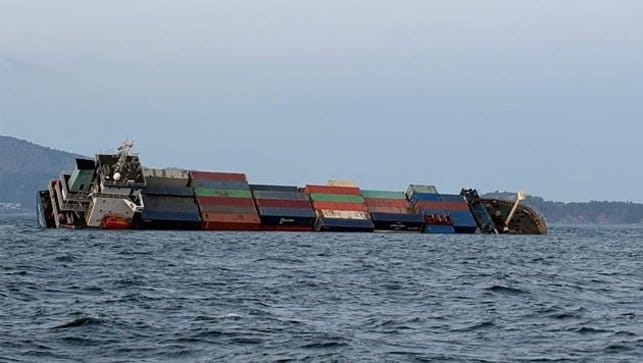
Thai officials are sounding the alarm and calling the latest developments “worrying” as reports grow of oil leaking from the wreck of the cargo ship Sealloyd Arc reaching Thailand’s beaches. They point out that efforts have been ongoing for 19 days, spraying dispersants at the site of the wreck, and in the early days, the winds were keeping the oil offshore.
Reports of oil on the beaches and in the shallow waters near popular tourist destinations began coming in on February 25. The Marine Department said it was monitoring the situation and had received reports of tar balls scattered approximately 80 to 100 meters (260 to more than 330 feet) along Kahang Beach at Koh Hey, a popular tourist spot located about five miles southeast of Phuket. Just three days earlier, it had reported an approximately three nautical mile long oil slick to the southeast of the wreck. At the time, it said the coral reef area of Koh Kaew Noi, which is about 1.1 nautical miles north of the shipwreck site, was clean.
Today, February 26, it reports westerly winds are carrying the oil slicks into the heart of the Racha Island’s tourist area, including Patok Bay, Tue Bay, Hila Bay, and Siam Bay. There were reports of tar balls scattered on the beaches and in the rocky areas. Oil is also staining offshore floats. The oil has appeared in clumps, and some of it has hardened into large clumps.
The Department of Marine and Coastal Resources is warning that even small amounts of toxins from the oil could destroy beautiful coral reefs and have long-lasting effects on rare marine animals. Teams have been sent to the beaches to manually remove the tar balls, and it is also requesting cooperation from shops and hotels to immediately clean up oil slicks from the beaches.
Media reports are saying as much as 900 meters (more than a half mile) of the beaches have been affected. The beaches remain open, but there are reports of tourists saying oil is sticking to their feet, bodies, and clothing.
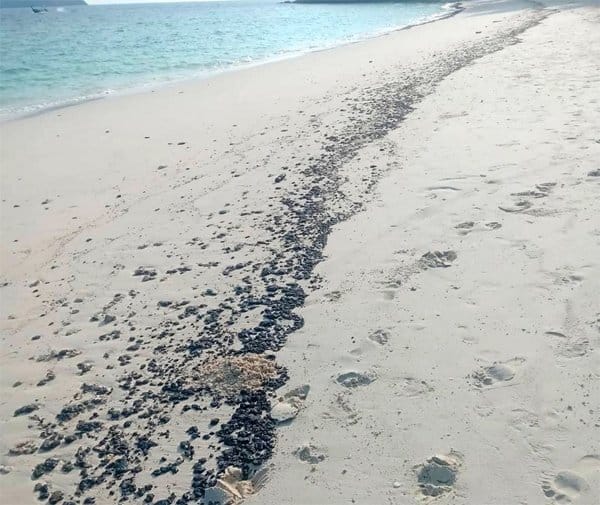
Tar balls were found on the beaches (MCOT State News Agency)
The authorities report booms have been deployed, but according to the media, there are an insufficient number of booms to stop the oil from reaching the beaches. Also, efforts to begin diving to the wreck to stop the leaks have been delayed due to negotiations over costs between the owner of the vessel and the underwater survey team. The first dive reportedly began on February 26.
The Sealloyd Arc (6,500 dwt) rolled onto its side on February 7 and sank several hours later after the Royal Thai Navy and local fishermen rescued the 16 crewmembers. The ship was located by divers at a depth of 61 meters (200 feet). The top of the stern mast is 14 meters (46 feet) below the surface. The ship is listing but sitting upright on the seafloor.

that matters most
Get the latest maritime news delivered to your inbox daily.
The Incident CommandCenter reported that the vessel was carrying approximately 98 tonnes of heavy fuel and 32 tonnes of marine diesel oil. It was also carrying 297 containers, but 218 were loaded in the hull, with only 79 deck loaded. Initial reports said about 14 of the containers were declared on the manifest to have hazardous materials.
Several of the containers were floating after the vessel sank, but the concern was on the hazardous materials, which were said to be chemicals, including hydrogen resin and ethyl alcohol. During a planning session on February 19, the command center emphasized the urgency, noting that seasonal shifts in sea conditions expected in April could increase the risk levels. It said the ship’s owner had appointed a local representative and that there was insurance coverage to cover expenses.
