


Iran's Strait of Hormuz Deal With Oman Would Ban All Warships
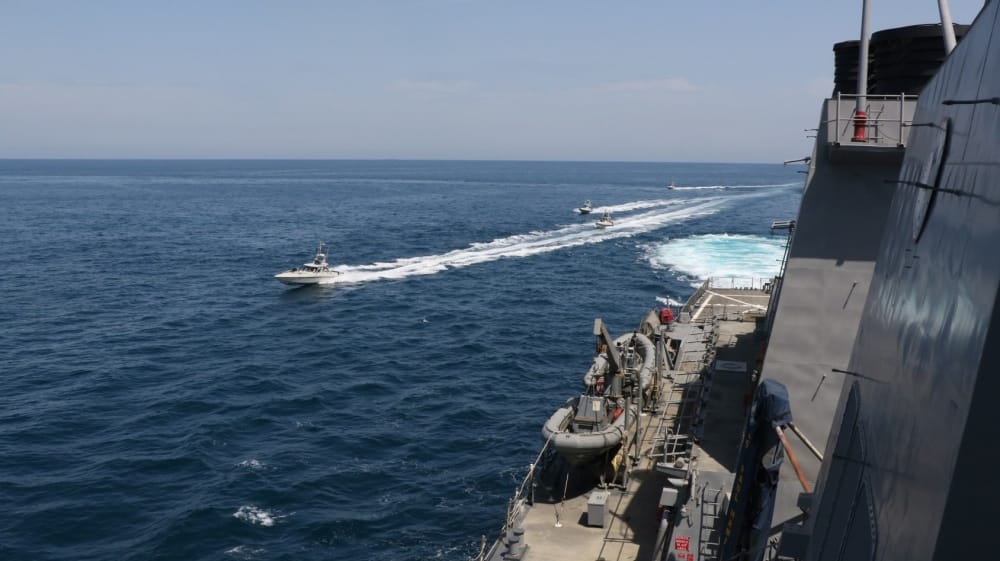
Iran and Oman have been negotiating a deal on joint control of the Strait of Hormuz for weeks, and both sides say that they are getting close to a final agreement. The joint protocol has an unexpected feature, Iran's deputy foreign minister Kazem Gharibabadi said in an extended interview on Tuesday: no warships of any kind or nationality will be allowed through the strait once the agreement takes effect.
"If the agreement becomes binding, no military vessel will be allowed through the Strait of Hormuz . . . No military vessels whatsoever," Gharibabadi told a state television channel. "It will strictly apply to the passage of commercial vessels."
If implemented successfully, this would have significant implications for the GCC states: Iraq, Kuwait, Bahrain and Qatar have no coastline outside of the Strait of Hormuz, and their militaries would lose access to the sea. For the U.S. Navy, it would limit the utility of the 5th Fleet naval base at Manama, Bahrain, which has been largely shuttered for six months due to its vulnerability to Iranian attack and its inaccessibility on the western side of Hormuz.
Oman and Iran to split "fees" for transits
Separately, Iran's Islamic Revolutionary Guard Corps has announced that two other important points have been settled - neither of which will be viewed favorably in Washington.
According to IRGC spokesman Hossein Mohebbi, Omani and Iranian negotiators have reached agreement on "each country's share of the starit's waters" and on "share of its revenues." The latter refers to the transit fee system that the IRGC wants to implement in perpetuity for traffic entering and exiting the Arabian Gulf; it could be worth billions per year, bringing in fresh revenue to support Iran's military and civil ventures.
He told state news agency Sepah that the "U.S. is obstructing this process." Mohebbi has previously said that the launch of an open, uncontested shipping lane in and out of the Gulf would only happen when the U.S. "accepts Iran's conditions."
Oman has not confirmed Mohebbi's claims about a final revenue-sharing agreement for the strait's future operations, nor have members of Iran's civilian government establishment.

that matters most
Get the latest maritime news delivered to your inbox daily.
The U.S. generally opposes a fee-for-transit structure in the strait. Last week, President Donald Trump threatened to bomb Oman - a longtime U.S. ally - in response to the news of a shared transit-fee proposal, two Mideastern officials confirmed to AP.
America's long-term ability to prevent an Iranian-managed strait is uncertain. So far, U.S. Central Command has managed to open a transit corridor through Omani waters and provide its users with substantial (if imperfect) protection from Iranian attack. But Mohebbi noted that U.S. munitions stockpiles are depleted, as widely discussed in the American press, and he suggested that limited volumes of interceptors and missiles would have to be reallocated as soon as another conflict cropped up elsewhere in the world. He characterized the Trump administration's refocus away from military action towards "economic warfare" as a form of retreat.
