


IMO Passes Major Reform of Ship Registration Process
Changed guidelines are expected to help fight fraud
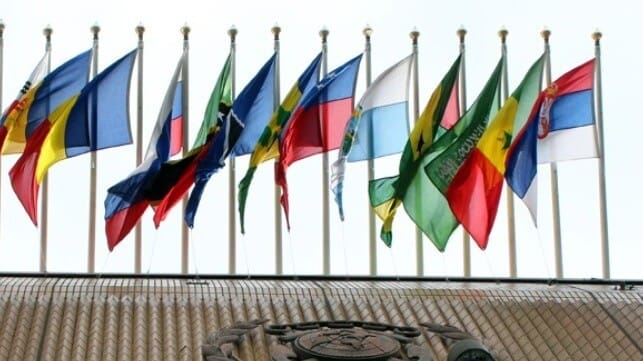
The International Maritime Organization (IMO) has moved to seal a regulatory gap that has enabled the rise of false flagging in the shipping industry, enacting new guidelines that will determine how ships are registered.
In recent years, the shipping industry has witnessed a significant surge in the number of ships flying a false flag, with Russia’s shadow fleet tankers being the main culprits. The shadow fleet employs many regulatory loopholes in order to circumvent sanctions on Russian crude oil, and one of the recently-adopted techniques is the falsification of flag registry status.
According to the IMO, the number of ships flying a false flag has increased substantially over the period from April 2025 to April this year, with 529 ships falsely flying the flag of a country. During the period, nearly 40 member states had seen cases of their flags being fraudulently used without their knowledge or consent.
To deal with the rising problem and to streamline ship registration, the IMO’s Legal Committee has approved a new set of guidelines that are aimed at improving transparency and due diligence. The guidelines are intended to close a key regulatory gap, considering that currently there is no binding international framework to regulate the registration of ships.
The guidelines, which were approved during the just-concluded 113th session of the committee, will henceforth assist new and existing flag state ship registries in the process of registering of ships. Specifically, they will provide registries with practical measures to strengthen verification and due diligence, ensure accurate ownership records, and improve oversight of registration procedures.
“This is a welcome step towards ensuring due diligence in ship registration systems for the benefit of safety, protection of the marine environment and the well-being of seafarers, essential for the safety and security of international shipping. The guidelines will also aid in eliminating cases of fraudulent registration,” said Arsenio Dominguez, IMO Secretary-General.

that matters most
Get the latest maritime news delivered to your inbox daily.
In November last year, the Centre for Research on Energy and Clean Air (CREA) revealed that between January and September 2025, it was established that a total of 113 shadow vessels sailed under a false flag. The net effect of their activities enabled the transport of 11 million tonnes of oil valued at $5.4 billion.
The IMO reckons that African flags are the most notorious when it comes to false flags, accounting for more than half of all reported cases. Regulatory gaps including weak oversight, simplified procedures, lower fees and lighter compliance burdens have given rise to the use of false flags of countries like Malawi, Benin, The Gambia, Comoros, Guinea, Sierra Leone among others.
