


Execution Phase for Conversion of PSV to Ammonia Set to Begin
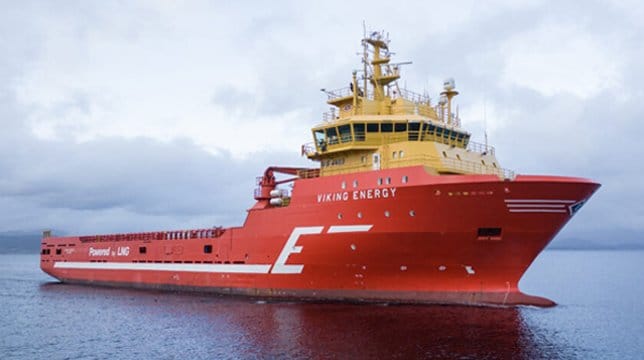
After several years of planning and development, the Apollo project is set to go into execution this spring, starting the conversion of an in-service platform supply vessel to ammonia-fueled propulsion. The vessel’s owners, Eidesvik Offshore, signed the agreement with Halsnøy Dokk, and it will be completed by fall, making the vessel the first offshore vessel in commercial service converted to be ammonia-powered.
The ship, Viking Energy, which was built in 2003, is 2,886 dwt / 5,073 gross tons and has been in active service in the North Sea under contract to Equinor. The current contract with Equinor runs through April 2030. The ship is 95 meters (312 feet) in length and designed for a crew of 24.
The Apollo project was announced in August 2024, with the order for the ammonia engine and fuel gas supply system placed with Wärtsilä Marine. Breeze Ship Design was contracted for the ship design services, while Equinor provided financial backing for the conversion. The retrofit is part of the EU-sponsored project led by Maritime Clean Tech as a demonstration of the technology.
The companies highlight that Viking Energy is no stranger to the record books, having previously made history as the first LNG-powered offshore vessel. Then, in 2016, it underwent a further conversion to the first-ever hybrid with a DNV “Battery Power” notation.
“Ammonia?fuel technology is ready, and we’re excited to bring that capability onboard Viking Energy,” says Stefan Nysjö, Vice President of Power Supply, Wärtsilä Marine. “It’s been extremely rewarding to work closely with our partners to apply a fully integrated ammonia solution – combining engine technology, fuel supply, and safety systems – to an existing vessel. This project marks an important milestone in supporting the maritime industry’s journey towards zero?emission operations.”
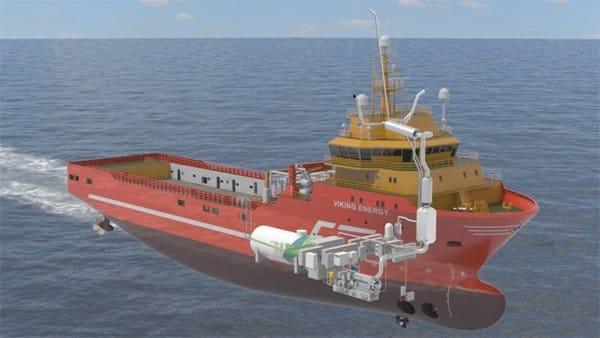
Rendering of the ammonia-fuel system for Viking Energy (Breeze Ship Design)
Work will begin with prefabrication of steel and piping systems in spring 2026. The scope of the project includes major structural modifications, installation and integration of a new ammonia dual-fuel engine, ammonia tank, and fuel systems, and technical upgrades required for safe operation. Testing and commissioning are being conducted following the completion of the conversion.
The design package recently received a preliminary assessment from the Norwegian Maritime Authority. Viking Energy will be equipped with a Wärtsilä 25 dual-fuel engine capable of operating on ammonia and marine gas oil.

that matters most
Get the latest maritime news delivered to your inbox daily.
Currently, there are only three ships in the world operating with ammonia as their fuel system. Fortescue acquired an offshore vessel in 2022 and launched it in 2024 as the world’s first ammonia-fueled ship for demonstrations and testing. Since then, two tugs have gone into service operating on ammonia, while more than 40 ammonia-ready ships are currently on order. The major engine manufacturers report strong progress and are shipping the first ammonia-fueled engines and systems for installation.
Eidesvik Offshore reports that once the conversion is completed, Viking Energy will have the potential to reduce greenhouse gas emissions by 70 percent or more. The Apollo project was designed to address technical integration, operational procedures, and the regulatory frameworks required for the adoption of ammonia as a maritime fuel. It is one of many projects underway contributing to the development of ammonia as an alternative maritime fuel.
