


Danish Archaeologists Uncover Largest Medieval Sailing Cog Ever Found
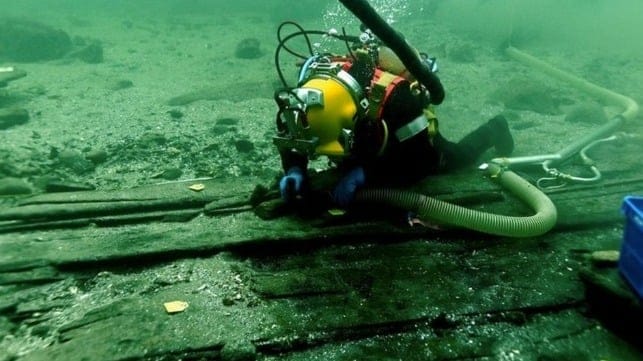
A team of archaeologists in Denmark have discovered the largest medieval European cargo ship ever found, according to the Viking Ship Museum.
The team found the wreck on the bottom of the Oresund while conducting site investigations for the construction of Lynetteholm, the controversial manmade island being built just off central Copenhagen. The new 270-acre land feature is both a harbor protection feature to defend against storm surge and a new urban development district.
During examination of the seabed between Amager and Saltholm - near the Oresund Bridge's western tunnel - the team from the Viking Ship Museum stumbled upon an extraordinary find: the largest "cog" ever discovered. It is about 100 feet long by 30 feet wide, and it dates back to the early 1400s. No cargo was found, but there were plenty of personal effects from the crew on site.
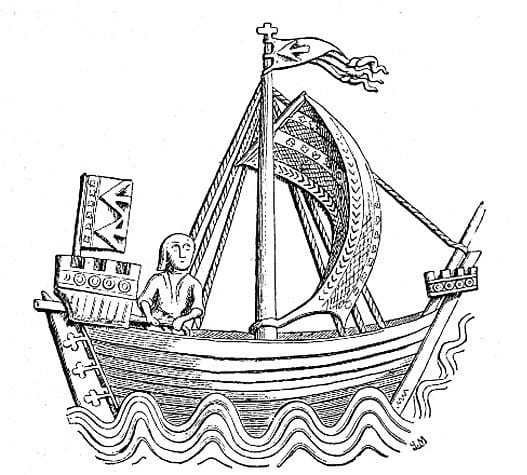
The medieval cog: Period illustration of a small cog from Stralsund, circa 1329 (Vrak)
The vessel, which the team named Svaelget 2 after the name of the channel, would have had a deadweight of about 300 tonnes. The high cargo capacity suggests a long-distance, large-volume route in the era's rapidly-expanding maritime trade network, the museum said.
"It is clear evidence that everyday goods were traded. Shipbuilders went as big as possible to transport bulky cargo – salt, timber, bricks or basic food items," excavation leader Otto Uldum said. "We now know, undeniably, that cogs could be this large – that the ship type could be pushed to this extreme."
The ship's planking came from Poland and the ribs from the Netherlands, the researchers found. Since Dutch shipwrights had expertise in building cogs, it is likely that Polish planks were shipped to a yard in the Netherlands for construction. Tree rings in the timber dated the ship to about 1410.
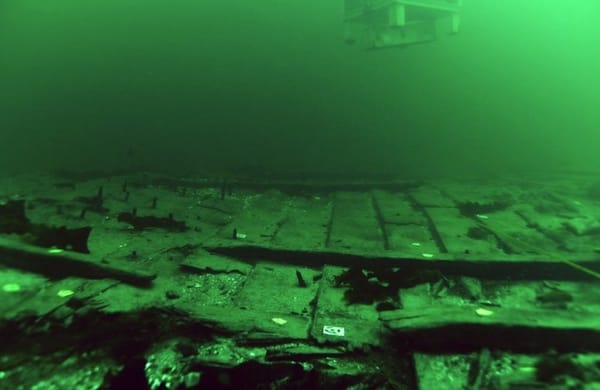
Viking Ship Museum / press handout

that matters most
Get the latest maritime news delivered to your inbox daily.
A large vessel like this one likely would have been built for moving cargo between modern-day Holland and ports in the Baltic, the museum said. It was a challenging voyage for a small wooden sailing vessel, requiring transit through the often-rough North Sea and the Skagerrak.
The degree of preservation of the wreck is extraordinary, the museum said, and even some traces of the rigging are still intact. Parts of a raised deckhouse on the stern are also still in evidence - the first time ever that this kind of structure has been found intact at the wreck site of a cog. The cog's rudimentary deckhouse was an advance over previous Viking Age designs that exposed the crew to the weather at all times, Uldum said. The vessel was also fitted with an advanced galley for the era, equipped with a brick hearth for cooking hot food under way.
