


Court Denies Motion for Injunction of BOEM’s Review of Maryland COP
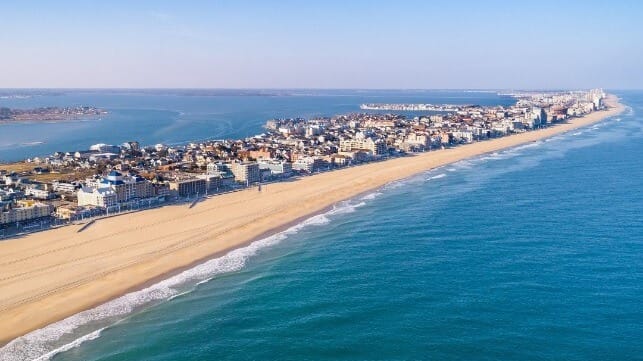
A federal court judge in Maryland has denied a request by offshore wind developer US Wind for a preliminary injunction against the federal government in its ongoing fight to save its planned offshore wind project off Ocean City, Maryland. It is the latest twist in the ongoing court battle over Maryland’s first offshore wind project and the broader battle against the Trump administration’s efforts to derail the industry and revoke existing permits.
US Wind, which is a partnership between investment firm Apollo Global Management and Italy’s Renexia, is planning a large wind farm off the Maryland coast that would include 114 wind turbines. The company completed its federal-level reviews, receiving approval of its Construction and Operation Plan in December 2024, but has faced local opposition and the new administration’s declared goal to end offshore wind energy.
The company has found itself caught up in multiple legal battles, including a jurisdictional dispute between the federal and state environmental protection authorities. Ocean City, Maryland, has also sued the federal government, challenging the approval of the wind farm’s plans.
Federal Judge Stephanie Gallagher ruled on Monday, December 15, that US Wind’s order seeking a preliminary injunction against the federal government from taking action was premature. She denied the injunction, saying the company has not yet suffered irreparable harm because the federal government has only discussed but not yet taken any actions against the project.
The judge said US Wind must wait to see “if its fears come to pass,” and the federal government rescinds the approval of the COP or seeks to modify its actions. The judge found that the company was premature because the Bureau of Ocean Energy Management had not denied services or formally revoked the COP approval. The company has argued that the administration’s hostility toward offshore wind energy was clear and that it expects the action that would endanger the project and its investments.
The company has understandably paused its efforts, the court says, because US Wind fears it would lose the investments required to proceed with the next steps, such as the Facility Design Report. While the court acknowledges that US Wind perceived the federal government filing as indicating hostility to wind projects generally and an intent to revoke the COP, the court notes the government “has not yet begun its reevaluation of this project.”
The Department of Justice has said in previous court filings that it was the government intends to reconsider the approval and that it might decide to change or not to renew the permits. It argues that the Biden administration rushed the approvals and failed to properly consider the full impact of the projects.
The court, however, has rejected both sides’ efforts so far. The federal government sought to have the COP approval voluntarily withdrawn and to stay the court case from Ocean City challenging the approvals. As with other cases, DOJ argues the local cases would become meaningless if BOEM reconsidered the COP.

that matters most
Get the latest maritime news delivered to your inbox daily.
Earlier in December, the judge also denied the federal government’s motions and ordered that Ocean City’s case should proceed.
The situation becomes more complicated because in the interim, another federal court has ruled that Donald Trump’s January 2025 executive order to cancel offshore wind lease sales and review the approvals was also invalid. The executive order has been a key part of the DOJ and the other agencies’ arguments to stop the local cases and to reconsider all the approvals issues by the Biden administration.
