


Canada Calls for Regulatory Oversight in Final Report on Titan Implosion
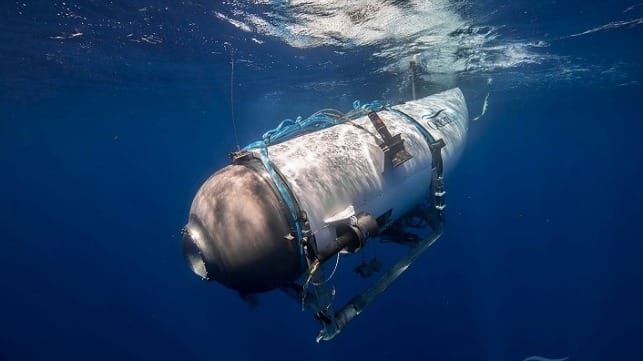
Marine investigators in Canada issued their final report on the catastrophic implosion of the Titan submersible in 2023, and in addition to known issues about the vessel and its operators, called for better regulatory oversight. They contend the disaster was a tragedy waiting to happen due to the failures of OceanGate but also cited the broader gap in the international oversight of submersibles.
The Transportation Safety Board of Canada (TSB) details the implosion of the Titan on June 18, 2023, while on a dive expedition to the Titanic wreck. It cites the well-known issues with the design and construction of Titan and the organizational structure of OceanGate. It cites progressive failures, saying Titan accumulated damage during each dive, while OceanGate’s risk management was faulty, and it failed to identify and mitigate key risks associated with the operation.
The report contends that OceanGate, which was founded by Stockton Rush in 2009, prioritized “innovation” over safety, while its primary use was a “trial-and-error approach” in its operations. It said the result was several situations during dives in which things had gone wrong.
The report goes on to describe OceanGate as literally being a one-man affair owing to the fact that Rush, the company’s CEO and Titan’s pilot, who also perished in the disaster, was integrated into all aspects of the company, including human resources, finance, operations, and submersible design and construction. In all facets, OceanGate was largely a reflection of his idea, and he was highly motivated to manifest it into a successful entrepreneurial venture.
On June 18, 2023, the Titan imploded while on a dive mission to the wreck of the Titanic, the famed ocean liner that sank in 1912. Having made previous dives to the Titanic in 2021 and 2022, the Titan was heading to the wreck, a descent of approximately 3,800 meters. Onboard during the mission were five people, all of whom perished.
The carbon fiber and titanium submersible was originally constructed in 2018. A year later, the carbon fiber cylinder that formed the midsection of the pressure hull was found to be damaged, prompting OceanGate to begin reconstructing the submersible in 2020, completing it in 2021.
In the doomed mission of 2023, the Canadian cargo vessel Polar Prince played a central role. The 69-meter (226-foot) ship that was built in 1959 and operated by Horizon Maritime Services, towed the Titan from St. John’s, Newfoundland and Labrador, to the dive location and provided a base for OceanGate’s operations at sea. The fact that a Canadian ship actively participated in the occurrence gave TSB the jurisdiction to investigate the disaster.
In its investigation, TSB was able to establish that the Titan’s carbon fiber hull failed progressively, with damage accumulating during each dive. It further highlights that the hull’s as-built properties were never validated to ensure they met the theoretical values used in the design process, and the construction and testing of the Titan did not follow standard engineering practices. As a result, OceanGate did not know for how long the pressure hull would remain safe when used repeatedly for dives to the depth of the Titanic.
Investigators also established that the reduced compressive strength of the Titan’s carbon fibre cylinder, as well as defects that were potentially introduced during manufacturing, operations, storage, and transport of the Titan, likely led the cylinder to fail progressively with damage accumulating during each dive cycle until it imploded. Also, while OceanGate had developed the strain monitoring system to provide data for post-dive analysis to identify potential problems with the pressure hull that could lead to failure on a subsequent dive, the company’s analysis of the strain data was inconsistent and did not result in the pressure hull being removed from service before its failure.
The report shows that in April and May of 2021, OceanGate made 11 dives with the Titan in the U.S. In June 2021, the submersible was transported to Canada, where it began operations using St. John’s as its home port. From June 30, 2021, until the end of the operating season in 2022, the Titan made 23 dives, 17 of which were at the Titanic wreck site.
While the report highlights the failures of OceanGate and its CEO, it also points to the lack of regulations and supervision. Transport Canada, the regulator for the maritime industry in Canada, has specifically been cited for failure in its oversight role. Despite being aware that the Titan was operating from St. John’s with the support of a Canadian vessel, Transport Canada did not undertake an oversight of the Titan. In essence, the lack of regulatory oversight to identify safety deficiencies resulted in increased risk to those involved in Titan’s operations.
TSB added that Transport Canada’s oversight activities were further limited by a lack of formal information sharing among federal organizations. It highlights that OceanGate had numerous interactions with several government departments. However, information gathered by these organizations was not shared with Transport Canada, leaving it without a complete picture of the operation and the risks it posed.
“When it came to the Titan, critical information existed across multiple federal government organizations, but no one was responsible for connecting the dots. Without a complete picture of the operation, the Titan continued to operate in Canada without regulatory oversight,” said Yoan Marier, TSB Chair.
TSB also highlights that the International Maritime Organization guidelines regarding the design and operation of submersibles are non-binding to member states. It says this results in inconsistent oversight around the world.

that matters most
Get the latest maritime news delivered to your inbox daily.
Following its investigations, the TSB has issued a report with six recommendations centering on the need to address oversight gaps, standards for submersible craft, and safety management for multi-party vessel operations.
TSB is calling for criteria and priorities for risk-based oversight of vessels such as the Titan and others not registered or captured by port state control processes. It also cites the need for information sharing in Canada and calls on Canadian officials to advocate to the IMO to incorporate its guidance into international conventions or codes. Finally, all human-occupied submersibles that are registered in Canada, operating with a Canadian support ship, or operating in Canadian waters should be required to comply with the IMO’s safety code.
