


Burundi’s Main Port Struggles to Recover From Flooding
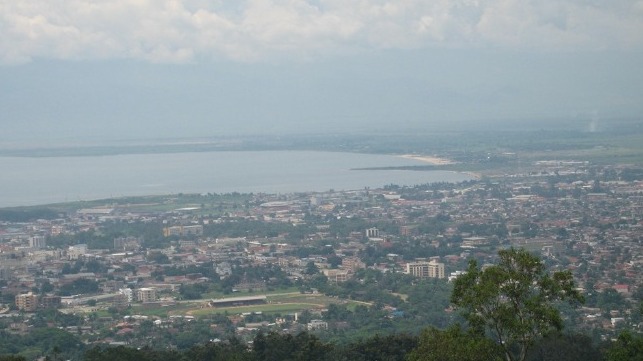
The landlocked East African nation of Burundi is racing against time to rebuild its main port facility that was damaged by flood waters in late 2023 and early 2024 - an indication of climate change's impact on critical infrastructure, particularly in poor countries, according to the UN.
Burundi, with a population of 13.7 million, ranks as the second-poorest country in the world with nine out of 10 people living below the poverty line. It depends on the Port of Bujumbura for over 80 percent of its imports and exports.
The port, which is located at the northern tip of Lake Tanganyika, has been a vital inland water transport system linking the country to Tanzania, Zambia and the wider East African trade network. Cargo moves across the lake to rail and road corridors that stretch to seaports on the Indian Ocean. Built in 1959 and designed to have an annual capacity of 200,000 tonnes, the port was expanded in the early 1990s, increasing its capacity to 500,000 tonnes.
According to the United Nations Development Program (UNDP), Burundi is now feeling the effects of climate change: the Port of Bujumbura was ravaged after unusually intense rainfall caused Lake Tanganyika’s water levels to rise sharply. The floodwaters destroyed homes, roads and infrastructure, with entire sections of the port and adjacent facilities being inundated.
With more than 240,000 people across the country affected and over 48,000 displaced, total losses emanating from the flooding was estimated at $210 million. Transport systems, including the Port of Bujumbura, bore the brunt of the flooding.
The floods unleashed their wrath just months after Burundi and international development partners had unveiled a $93 million project to renovate and modernize the port as part of a broader regional corridor across Lake Tanganyika. The project was to be financed by the Africa Development Bank alongside the European Union, and was aimed at supporting better regional connectivity and strengthening regional trade within the countries that border Lake Tanganyika.
Following the devastation of the floods, it is now emerging that rebuilding the Port of Bujumbura's infrastructure to previous standards is no longer sufficient. Specifically, a detailed engineering study commissioned by UNDP and the EU contends that future facilities must be anchored on resilience against evolving climate and hydrological risks.
The study outlines how existing infrastructure can be reinforced, drainage systems can be redesigned to better manage water flows, and future expansions can be planned to withstand conditions that are uncertain but increasingly severe.

that matters most
Get the latest maritime news delivered to your inbox daily.
“The Port of Bujumbura is no longer being viewed simply as infrastructure to be repaired or expanded. It is being reimagined as a system that must function under stress, absorb shocks, and continue to serve the country’s economy even in adverse conditions,” notes an UNDP analysis.
For Burundi, the stakes are high considering that as a landlocked country, disruptions to the Port of Bujumbura ripple across the entire economy - affecting prices, supply chains and livelihoods. For that reason, strengthening the resilience of the port is at the heart of safeguarding national stability and regional connectivity.
