

Battle of the Beaches for the Cruise Lines
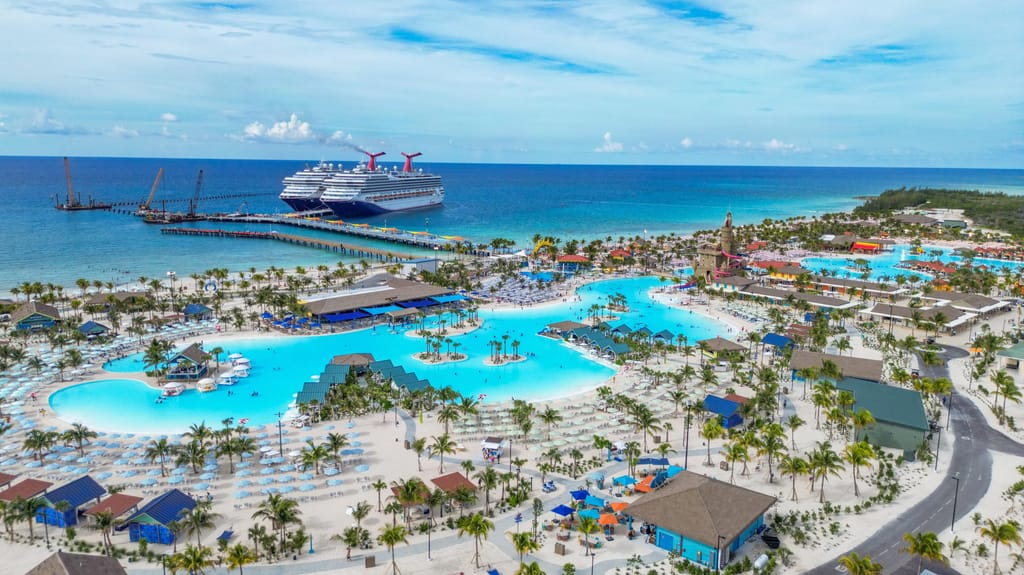
Cruise lines are intensifying their focus on their private ports. While the beach destinations have long been popular with passengers, the lines are increasing their investments not only to expand their offerings but also to differentiate their islands as they seek to grow their earning potential.
The concept of the private islands got its start in the 1970s. Then marketing executive at Norwegian Cruise Line, Bruce Nierenberg, recalls the origins as coming from a popular beach party excursion the line offered on Grand Cayman during its western Caribbean cruises. He said it was the top-rated excursion and inspired NCL to acquire rights to an island in the Berry Island chain of the Bahamas.
Started with a Beach Party
The private island beach party was launched in 1977 on 3- and 4-day cruises Norwegian called Bahamarama from Miami to Nassau and the island. Nierenberg recalls it was a “Robinson Crusoe” style experience, and they were using lifeboats to land the passengers. The line also acquired surplus World War II landing crafts, rebuilt and rechristened the Bahamarama Mamas.
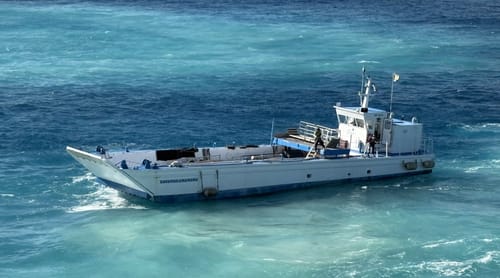
NCL's first "tenders" for passengers with a bow ramp, the Bahamarama Mama, is still in service at Great Stirrup Cay (Allan Jordan)
“Private destinations have become a major factor in how travelers choose a cruise today,” says Micah Balingit, Marketing Specialist at online travel agency Cruise Direct. He notes that travelers frequently filter itineraries that include a private island stop on their site. Balingit reports the private islands “have become some of the most sought-after stops in the industry.”
Based on the popularity of the stop at Great Stirrup Cay, the port was added to more of Norwegian’s itineraries. Other cruise lines followed. Princess Cruises launched a beach party in the Grenadines and, in 1992, acquired rights to a Bahamas destination that became Princess Cays. Royal Caribbean International introduced Labadee in Haiti in 1988 and followed with what became Coco Cay in the Bahamas in 1990. Holland America Line acquired the rights to Little San Salvador, which Norwegian had been using, and in 1997 introduced Half Moon Cay.
The upgrades of the islands started with Disney Cruise Line, which was the first to incorporate a dock into the island for its cruise ship, doing away with the challenges of tendering. While the lines added new activities, the basic concept of the islands remained until 2019, when Royal Caribbean extensively renovated Coco Cay at a cost of $250 million and renamed it Perfect Day CocoCay. It added waterslides, a balloon ride, a zip line, and the Caribbean's largest wave pool, setting the stage for the battle of the beaches.
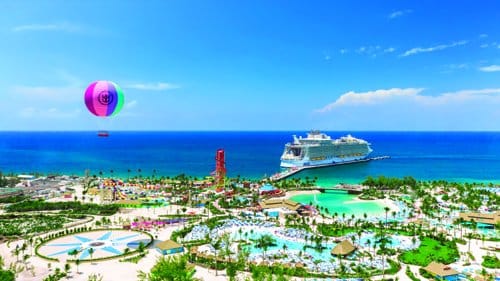
Royal Caribbean started the trend by developing an amusement park on its private island (RCI)
New Ports and Upgrades
“Private islands are the clearest example right now” of where the cruise lines are spending their money, says Nick Bonatsakis, the founder of the ship-tracking site Cruise Kick. He notes that they get the highest guest satisfaction scores of any stop on a trip as they offer an easy beach day with no hassle. For the cruise lines, he notes the private ports mean they “keep almost all the money guests spend that day.”
Carnival Cruise Line, which for years had preferred to keep its ships at sea for a day cruising, invested nearly $600 million to develop Celebration Key on Grand Bahama. Opened in July 2025, it handled 2.4 million passengers in its first year. Carnival recently completed a further $100 million investment in a pier extension, permitting it to dock up to four ships a day at Celebration Key. Carnival reported the extended pier would add roughly 200 more ship calls and 700,000 passengers annually, taking Celebration Key toward a daily capacity of 13,000 passengers and 3.5 million visitors annually. The corporation is also adding port calls at the private destination to Princess Cruises and AIDA’s port rotation.
Carnival Corporation highlights that it now has seven exclusive destinations in the Caribbean. It recently completed upgrades at Half Moon Cay, launching RelaxAway on a separate part of the island with a private pier for Carnival Cruise Line. In Honduras, Carnival Cruise Line upgraded and renamed its destination Isla Tropicale with a $93 million investment, including a pool, along with a dock that handles Excel and Vista class ships. It opened as Mahogany Bay in 2009, and Carnival says it has handled more than nine million visitors.
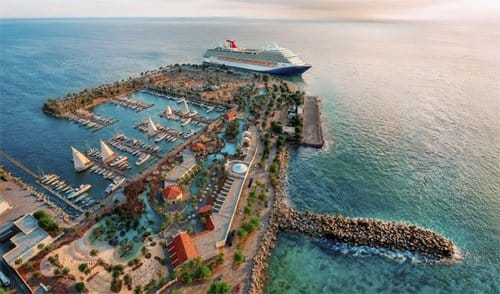
Rendering of Carnival's planned development for Baja California (CCL)
Next up for Carnival is its Ensenada Bay Village, a new shoreside destination planned for Baja California, Mexico, which will also become the industry’s first private destination on the North American West Coast. The company is investing over $26 million as a shared commitment by the project partners to develop a destination with attractions such as zip lines, river rides, a scenic boat ride, artisan crafts, and culinary, relaxation and wellness experiences, including thermal springs, an adult pool area, and spa offerings. Designed to handle 9,000 visitors a day, it is expected to open in 2028.
Norwegian Cruise Line is anticipating the opening of its Great Tides Waterpark at Great Stirrup Cay in September as part of a $150 million investment in the destination. It also added its first dock for the cruise ships. It is expanding its private cabanas, adding new food trucks, a pool, and the first water coasters.
MSC Cruises joined the beach battle, opening Ocean Cay in late 2019. In addition to the industry-standard features of beaches and sports attractions, it is unique as it hosts the MSC Marine Reserve. MSC currently has an expansion and upgrade project underway that will expand the pier to allow two ships to dock simultaneously, new restaurants, more beach area, and adults-only areas. The upgrades are due to be completed by late 2027, and MSC is also developing a newly-created nearby island, which it calls Sandy Cay, as a luxury destination due to launch in 2028 for its Yacht Club passengers and Explora Journeys.
More Revenue Opportunities
The cruise lines are seeking to further differentiate their destinations, with Bonatsakis noting that “the gap is widening.” Royal Caribbean is leaning into paid thrills, notes Bonatsakis, and pricier zones, a model Norwegian Cruise Line is following. Others, like Half Moon Cay, “are more of a quiet, classic beach day,” while Disney developed a second island and increased the family premium experience.
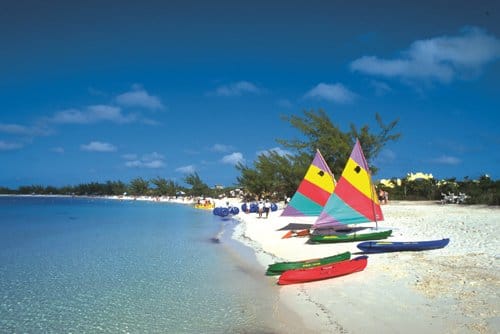
Holland America's Half Moon Cay remains one of the more relaxed beach experiences without the amusements (HAL)
For the passengers, a day at the islands can be pricey. Sebastian Garrido, digital marketing manager at Vibe Adventures, highlights that Royal Caribbean has a base charge of $56 for its Hideaway Beach, $100 for the waterpark, and cabanas ranging from $1,000 to $10,000 for a family cabana. Norwegian has excursions such as a zip line at $110 and swim-with-pigs at above $200.
“When a stop lets you raise prices and still fill the ship, that’s real demand,” says Bonatsakis. The cruise lines have also started “double dip” itineraries visiting two of their private destinations on a cruise or cruises just to the private islands.

that matters most
Get the latest maritime news delivered to your inbox daily.
Royal Caribbean is expanding the offering to its premium brand, Celebrity Cruises, and taking the concept beyond the Caribbean. In addition to a beach club in the Bahamas, Royal Caribbean opened a beach club on Santorini in Greece. In late 2027, it plans to open Royal Beach Club Lelepa, in the southwestern Pacific island nation of Vanuatu, which the line says will raise the bar on vacations in the South Pacific. However, it ran into environmental protests for a planned Perfect Day Mexico destination on Mexico’s east coast near Costa Maya in the Caribbean. The company says it is looking to relocate the planned development.
The popularity of these destinations builds on the controlled experience of a cruise and provides the lines with new opportunities to differentiate their products. The strong financial contribution to the lines and the ability to manage concerns such as port overcrowding are likely to continue to drive these investments and see the application of private ports continue to expand.