


Australian Dockers Push Back on Automation and AI on the Waterfront
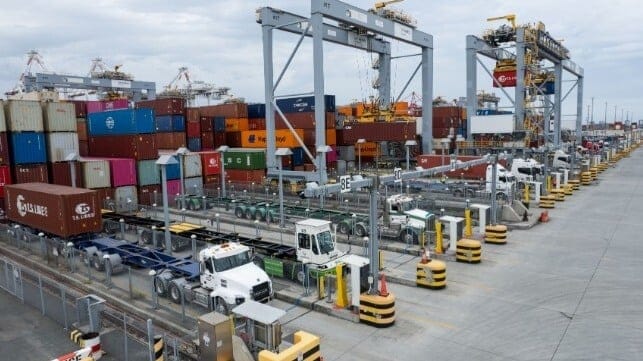
Docker jobs throughout the developed world are a natural target for automation, and longshore unions put the fight against automated cranes, RTGs and yard vehicles at the very top of the priority list for collective bargaining. They have legitimate cause for concern: newly-built box terminals like Shanghai Yangshan or Maasvlakte II have more robots and fewer people. Now one union is reframing that longtime threat in a new way, coupling the old fear of industrial automation to the new fear of AI, which could pose a threat to white-collar jobs.
"Foreign-owned ports operator DP World is planning to replace skilled Australian workers with AI and automation — without public consent, without proper rules, and without government oversight. If they get away with it here, your job is next," the Maritime Union of Australia (MUA) argues in a new public ad campaign.
The MUA, one of the world's most vocal dockers' unions, is fighting a long-running battle against plans to roll out automated trucks at DP World's four container facilities in the country. The union says that DP World is engaged in an "AI automation program that could threaten up to a thousand jobs," about 60 percent of the docker workforce.
In a report prepared with MUA, the pro-union tax justice group CICTAR lays out a case that more automation would be worse for Australia. CICTAR says that DP World's Australian revenues have gone up since 2019, driven by rising landside charges per container lift, but the wage share of that revenue has fallen: dockers used to earn about half of all dollars that came through the gate, but they now earn about one third.
The report argues that the same thing would happen with more automation in the terminal. In CICTAR's account, there would be fewer workers, but service charges would remain the same, leaving a larger profit margin for the operator. Depreciation on the cost of the automated equipment could also lower the company's tax bill over a period of years, the report argues.
The changes may not be limited to the yard. The MUA says that DP World Australia is also testing out a new AI software program to "revolutionize employee management," using an algorithm to make dockers' work scheduling decisions - a task normally performed by administrative staff.

that matters most
Get the latest maritime news delivered to your inbox daily.
The union is calling for a 28-hour workweek with no loss of pay for members who would see their jobs put at risk by automation. It has also launched an advertising campaign calling on all Australians to push their government for controls on how AI is used in the workplace. By law, it cannot go on strike until the expiration of its current contract in 2028 - but a change in the law could give it freedom of action.
"The Australian government must make urgent changes to the Fair Work Act to allow workers a genuine voice to effectively bargain how new technologies are introduced to Australian workplaces and introduce urgent safeguards on the use of AI. The government must also explicitly support workers seeking to share the productivity benefits from AI through bargaining," CICTAR concluded in its report for the MUA.
