
New Reality of Tanker Ops: Why Onboard Blending and Cargo Control Matter
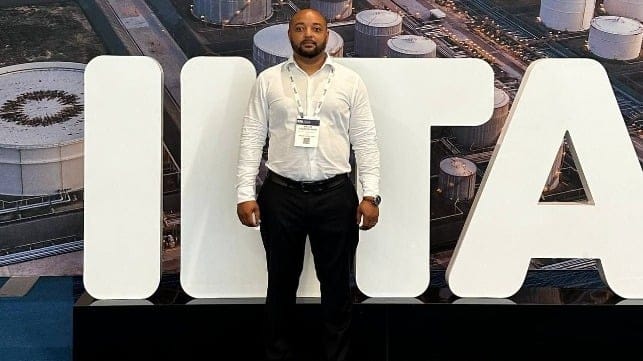
In tanker shipping, some of the most consequential operational failures do not begin with a dramatic event. They begin quietly - with a discrepancy in cargo figures, a poorly documented transfer step, an overlooked blending variable, or a ship-shore exchange that seems routine until the numbers stop aligning.
For Artur Chaykovskyy, these are not secondary details. They are exactly the points where operational discipline, technical understanding, and commercial accountability either hold together - or begin to break apart.
Over the past several years, Chaykovskyy has built a professional reputation around one of the most demanding and underappreciated corners of maritime work: the intersection of marine petroleum logistics, cargo integrity, onboard blending, terminal coordination, and loss control. In an industry that increasingly depends on operational transparency and precision, this combination of expertise is becoming far more valuable than it once was.
His career reflects a broader shift in tanker operations. It is no longer enough to move cargo safely from one port to another. Today’s marine petroleum environment demands more: accurate data, controlled blending, timely reconciliation, structured reporting, better visibility during loading, and clearer accountability between vessel, terminal, and client. Chaykovskyy’s work sits directly inside that evolving space.
A Career Built in the Operational Core of Tanker Shipping
Before moving into U.S.-based cargo operations and marine services work, Chaykovskyy spent years at sea on tanker vessels, advancing from entry-level shipboard roles to Chief Officer. That progression gave him something that cannot be simulated in an office environment: firsthand understanding of how tanker operations actually unfold under operational pressure.
It also gave him a perspective that now distinguishes his work. He does not approach cargo control, loss prevention, or blending as abstract technical topics. He understands them as part of a living operational system involving the vessel, the shore side, the cargo itself, the limitations of time, and the commercial expectations attached to every movement.
That background matters because tanker operations have become more complex than many outside the sector realize. In high-value petroleum transport, accuracy is not simply an administrative preference - it is central to trust, compliance, and commercial integrity.
Why Artur Chaykovskyy’s Expertise Stands Out
What makes Chaykovskyy unusual is not only that he understands tanker cargo operations, but that he has developed expertise across several areas that are often treated separately.
He has worked in petroleum loss control, including the identification and analysis of cargo discrepancies and the reconciliation of vessel and terminal data. He has handled terminal interface management, where clear communication and procedural accuracy often determine whether an operation remains smooth or becomes contentious. He has supported operational reporting and documentation, areas that directly influence traceability and accountability. And critically, he has developed hands-on expertise in onboard blending - one of the more technically demanding functions in marine petroleum logistics.
This range matters because modern tanker operations increasingly need professionals who can bridge multiple layers of the process rather than perform one narrow task well.
Onboard Blending: A Specialized Capability
Among the most distinctive aspects of Chaykovskyy’s work is his experience with onboard blending of petroleum products.
To outsiders, blending may sound like a simple mixing function. In reality, it is a highly controlled process that requires product understanding, proportional calculations, operational discipline, and close supervision during execution. The objective is not merely to move fuel, but in some cases to produce a required final specification while the cargo operation is underway.
That may involve using a base product and additives in defined quantities so that the final cargo meets the client’s target requirements - whether that means a higher-grade gasoline or a seasonally adjusted diesel fuel. The margin for error is small. If the ratios are wrong, if the treatment logic is off, or if operational control is weak, the consequences may affect not only the cargo but the broader commercial chain.
Chaykovskyy’s value in this area comes from the fact that he understands both the operational mechanics and the practical implications. He knows how blending is discussed onboard, how plans are translated into action, how vessel personnel and cargo-side representatives must coordinate, and how decisions made during loading influence the final outcome.
That kind of expertise remains relatively rare - and increasingly important.
Cargo Control Is No Longer a Secondary Function
For much of shipping history, cargo discrepancies were often treated as an accepted operational nuisance. Today, that mindset is becoming much harder to sustain.
Clients expect more visibility. Service providers are under greater pressure to show reliable documentation. Commercial parties are less willing to tolerate unexplained variances. And in petroleum logistics, where volumes, specifications, and timing all matter, even small differences can create outsized consequences.
This is one reason why Chaykovskyy’s work in loss control and reconciliation is especially relevant. These functions may appear technical, but they influence broader questions of risk, trust, and financial exposure. Knowing how discrepancies arise in actual operations - not just how they appear in reports - allows for better controls and more defensible processes.
It also helps explain why specialists like Chaykovskyy are becoming more central to the industry. They do not simply document what happened after the fact. They help shape the operational conditions under which errors are less likely to occur in the first place.
From Field Experience to Structured Systems
Another important dimension of Chaykovskyy’s work is his involvement in practical digital tools for marine operations.
In many tanker-related environments, operational information is still fragmented across notes, spreadsheets, disconnected files, and individual memory. That creates obvious inefficiencies, but more importantly, it weakens consistency and makes later verification more difficult.
Chaykovskyy has contributed to the development of specialized operational tools designed to address exactly these gaps. These include systems for cargo control, loading-rate monitoring, meeting capture, event logging, vessel tracking, operational dashboards, loss monitoring, and onboard blending support.
What makes these tools notable is that they were built around actual field workflows. They are not generic software abstractions. They reflect how marine petroleum operations are really documented, monitored, and coordinated. That is precisely why field-based specialists are often more valuable in designing such systems than general software teams working without operational context.
In Chaykovskyy’s case, the digital layer of his work reinforces rather than replaces his core expertise. It shows how practical tanker knowledge can be translated into systems that support visibility, accountability, and standardization across operations.
A Broader Industry Shift
Artur Chaykovskyy’s career is not only a personal professional story. It also reflects a broader industry movement.
Tanker shipping is becoming more exacting in the way it manages product quality, cargo accountability, reporting discipline, and operational visibility. The sector is still deeply practical, but it is no longer enough to rely on experience alone if that experience is not also being structured, documented, and translated into repeatable systems.
Professionals who can operate at that intersection - between shipboard reality, technical procedure, cargo control, and modern workflow design - are becoming increasingly valuable. Chaykovskyy is part of that emerging profile.
His work suggests that the future of marine petroleum logistics will not be shaped only by bigger systems or better sensors, but by specialists who understand where risk actually lives in daily operations - and who know how to reduce it.
Looking Ahead
As tanker operations continue to evolve, the industry will likely place greater value on specialists who can do what Artur Chaykovskyy has increasingly come to represent: connect cargo movement, cargo integrity, blending precision, operational control, and structured decision-making into a single professional discipline.
In high-value marine petroleum environments, that is no longer a narrow skill set. It is becoming an essential one.
Veronika Furs is a business development manager at PRNews.io.
This article is sponsored by SeaStar Global Marine Group.
The opinions expressed herein are the author's and not necessarily those of The Maritime Executive.
