
Op-Ed: Safety Oversight Must Not be Pushed Out of Sight
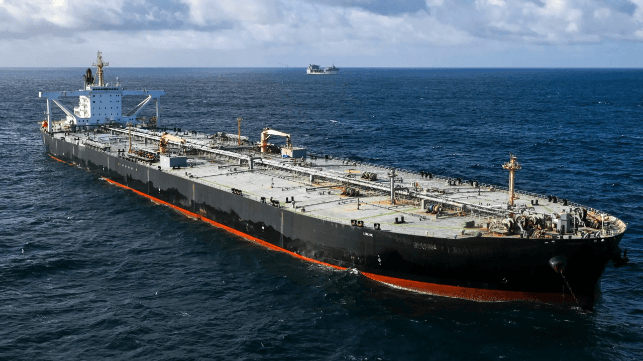
Shipping is being pulled in several directions at once, and the consequences are being felt not in theory but in the daily operation of ships. Sanctions are reshaping parts of the fleet, strong freight markets are keeping older vessels in service for longer, and owners are expected to manage increasingly complex regulation while still keeping cargo moving, crews protected and vessels available for trade. In these conditions, technical oversight becomes more important, not less, because the pressures that build around a vessel can quickly become pressures on maintenance, survey discipline and operational judgement.
The role of classification has always been rooted in the protection of life, assets and the marine environment. That foundation has not changed, but the circumstances in which class societies now apply it have become more demanding. Owners are dealing with overlapping requirements from flag states, port states, charterers, insurers, sanctions authorities and environmental regulation, often while trying to make investment decisions about technologies whose long-term commercial and operational viability is still developing. Class cannot remove that complexity, and it should not attempt to make compliance appear easier than it is, but it can help owners understand what the rules require and how they can be met safely.
That distinction matters. There is a clear difference between explaining a route to compliance and weakening a requirement, just as there is a clear difference between technical guidance and consultancy that compromises independence. If a vessel has a defect, a delayed repair or a condition of class, the answer cannot be to treat the matter as a commercial inconvenience. The answer may be immediate rectification, an equivalent safety measure or a limited and justified extension to the next port. Each case requires judgement, but that judgement has to be technical, independent and anchored in the standard itself.
This is particularly important for smaller owners and operators, many of whom do not have large technical teams ashore and may be trying to interpret complex requirements while also dealing with port schedules, crew changes, repair availability and charter commitments. In those circumstances, class has a useful and legitimate role in helping an owner understand the safest practical route forward. That does not mean becoming lenient, and it certainly does not mean finding a way around the rules. It means applying technical knowledge in a manner that keeps the vessel compliant, keeps the crew safe and preserves the integrity of the classification process.
The sanctioned fleet raises a more difficult question, but it is one the industry should be prepared to discuss with honesty.
Sanctions are set by governments and competent authorities, and classification societies must comply with the rules that apply to them. IRClass has taken difficult decisions in line with its sanctions policy, including releasing tonnage where required. However, the wider safety consequence also has to be recognized: a ship that loses established class does not necessarily stop trading. It may move to a less transparent flag, a weaker technical regime or a part of the market where accountability is much harder to see. That does not remove the risk from the industry; it may simply move the risk further out of sight.
This should concern everyone involved in maritime safety. The purpose of sanctions is not for class societies to determine, but credible technical oversight has a direct bearing on the safety of seafarers, ports, coastal states and the marine environment. If vessels continue operating without recognized class oversight, the industry may lose visibility over precisely the ships that need the closest scrutiny.
In that sense, the question is not whether sanctions should be respected; they must be. The question is whether the safety framework around ships can be preserved in a way that prevents risk from drifting into parts of the market where standards are less visible and harder to enforce.
The concern is sharpened by the age profile of parts of the world fleet. Strong markets can encourage ships to remain in service beyond the point at which they might otherwise have been recycled, and while older vessels can operate safely when they are properly maintained and surveyed, age leaves less room for weak maintenance, delayed repairs or poor technical control. Once a vessel moves beyond 20 years, condition and survey discipline become even more important. Class societies therefore have to be prepared to support owners where safe compliance is possible, but also to refuse vessels, release vessels or insist on corrective action where standards are not being maintained.
The same principle will apply as shipping moves into new fuels, new technologies and more ambitious shipbuilding programmes. Innovation is necessary, but it will not reduce the need for scrutiny. Methanol, ammonia, hydrogen, digital systems and future energy solutions all have potential, but they also require careful technical assessment and a realistic understanding of operational risk. The industry should remain open to new options, but it should not allow enthusiasm to take the place of evidence, nor should it assume that new technology automatically reduces the need for strong independent oversight.

that matters most
Get the latest maritime news delivered to your inbox daily.
Class is most valuable when conditions are difficult. It has to remain independent, technically rigorous and willing to take decisions that may not always be commercially convenient, while also remaining close enough to operational reality to help owners meet their obligations properly. When ships are under pressure, when markets encourage older tonnage to keep trading and when political decisions affect where vessels can be classed, the answer cannot be weaker oversight or less visibility. Strong classification is one of the safeguards that allows shipping to keep trading without losing sight of safety.
Mr. Arun Sharma is Executive Chairman of the Indian Register of Shipping.
The opinions expressed herein are the author's and not necessarily those of The Maritime Executive.