
Op-Ed: How the Industry is Building S-100 Readiness
The maritime sector is approaching a significant transition with the introduction of the S-100 framework. As a universal hydrographic data framework developed by the International Hydrographic Organization (IHO), S-100 will provide the foundation for the next generation of digital navigation services and technologies, including Electronic Chart Display and Information Systems (ECDIS).
As part of the transition, S-101 will gradually succeed S-57 as the primary Electronic Navigational Chart (ENC) standard, with S-57 continuing to be supported for the foreseeable future. Additional layers, displaying granular, dynamic navigational data, will be overlaid on the S-101 base layer to provide a more complete picture of the surrounding marine environment.
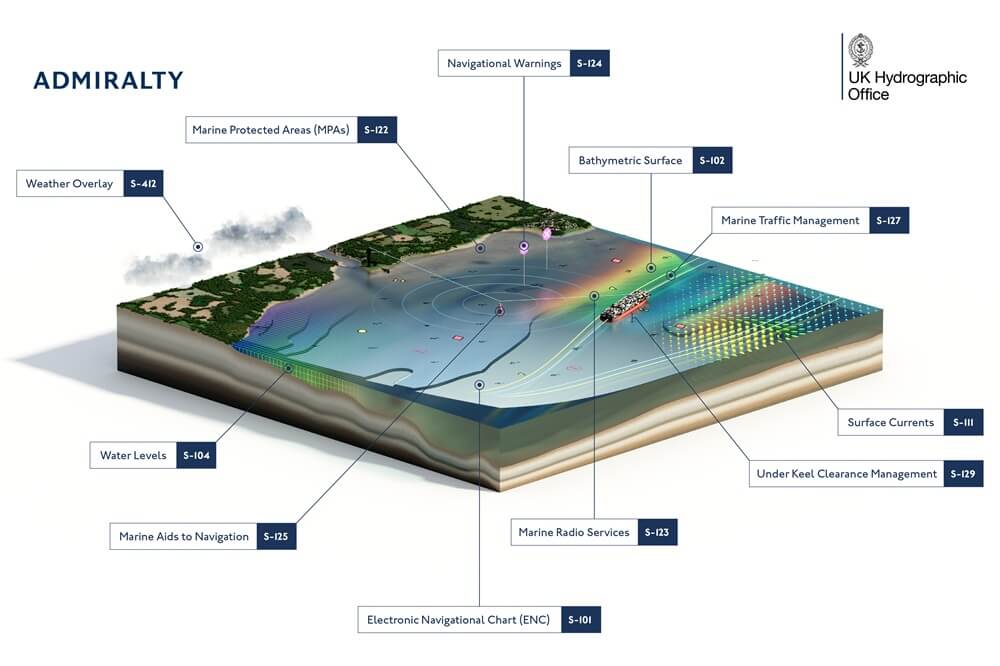
S-100 systems will be capable of displaying interoperable layers, bringing multiple data sources into a single view to improve clarity and navigational confidence
By providing more precise, accurate, and timely navigational data, S-100 offers considerable opportunities to enhance decision-making on the bridge, unlocking new efficiencies and improving safety. However, making the most of this potential and ensuring a successful transition requires building preparedness among all maritime stakeholders.
Why preparedness matters
Industry expectations suggest that type-approved S-100 ECDIS could become commercially available around 2028, although timelines remain dependent on standards, testing and certification processes. Importantly, these systems will be ‘dual-fuel’, meaning they can display and use both S-100 and existing S-57 data. From 1st January 2029, all newly installed or retrofitted ECDIS will need to be S-100 compatible.
These changes will be especially significant for mariners who will need to gain familiarity with navigating using the new standards and systems. The staggered transition period provides an opportunity for mariners to trial S-100 and provide direct feedback to data providers, technology developers and other industry peers. This collaborative approach can be used to inform further standards development, system optimizations and training requirements, ensuring S-100 products and guidance meet user needs.
Ship owners and operators also need a clear understanding of S-100 from a commercial perspective to support the development of business cases for technology upgrades aboard their vessels and across their fleets. Gaining this knowledge ahead of upcoming regulatory milestones is vital to enable them to work proactively with technology providers to assess when transitioning to S-100 would be most effective for their organizations.
Conceptual to operational understanding
To better understand the practical realities of the S-100 transition, stakeholders from across the maritime sector are coming together to evaluate how the new data standards and next-generation ECDIS perform in real-world conditions.
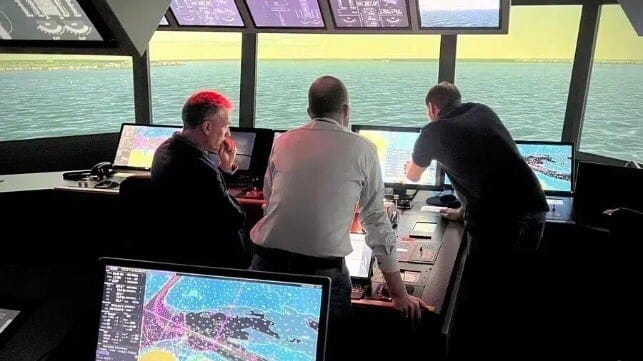
As part of a dedicated effort to evaluate S-100 performance in complex and confined waterways, the UKHO recently participated in S-100 in Confined Waters, an IHO international test bed and programme of trials, alongside international partners at Carnival Corporation’s Center for Simulation & Maritime Training (CSMART). During the trials, mariners conducted repeated port approaches, transits and departures using a full mission bridge simulator equipped with S-100 ECDIS and portable pilot units (PPU).
The CSMART S-100 trials brought together a diverse range of partners, including hydrographic offices, ports, mariners, marine managers and technology providers.
In each simulation, mariners of MV Iona and MV Caribbean Princess navigated through operationally demanding scenarios while switching between different S-100 data layers, providing safety-critical information on bathymetry, water levels, tidal heights and surface currents. Through a combination of individual surveys and group discussions, participating mariners provided detailed feedback on their experience using S-100, including how it influenced navigational planning and decision-making.
The value of interoperability
One of the defining characteristics of S-100 is interoperability. Rather than requiring mariners to interpret information from multiple, separate data sources, S-100 enables information from different producers to be viewed together. While individual data products continue to serve distinct purposes, presenting them within a single environment can support a more coherent understanding of navigational conditions.
Safety and operational benefits
These trials provided new insights into how the added functionality of S-100, including interoperability, can translate into real-world benefits. When navigating using S-100, mariners highlighted how the combination of high-resolution bathymetry and dynamic water levels increased their understanding of available navigable space, supporting more informed maneuvering. Mariners also recognized that bringing complementary data products together within a single view can improve situational awareness, as well as enhance passage planning. In particular, noting how integration of dynamic water levels and surface currents data can enable decisions around timing and routing to be optimized earlier.
ECDIS usability
The trials enabled mariners to directly compare how the user interface of new S-100 systems compares to S-57. Overall, mariners saw S-100 as an evolution of existing systems rather than a full reinvention, with shared features such as consistent symbology enabling the transition to be regarded as manageable. When evaluating the new systems, they also identified potential usability enhancements, such as the ability to easily tailor the display based on the scenario and their preferences. For instance, being able to toggle S-100 data layers on and off and quickly revert to basic S-101 ENC if needed.
Future training needs
Mariner feedback also provided valuable insights into key areas where training is required to build familiarity with S-100 systems. This included the need for clear guidance on how to effectively manage data layers to benefit from more detailed insights without risking information overload. In addition to skills-based training, the trials also highlighted a need for wider education around S-100 data products themselves to ensure mariners are fully equipped to accurately assess and interpret displayed information.
Further evaluation and shared insights
An extensive programme of further trials is already planned to test S-100 within different operational environments and situations. This includes real-world sea trials being conducted aboard commercial vessels in live navigation scenarios. For example, the UKHO and French Hydrographic and Oceanographic Service (Shom) are currently collaborating on a programme of cross-border trials following a route from the UK to France. These trials are helping to build an understanding of how S-100 data products perform during voyages across national boundaries.
Ensuring that all learnings from these trials are widely communicated is a shared goal across the maritime community. Participating organisations are already sharing results and insights through delivering presentations at industry events and developing educational resources. Hydrographic offices, including the UKHO and Shom, are also making their trial data sets publicly available, enabling all stakeholders to gain a preview of S-100 in operation.
Readiness for an S-100 future
Through comprehensive evaluations of the new standards and systems, considerable progress is being made towards building a shared understanding of the challenges and opportunities the S-100 transition will present. As further trials take place, maritime stakeholders across the sector have more opportunities to deepen their knowledge of S-100 and its practical implications.

that matters most
Get the latest maritime news delivered to your inbox daily.
Whether through participating in trials, engaging with industry partners, or staying up to date with the latest S-100 developments and insights, stakeholders can increase readiness within their own organizations. By building this foundational understanding, organizations can approach S-100 adoption with greater confidence and begin planning for a staged and manageable transition in the years ahead.
 As Head of Technical Partnerships, Tom Mellor leads the UKHO’s collaboration with technical partners including Original Equipment Manufacturers (OEMs) to enable the development of e-navigation products and S-100 solutions for Electronic Chart and Information Display Systems (ECDIS). He works at the forefront of the latest "next generation" navigation technologies to support the implementation of new standards that can help improve safety, efficiency and optimization.
The opinions expressed herein are the author's and not necessarily those of The Maritime Executive.