
Conversions to Livestock Carriers Accelerate as Condition Issues Persist
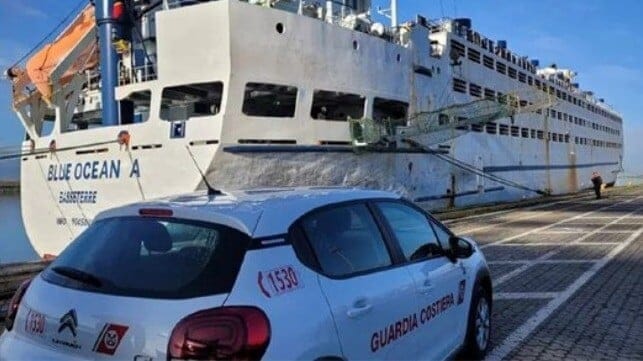
A new report developed by a group of animal welfare NGOs is once again highlighting the long-standing problems with live export and livestock carriers, while also warning that the pace of vessel conversions is accelerating. The analysis of the global livestock carrier fleet reveals the organizations assert a sector characterized by aging and deteriorated vessels, many of which should have been scrapped years ago, operating under low-performing flags, and classification societies that, in many cases, are failing to provide the necessary oversight.
The problems of live export and the vessels have been well documented, and have increased the pressure on the government to stop the practice. Countries including Australia and New Zealand have moved to end live export, but the report developed jointly by the German Animal Welfare Foundation, the French organization Robin des Bois, and the Swiss Tierschutzbund Zurich renews the concerns while reporting growth in the number of vessels.
Their analysis of the sector shows that between January 2024 and March 2026, 10 older vessels were converted into livestock carriers, compared with only three in 2022 and 2023. Further, the ownership remains with shell companies and small or individual ship operators, while majors such as the Dutch Vroon Holding sold their livestock operations in March, and Wellard, once described as Australia’s largest live export business, sold its last vessel in 2025.
Of a current fleet of 159 vessels, the report identified that 84 percent (134 vessels) were older ships that had been converted to carry live animals, often with lower safety standards. The average vessel is 45 years old and was converted after 28 years of operations as a cargo ship. Fifty (50) of the ships are more than 50 years old.
Livestock carriers as a category have racked up numerous deficiencies and detentions in port state inspections. The report calculates that 88 percent of port state inspections in 2024 identified deficiencies, and 15 percent of the vessels were detained, which was four times the average detention rate for all ships.
They report that more than half (54.6 percent) of the converted vessels fly a flag included on the Paris MoU Black list. Only 4.3 percent of livestock carriers are under a white-listed flag. Most of the ships (77 percent of the converted vessels) operate with class societies outside the international structure, and which provide less supervision.
There is a small segment of purpose-built vessels (25) that operate in the industry, with 11 of them formerly owned by Vroon Holding. However, even these ships are on average 17-years-old and have also been identified with deficiencies during inspections. Although they are typically under IACS-recognized classification societies and fly flags on the Paris MoU White List.

that matters most
Get the latest maritime news delivered to your inbox daily.
The report also warns there is an emerging group of “ghost” livestock carriers. These ships have not transmitted AIS signals for long periods. While some may be laid up or scrapped, others appear to be sailing.
Based on the poor record of the segment, the organizations are urging governments of all countries involved in the trade of live animal export by sea to take defensive actions. They are calling for enforcing higher standards and closing safety loopholes to protect the animals, crew on the ships, and the ocean. They are continuing to call for a ban on live export, warning that until the standards are improved, there will be more incidents of horrible conditions for the animals and safety risks from the ships.