
Op-Ed: Iran Appears to Probe New Sea Smuggling Routes into Lebanon
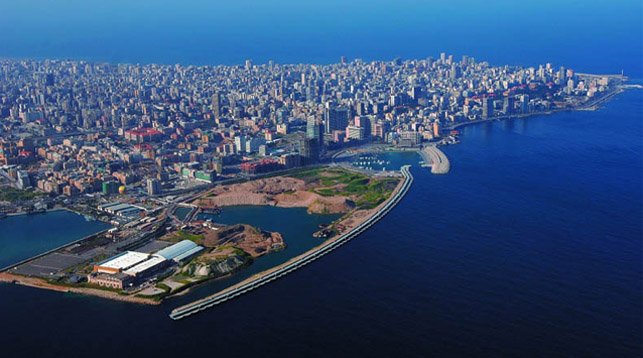
Sea smuggling routes into Lebanon are the focus of renewed attention.
Tension is rising in the Levant, where the Lebanese government is under diplomatic pressure from the United States to speed up its progress with disarming and displacing Hezbollah, accompanied by the threat from Israel that it will take military action to intervene in the process directly. The pressure is being maintained. Morgan Otagus, the US deputy special presidential envoy for Middle East peace, is due shortly again in Lebanon to reinforce the diplomatic pressure, whilst Israel killed Hezbollah chief of staff Haytham Tabtabai in a drone attack launched in Beirut on November 23.
Notwithstanding Israeli airstrikes, Hezbollah still has stocks of arms - but is keen to replace those destroyed, so that it retains the military means to have an impact in Lebanese domestic politics. Iran and the Islamic Revolutionary Guard Corps (IRGC) Quds Force is keen to oblige. IRGC hardliners are determined to try and recover the influence lost since the Israeli attacks on Hezbollah and Iran, which crippled the linkage that had hitherto been the two strongest constituents of the Resistance of Axis.
Before Hezbollah was broken by Israeli strikes, the IRGC's Unit 190 worked with Hezbollah’s Unit 4400, operating three primary routes into Lebanon to keep Hezbollah supplied. Besides shipping into Beirut docks, Iranian heavy cargo aircraft from Mahan Air regularly flew into Beirut’s International Airport, where aircraft were unloaded by Hezbollah without any interference on the part of the Lebanese state. Large volumes were also trucked over the border from Syria, having arrived in Syria primarily overland, through the port of Latakia or via Damascus International Airport. On October 3, 2024, the Israelis destroyed a two-mile-long truck tunnel that straddled the border and emerged into northern Lebanon at Mrah al-Makbeh. One of many routes, this tunnel demonstrated the sophistication of the smuggling system, which in the post-Assad era is now largely dismantled.

The 2-mile-long Hezbollah tunnel, which straddled the Lebanese-Syrian border (Google Earth base map/CJRC)
In rebuilding the flow of weapons, Unit 190 will try a number of options based on its previous experience and practice.
Small volumes of cash and vital supplies are still entering Lebanon via Beirut International Airport, but after a number of seizures by Lebanese security forces, the flow is much reduced, and the new Lebanese government is managing a much stricter control regime over airfreight. Likewise, Unit 190 has tried to use professional smuggler gangs on land routes into Lebanon, but the new Syrian government also has no desire to stir up trouble with Israel and has made a number of interceptions. By preference, Hezbollah will try to truck through border areas where there is a majority Shi'a population, such as Mirah al-Zakbeh, the Hermel district, and Al Nabi Shayth, even though Hezbollah also enjoys support within Christian and Sunni communities.
But by far the most attractive approach will be smuggling via ship. Iran is not likely to use its own naval sealift or sanctioned vessels from the government-owned Islamic Republic of Iran Shipping Lines (IRISL). On the basis of past practice, Iran will try to set up two channels; the first smuggling illicit materials onto respectable container liners on multi-stop routing, and the second by chartering small coastal vessels with cargos likely to be cross-decked afloat or loaded in Turkey, now that Syria is hostile territory. Turkey has consistently provided a benign environment for the Resistance of Axis support activities.
Containers will come into ports serviced by container liners, namely Beirut and Tripoli. The Port of Beirut, for many years, was heavily compromised by a network of compliant customs and port officials controlled by Hezbollah's Wafiq Safa. Management and development of the port was taken over by CMA CGM in March 2022, and the French firm also took over the Tripoli container port in 2021. Under the new regime, these ports are less likely to be used for bulk importation of obviously military items, but smaller and dual-use items will still be sneaked through, albeit in lesser volumes.
This then leaves the smaller ports used to handling coastal shipping. In November 2024, an Israeli commando unit came ashore at Batroun, north of Beirut, and kidnapped the supposed head of Hezbollah's navy, Imad Amhaz. Locals in this Christian town knew Amhaz as the captain of a coastal vessel operating from the small port in Batroun. Hence, it is easily feasible that Hezbollah-aligned merchant mariners could operate through Batroun and other small ports on the Christian-dominated coast between Beirut and Tripoli, namely Jounieh and Selaata. These ports have piers able to dock ships up to 100m in length. There are numerous other ports on this coastline with jetties for smaller coastal tramps.

The port at Selaata, with an 80 m coastal bulker alongside (Google Earth/Airbus, December 2023)
South of Beirut, there is a small port at Zahrani, and larger facilities in Tyre and Sidon. This coastal area is under heavy Israeli surveillance and is also the focus of patrolling by five naval vessels from the UN force in Lebanon, currently provided by Bangladesh, Germany, Greece, Indonesia, and Turkey. The UN's Maritime Task Force (MTF), tasked with preventing arms smuggling, hails suspect vessels but passes interceptions off to the Lebanese authorities, so it is likely to have a good maritime intelligence picture that can be exploited. The Lebanese Army has also now returned to the environs of Tyre. So in this area, although traditionally well-disposed to Hezbollah, the risk of interception is greater.
Lebanon is seeking to improve the capability of its naval forces, and will have aid from the MTF until its mandate runs out next year. The IRGC's Unit 190 and Hezbollah’s Unit 4400 will be seeking to find gaps in coastal protection that they can exploit in order to rebuild Hezbollah's capability. Both units have had exposure to weapons smuggling techniques used to support the Houthis, and the primary lesson they will seek to apply is to keep the smuggler profile small - by using small craft and small ports, but also leveraging the advantages of shipping in dual-use raw materials which can then be used to manufacture weapons within the country.

that matters most
Get the latest maritime news delivered to your inbox daily.
Top photo by Yoniw -- CC BY-SA 3.0
The opinions expressed herein are the author's and not necessarily those of The Maritime Executive.