
Jebel Ali Port Resumes Operations as Most Regional Ports Remain Operational
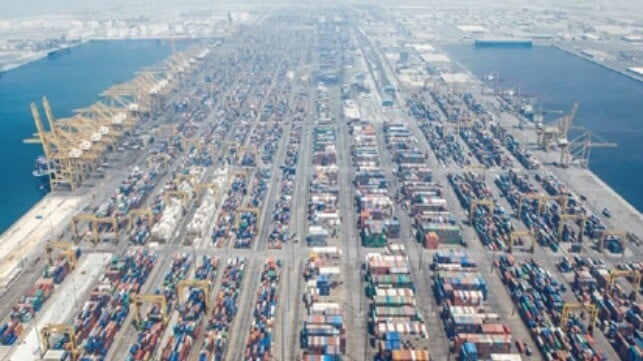
After widespread reports of a possible missile strike and a fire at the Jebel Ali Port in Dubai, operations resumed on Monday. Most ports across the Middle East report operations are continuing despite the efforts by the Iranians to target ports as part of their campaign to disrupt the region.
Videos circulating online showed a smoke cloud rising from the container port in Dubai, creating concerns as Jebel Ali is the largest port in the region. In addition to being a key import and export location, it is a transshipment hub for much of the region. Reports began circulating that operations were suspended.
The Dubai City Defense force confirmed that it was quickly able to bring the fire under control with minimal damage. Officials are asserting that it was debris from a successful intercept of a drone that caused the fire and not a missile or drone strike on the port. Dubai, however, has been one of the areas heavily targeted by the Iranians, with reports of multiple intercepts and strikes, including on hotels and residential buildings.
DP World, which operates the container port, is saying operations were suspended as a precaution, and they undertook a safety review. As of Sunday evening local time, March 1, it was reporting that all four terminals were operating normally. The Dubai Ports Authority confirmed the operations while saying it was “monitoring developments closely” and would remain in close coordination with the relevant authorities. It said that “enhanced safety and security measures” would remain in place across the Jebel Ali Port.
Plumes of smoke were seen rising from Dubai's Jebel Ali Port on Sunday morning as Iran continued its retaliation for attacks by the US and Israel. On Saturday the port was hit by debris from an intercepted missile. pic.twitter.com/TGoCCieUTH
— Al Jazeera English (@AJEnglish) March 1, 2026
Ports in the UAE, Kuwait, Saudi Arabia, Iraq, and Qatar, as well as further afield in Jordan, Egypt, Lebanon, Israel, and Cyprus, are also said to be operating normally. Inchcape, one of the leaders in providing port services, compiled a comprehensive report on the status of the port.
Ports in Bahrain have reportedly suspended operations temporarily, while Oman has partial restrictions. This comes after the countries were targeted by the Iranians. The Oman News Agency had earlier reported that two drones had targeted the port area and that one person was injured.
The key LNG terminals have, however, also been closed after their operations came under attack. Citing safety concerns, Qatar Energy said it had suspended operations at its Ras Laffan facility, with Inchcape also reporting that Qatar had suspended processing crew visas at Ras Laffan Port. Severe GPS signal interference was also being reported at Ras Laffan.

that matters most
Get the latest maritime news delivered to your inbox daily.
While the ports remain mostly operational, ships have stopped transits of the Straits of Hormuz due to the repeated attacks by the Iranians and a suspension of war risk insurance. In addition, many of the major shipping lines are reporting that they have placed restrictions on operations. MSC Mediterranean Shipping reported that it was suspending all bookings of the Middle East, while Ocean Network Express also reported it will temporarily suspend acceptance of new bookings for cargo moving both to and from the Persian Gulf until further notice. Maersk and HAPAG-Lloyd were among the companies that reported their vessels would stop transits in the Persian Gulf region. Maersk reported it was suspending reefer, dangerous/special cargo acceptance in and out of UAE, Oman, Iraq, Kuwait, Qatar, Bahrain, and Saudi Arabia, and not taking new bookings, including to parts of the Indian subcontinent. It also said all vessels would divert from the Suez Canal – Red Sea corridor.
In response to the ongoing missile attacks, U.S. commanders said they were focusing on quickly addressing Iran’s capabilities to strike neighboring facilities. U.S. Central Command reported on Monday, March 2, that because “Iran continues to maliciously launch ballistic missiles, indiscriminately targeting military and civilian locations throughout the region,” its efforts were being increased. It reported overnight that the massive B-1 bombers had been deployed to strike deep inside Iran to degrade Iranian ballistic missile capabilities. The U.S. released videos of mobile missile launchers being targeted and destroyed, while Iran responded with a video of underground bunkers storing large numbers of drones and missiles that it said it would be launching at the American forces and their supporters.