
Epic Fury Settles Into an Uneven Slogging Match
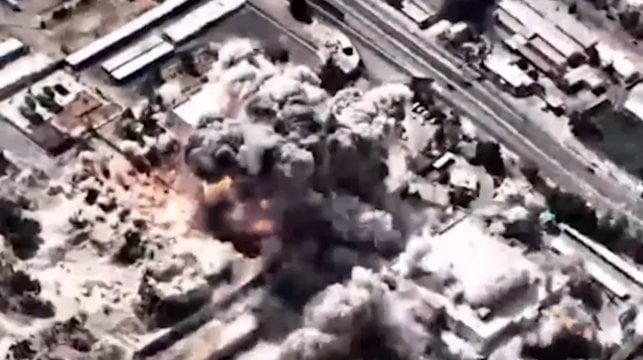
After the shock of two days of intense warfare, Operation Epic Fury on the morning of March 2 appears to be settling into a slogging war of attrition.
American and Israeli attacks have eliminated key Iranian regime leaders – and already some of their successors. Other attacks have focused on the internal security apparatus. Although the details are not yet clear, President Donald Trump has indicated that nine Iranian naval vessels have been disabled – which probably accounts for most of the major ships in the regular Navy (Nedaja) and IRGC Navy (Nedsa), but this will still leave a large number of smaller missile attack craft and speedboats. In comparison with the 12-Day War last year, both sides are being much more reticent about damage suffered, to provide operational security against further attacks.
From an Iranian perspective, although their missile and drone armory will have been severely depleted, both by stock usage and interdiction, continued attacks on a range of targets across the region suggest that capability still remains. American bases, or civilian infrastructure which U.S. forces have in the past utilized, have been attacked in Jordan, Iraq, Kuwait, Saudi Arabia, Bahrain, Qatar, and Oman, but not to a degree that effectiveness has been dented. Civilian infrastructure, including airports and ports, as well as oil infrastructure, has been attacked across the GCC; traffic flows using this infrastructure have been affected, but without long-term damage, which it would not be quickly repaired. Flights in and out of Kuwait, Bahrain, Qatar, and the UAE are all currently halted, with reduced services elsewhere in the region.
Overnight, both Kpler and VesselFinder showed the Straits of Hormuz Traffic Separation Scheme completely empty of traffic. Two fresh incidents were reported late on March 1 by UKMTO, a projectile narrowly missed a vessel 35nm west of Sharjah, and another incident in Omani waters just off Khasab, in which a ship had to be evacuated. There was also a UKMTO incident report of a vessel being struck by two projectiles in the port of Bahrain early on March 2.
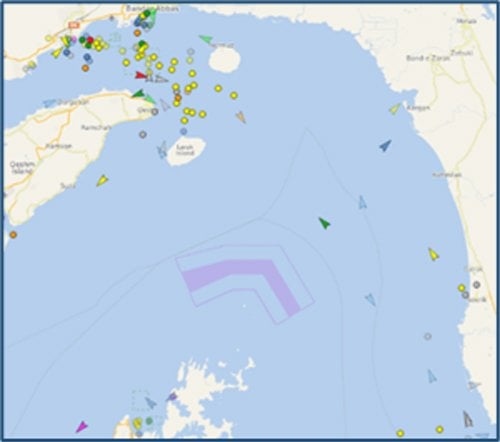
VesselFinder plot of traffic in the Straits of Hormuz, early on March 2 (VesselFinder)
Currently, no oil and gas is flowing out of the Gulf, with both laden and empty LNG and crude tankers at anchor within the Gulf, and empty tankers stacking up off Fujairah and Sohar, unable to get through the Straits of Hormuz.
London LNG traders reckon that end-user markets in Asia will begin to be affected by shortages after about 30 days, but will, in the meantime, be buying extra volumes on the spot market. There is also potential damage to producer reputations if contracts cannot be honored, and consumer countries have to source alternative supplies. The oil market is probably more flexible, and shipping fleets are better able to shift flows. Oil prices rose about eight percent on March 1, and natural gas prices by 25 percent, according to the Financial Times.

that matters most
Get the latest maritime news delivered to your inbox daily.
Overnight, the conflict has widened. A drone attack on the British base at Akrotiri in Cyprus, whether carried out by the Iranians at extreme range, or more likely by Hezbollah, has prompted the UK authorization of American use of British bases worldwide. The French are moving an aircraft carrier to the Mediterranean, after a direct attack on the French naval base in Abu Dhabi, with U.S. refueling aircraft already making use of French bases to refuel B-2 aircraft making long-range attacks from U.S. continental bases. Hezbollah has also joined the fight and attracted Israeli counter-attacks.
While both sides in the conflict absorb economic infrastructure damage without as yet receiving crippling blows, from a military perspective, neither side has yet dealt the other damage that has dented the ability to maintain operations. From a military perspective, judgment must be that the Iranians will finally succumb; it is more a question of how long this will take, and if internal political developments within Iran will foreshorten the process.