
An Armada May Be On the Way to Iran, But It Has Not Yet Arrived
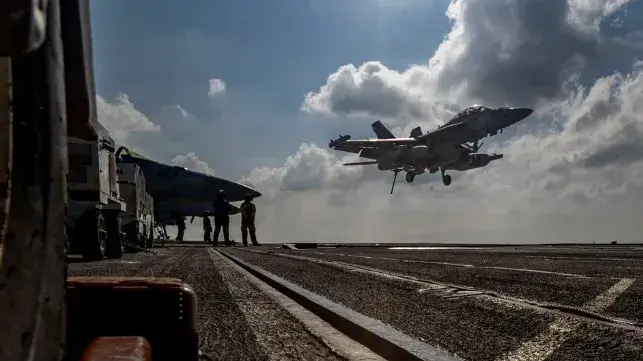
President Trump has told an audience that "there's another beautiful armada floating beautifully toward Iran right now." Some commentators have taken the president at his word, and are interpreting a series of military movements towards the Middle East as being indicative of an imminent US attack on Iran. However, close examination of the movements which can be detected suggests these deployments are precautionary, and far below the scale of what would be necessary to mount an attack on Iran and to handle any Iranian response.
Prior to the recent upsurge in tension, US Central Command has been supported by Arleigh Burke-class guided-missile destroyers USS Mitscher (DDG-57) and USS McFaul (DDG-74), and three Independence-class littoral combat ships optimized for mine countermeasure missions, namely USS Tulsa (LCS-16) USS Canberra (LCS-30) and USS Santa Barbara (LCS-32), with logistic support from USNS Henry J Kaiser (T-AO-187).
On January 23, the three Independence Class ships were alongside at the US Naval Support Facility in Bahrain, and the four Avenger Class vessels they have replaced have now left Bahrain.
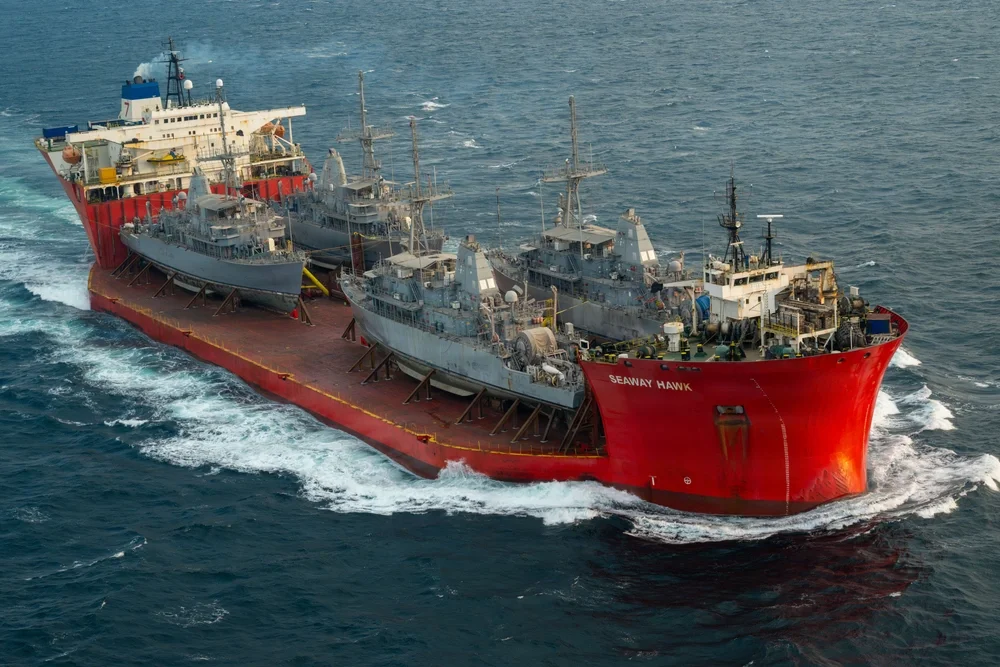
De-commissioned Avenger Class mine countermeasures ships USS Devastator, USS Dextrous, USS Gladiator and USS Sentry leaving Bahrain escorted by USS Canberra, January 20 (CENTCOM)
In recent years it has been customary for this permanent Central Command naval element to be supported in-theater by a US Navy aircraft carrier with an accompanying carrier strike group. And if operations are imminent, CENTCOM has in the past been supported by a second aircraft carrier. Hence the movement of the USS Abraham Lincoln (CVN-72), with its Arleigh Burke Class guided-missile destroyers USS Spruance (DDG-111), USS Michael Murphy (DDG-112) and USS Frank E. Petersen Jr. (DDG-121), with logistics support from USNS Carl Brashear (T-AKE-7), restores the naval forces available to Commander CENTCOM to a normal contingency level, but not to a level yet able to launch a pre-emptive US attack on Iran.
A pre-emptive attack, which would likely provoke an Iranian and Houthi ballistic missile response and counter-attacks on US bases in the region, would need to be undertaken at a much greater scale if it were to suppress the predictable response, involving at least a second US aircraft carrier and major forward deployment of air assets.
Some air assets have been moved into theater, but potentially are covering the increased tension in Syria, and with most cargo aircraft flying from locations which suggest they are moving additional air defense assets to the Middle East. Bolstering air defense is also the most likely explanation for the deployment of a small RAF air defense half-squadron to Qatar.
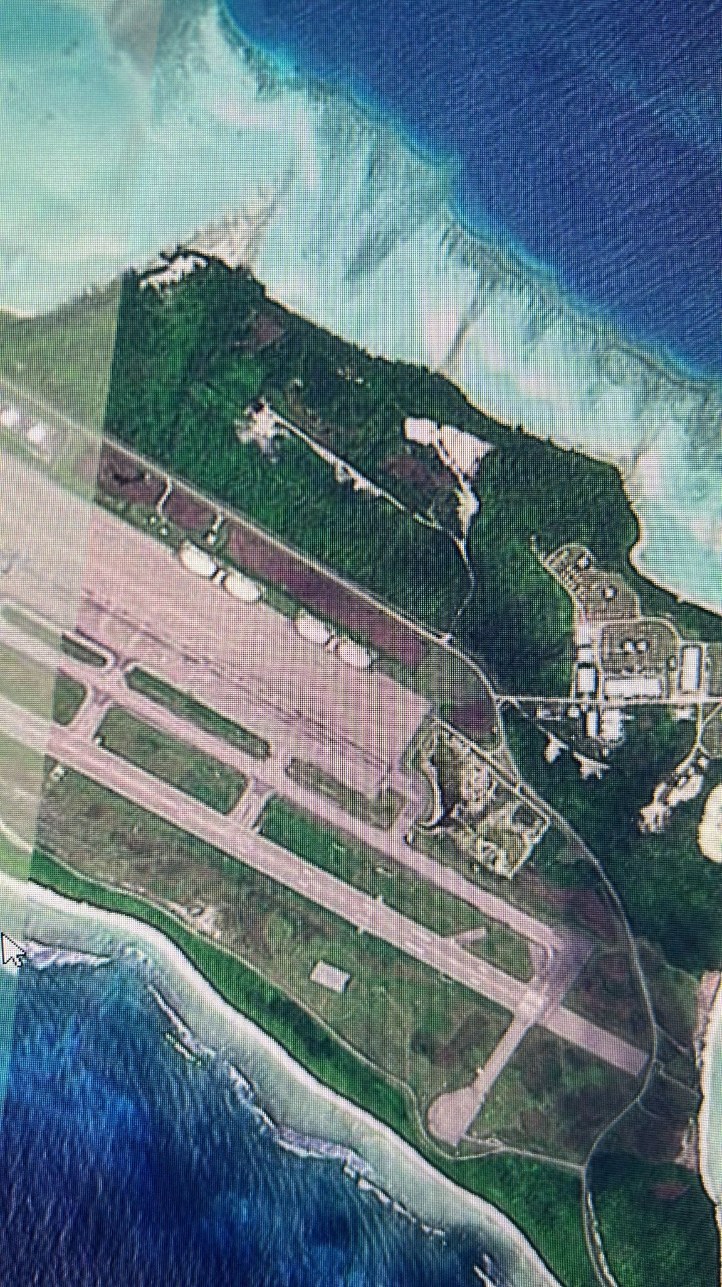
The South Ramp at the US Naval Support Facility airfield on Diego Garcia, Monday January 26. Imagery the next day through a break in the cloud cover also suggested the South Ramp was empty (Sentinel-2)
Cloud cover has been heavy for several days over the airfield at Diego Garcia, but a break on Monday and a partial view Tuesday January 27 showed the South Apron as empty of aircraft (above).
The CENTCOM air exercise planned this week is posted as being a rehearsal of alert measures, to ‘validate procedures for rapid movement of personnel and aircraft’ and to ‘practice’ dispersed operations at contingency locations’, should there be indications of an imminent Iranian ballistic missile attack on forward bases in the region. Such an exercise is probably necessary to improve the flow of such an emergency evacuation, given accounts of the chaos at recipient airfields in the region when a similar procedure was carried out prior to the Iranian attack on Al Udeid last summer.
A further contra-indication of an imminent attack is the Emirati announcement that offensive sorties against Iran will not be permitted by aircraft flying from Emirati bases, or flying through Emirati air space.
Meanwhile in Iran, evidence is growing of a huge death toll during the recent unrest. IRGC internal security forces appear to have been authorized to carry out widespread extra-judicial killings. Iranian government ministers may have given assurances that prison executions may be halted, but instead they appear to have used the internet blackout as cover for a huge massacre of protestors.
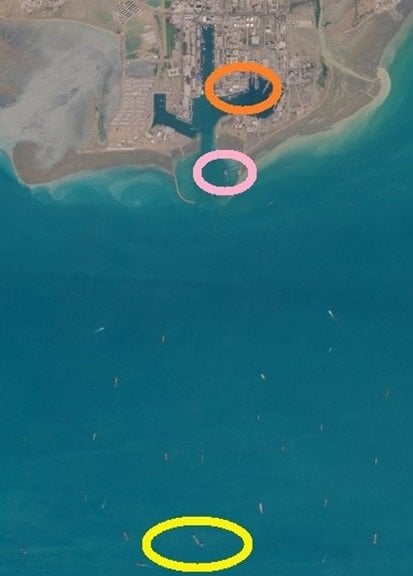
Bandar Abbas Naval Harbor, January 27. Orange: Empty frigate berths; Pink: IRINS Kurdestan (K442) present in Outer Basin, IRINS Makran (K441) absent, returning from Africa; Yellow: Shahid Bagheri (C-110-4) anchored as normal (Sentinel-2/CJRC)

that matters most
Get the latest maritime news delivered to your inbox daily.
Nonetheless, the fragile regime in Iran appears to be expecting an attack, based on political statements and also the deployment of almost all fighting ships from the regular Iranian Navy’s main operating base at Bandar Abbas. Iranian naval deployments in the Straits of Hormuz are being kept under persistent surveillance by US Navy MQ-4C and Poseidon P-8A platforms.
Force deployments currently are consistent with a high state of alert on the part of all parties, but the US force posture at present is far smaller than would be necessary to mount an imminent preemptive attack. US CENTCOM planners will however be adept at avoiding open source scrutiny.
The opinions expressed herein are the author's and not necessarily those of The Maritime Executive.