
Op-Ed: Fully-Compliant Fire Systems May Fall Short Against Modern Risks
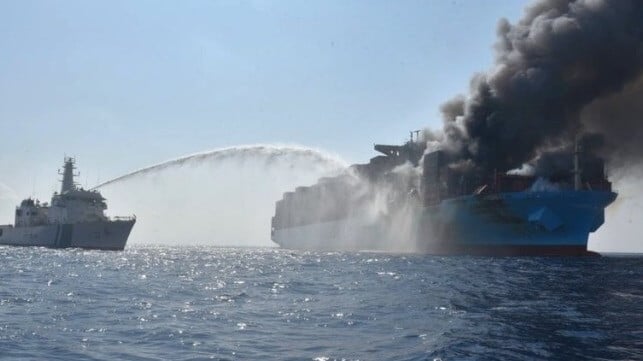
Inspection reports across much of the commercial fleet paint a reassuring picture. Fire detection systems are operational, fixed firefighting systems are in good working order, equipment is serviced on time and instructions are correctly posted. On paper, vessels are doing what is required of them.
The problem is that paper compliance is increasingly being mistaken for operational readiness.
Most of the fire detection and firefighting systems in service today were designed for a risk profile that has changed very little over several decades. Engine rooms, accommodation spaces and conventional cargoes are well understood, and the industry has become comfortable relying on smoke and heat detection, CO? systems, water spray and foam to manage those risks. When inspections confirm these systems are maintained and functional, vessels pass, as they should.
What inspections cannot resolve is whether those same systems are suitable for the fires the industry is now worried about.
Electric vehicles, alternative fuels and denser, more complex cargo configurations all introduce fire behavior that does not fit neatly into traditional detection or suppression assumptions. A system can be compliant, fully operational and recently serviced, yet still be slow to detect an incident or ill-matched to how it develops once it does. This is not a failure of maintenance or seamanship. It is a consequence of relying on systems designed for a different era.
Inspection data increasingly exposes this gap. It is common to encounter vessels where detection coverage is complete, firefighting systems are correctly protected and fire pumps are in good condition, while it remains unclear whether those arrangements would deliver early warning or meaningful control in a modern cargo fire scenario. The ship passes inspection, but the underlying question remains unanswered.
The industry response has been predictable. Shipping does not invest ahead of regulation unless there is a compelling commercial or operational reason to do so. As long as existing systems remain class approved and compliant, many owners see little incentive to adopt alternatives that are not yet mandated and may later be superseded.
This caution is reinforced by the absence of a clear firefighting strategy for certain emerging fire risks. Detection technology may be advancing, but without agreement on how fires involving electric vehicles or alternative energy sources should be fought at sea, the value of earlier detection alone is difficult to justify. In that context, hesitation is rational.
The result is a growing disconnect between what inspections are designed to confirm and what operational reality is beginning to demand. Compliance frameworks continue to focus on the presence and condition of systems, while the question of whether those systems are fit for purpose in today’s risk environment remains largely unanswered.
A vessel can meet every requirement, pass every inspection and still face scenarios that fall well outside the assumptions on which its fire safety arrangements were based. That is not an argument for blame. It is an argument for acknowledging that compliance has become a lagging indicator of risk.

that matters most
Get the latest maritime news delivered to your inbox daily.
Until regulation, detection capability and firefighting strategy are better aligned with the fires the industry is now concerned about, inspection reports will continue to look reassuring, even as confidence in true fire readiness remains far less certain.
John Nicholson is Idwal's Head of Technical.
The opinions expressed herein are the author's and not necessarily those of The Maritime Executive.