
Trump Administration Green-Lights Texas GulfLink SPM Project
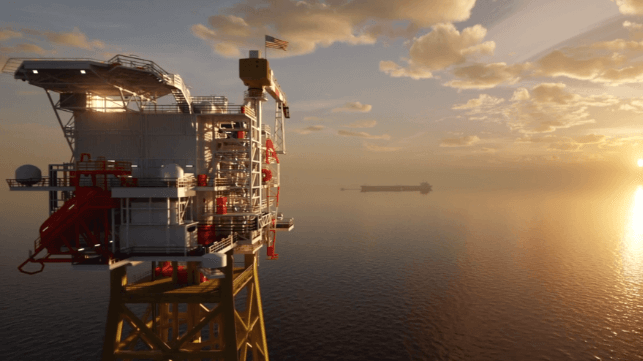
Just weeks after taking over the federal environmental-review process for deepwater oil and gas terminal licensing, the U.S. Department of Transportation has approved a construction and operation license for Texas GulfLink, the first issued under the Trump administration.
Texas GulfLink will be a twin single-point mooring facility located about 27 nautical miles off the coast of Brazoria County, Texas. It will be fed by a 42" subsea pipeline to a manned offshore platform, where its operations will be overseen on-site in real time. It is backed by Sentinel Midstream.
Capt. Stephen M. Carmel, head of DOT's Maritime Administration, said in a statement that the project will speed up exports of American oil to global buyers. "We are signaling to the global market that America is open for business. By approving projects like Texas GulfLink, we ensure that American oil producers aren't halted by domestic bottlenecks," he said.
According to the DOT, the project will support more than 700 jobs and increase oil export capacity by as much as one million barrels per day. It will be able to handle VLCCs, the most economical vessel class for transoceanic trade, and will make it less expensive to ship and sell oil to foreign refiners.

that matters most
Get the latest maritime news delivered to your inbox daily.
"The Texas GulfLink project is proof that when we slash unnecessary red tape and unleash our fossil fuel sector, we create jobs at home and stability abroad. This critical deepwater port will allow the U.S. to export our abundant resources faster than ever before," said Transportation Secretary Sean Duffy in a statement.
At present, only one VLCC-capable offshore terminal exists in the U.S. - the Louisiana Offshore Oil Port, or LOOP. At all other loading ports, VLCCs have to take on cargo using reverse lighterage, the process of sending a smaller tanker in and out of port several times in order to fill up. This is a relatively expensive and time-consuming method, and requires multiple transits through pilotage waters. An offshore single-point mooring can load a VLCC in a single evolution.