
The Caspian Sea is Busy Between Russia and Iran
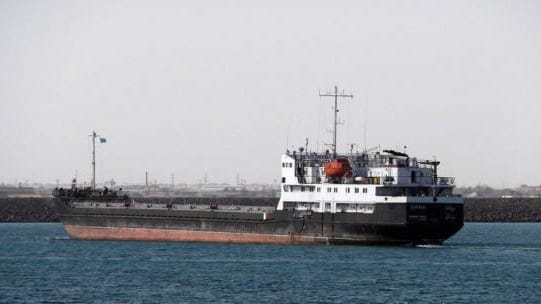
The US naval blockade of Iran’s southern ports appears to be nearly 100 percent effective, cutting the flow of goods through Bandar Abbas and other Gulf and southern coast ports which used to handle 80 percent of Iran’s trade before the current conflict.
Within the last week, air traffic to the outside world has also largely been cut. Some flights will still be leaving and entering, perhaps some military aircraft flying with disabled transponders, and perhaps a few to Russia and China, but in total carrying very little cargo.
Road routes across the land borders from and to Iraq, Turkey, Azerbaijan and Armenia have significant capacity issues, with Al Jazeera reporting recently that at the Norduz crossing into Armenia, as many as 1,800 trucks are queuing, some trucks taking as long as 10 days to pass through the border checkpoint. Neither Turkey nor Iraq will wish to face US wrath by increasing traffic flows, and poor Azeri-Iranian diplomatic relations will be a hindrance to traffic flows. In other conflicts in the region, enterprising truck drivers have taken to delivering crude by truck when pipelines and tankers are unavailable, but that will not be happening at any scale from Iran, given the route and border restrictions.
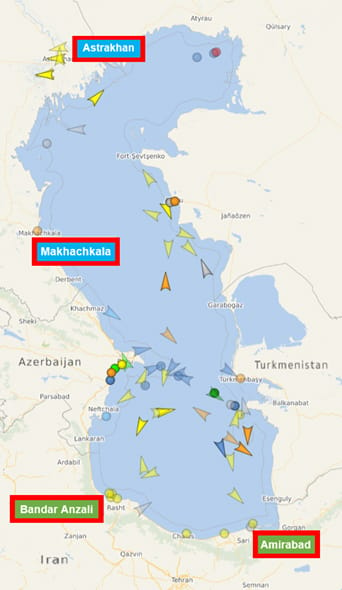
A snapshot of the Caspian Sea, September 27, with cargo vessels marked in yellow (VesselFinder)
To get around the strictures of the US naval blockade, the Iranians have only two viable options for moving heavy cargo. One of these could be the railway connections through Turkmenistan, from Sarakhs in the northeast to China, and through Incheh Borun to Kazakhstan and Russia. Cruise missiles hit the Aq Tekeh Khan railway bridge on the latter route on July 9, although traffic on the route was quickly restored. Turkmenistan has declared itself neutral in the conflict, so it will be anxious not to be seen to be providing a back door for Iran to move heavy volumes of additional traffic. But no doubt the specialist smugglers of the IRGC’s Unit 190 will be getting high-value cargo through on this route, and this route will also be used to ship Chinese-manufactured dual-use sodium perchlorate, historically for processing into ammonium perchlorate rocket fuel at Parchin south of Tehran and Khojir. Ammonium perchlorate makes up 70 percent of the standard fuel load of most of Iran’s solid-fueled ballistic missiles, such as medium-range Khybar-Shikan and Fattah missiles, and the shorter-range Fateh-110 and Zolfaghar missiles.
This then leaves the cargo routes across the Caspian Sea, principally to Russia. Before the war, the Iranian ports on the southern coast of the Caspian handled about 10 percent of Iran’s trade. The governor of the northern Iranian province of Gilan has said that from March to August this year volumes had increased by 50 percent. Because the principal Russian port of Astrakhan at the northern end of the Caspian lies within the Volga delta, specialist shallow-draft cargo vessels have to be used on the route, such that about 20 Caspian Sea ships are needed to carry cargo which could have been moved by one ocean-going ship using the southern ports.
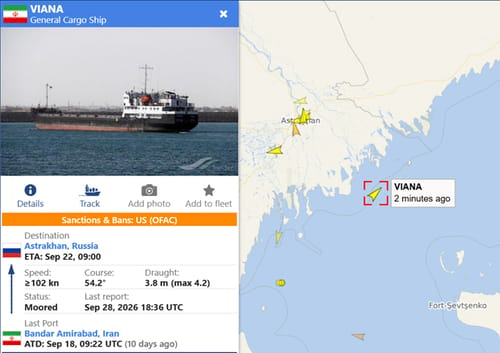
Plot of a typical cargo vessel on the Iran-Russia route (VesselFinder)
The pattern of movements can be seen in ship tracking sites such as VesselFinder, as ships travelling North-South need to be using AIS so as to avoid the heavy marine traffic crossing between Azerbaijan in the West and Kazakhstan and Turkmenistan on the Eastern side. Examination of Russian- and Iranian -flagged vessels making progress between Iranian and Russian ports over several days shows that on average there are about eight vessels visible every day on AIS moving between the principal ports of Astrakhan and Makhachkala in Russia, and Bandar-e Anzali and Amirabad in Iran.

that matters most
Get the latest maritime news delivered to your inbox daily.
None of Iran’s alternatives to its southern ports can be ramped up quickly in terms of capacity, and there is now the additional danger of Ukrainian attacks on Russian shipping both in the Caspian and along the Volga-Don canal system linking to the Black Sea. Attempts to reduce dependency on the southern ports before the war, for example by developing rail routes to Russia through Azerbaijan, consistently failed to make progress because of a lack of finance and the Iranian tendency to bully neighbors into complying with its instructions, which few of them were inclined to do.
Top photo by Seyed Abolfazl - courtesy of VesselFinder
