
Report: Saudi Arabia Pushes U.S. to Lift Blockade on Iranian Traffic
Saudi officials are pushing the White House to abandon the brand-new blockade of Iranian shipping, hoping to avoid a new cycle of escalation that could further reduce oil exports from the Arabian Gulf, according to the Wall Street Journal.
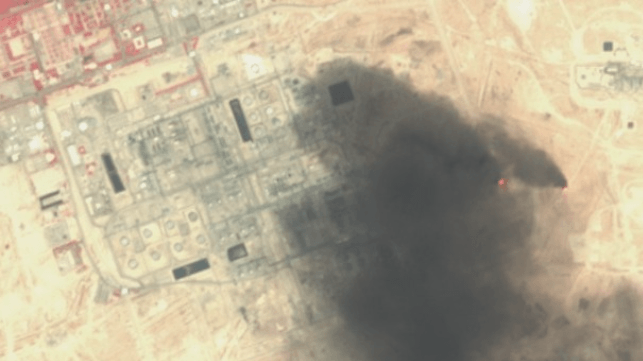
Iran has repeatedly attacked its neighbors since the start of the U.S./Israeli operation to remove its leadership. Its military has launched missile and drone strikes on refineries, pipelines, LNG liquefaction plants, desalination plants and powerplants in GCC nations, resulting in damage to 80 sites, according to the IEA. Among others, the damaged facilities include a pumping station for the Saudi East-West Pipeline, taking out 700,000 bpd of transfer capacity to the strategic Red Sea port of Yanbu.
More than a third of those sites are severely damaged, and some - like the two liquefaction trains that were hit at Ras Laffan, Qatar - will be offline for years. “This is one of the most critical issues, and different than the past, many of the facilities are badly damaged,” IEA chief Fatih Birol said at a gathering of the Atlantic Council on Monday.
Iran has already said that it would retaliate for the U.S. blockade by hitting seaport facilities in the GCC.
Back-channel contact between the U.S. and Iran continues, and formal direct talks are likely to resume, according to UN Secretary General Antonio Guterres. "The indication we have is that it is highly probable that these talks will restart," Guterres told the WSJ. He added a critique of the U.S. and Iranian blockades, calling for all parties to return to the rule of international law and freedom of navigation.

that matters most
Get the latest maritime news delivered to your inbox daily.
Those talks hinge on Iran's commitment to continuing enrichment of uranium, which is key to a domestic nuclear-fuel supply chain for civilian powerplants and (though Iran denies an interest in doing so) the development of nuclear weapons. Iran has a stockpile of 440 kilos of 60% high-enriched uranium, enough for a breakout run to build nuclear bombs in comparatively short order - if it had a working design, the will to build it, and the means to physically access the material without triggering U.S. airstrikes.
Continuation of uranium enrichment has been a bedrock demand of the Iranian regime for years; permanent cessation of enrichment and handover of the HEU stockpile were core demands of the Trump administration - until last weekend, when the White House reportedly offered to accept a 20-year pause in enrichment. Iran countered with an offer to pause for several years, which the Trump administration rejected.