
Report: Russian Shadow Fleet Vessels Play a Role in Drone Incursions in EU
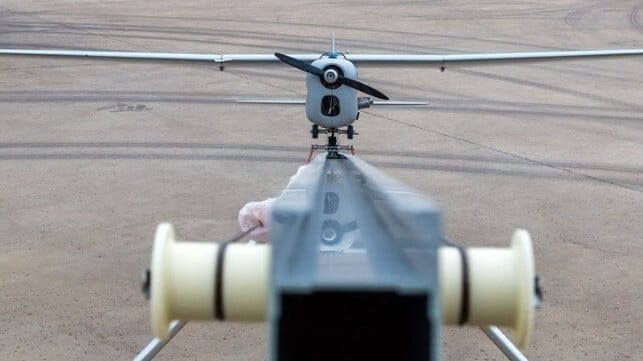
Russia's intelligence agencies have used shadow fleet tankers to launch spy drones over Western Europe since at least 2024, but European governments have yet to field an effective response, concluded researchers at IISS in a new report.
The three-person research team behind the report found that out of 144 documented incidents, a large subset were likely launched from the decks of Russia-linked vessels, based on patterns of AIS and satellite-based radar ship tracking. Other reporters have previously suggested that Russia uses sanctions-busting tankers to launch drone sorties, notably the disruptive UAV intrusions at Copenhagen's airport in 2025. French forces stopped and boarded the tanker Pushpa/Boracay shortly after this notorious series of drone incursions into Danish airspace; two deck officers from Boracay were taken in custody, and the interdiction by French commandos sent a strong message. (The Kremlin denied any knowledge of the vessel.)
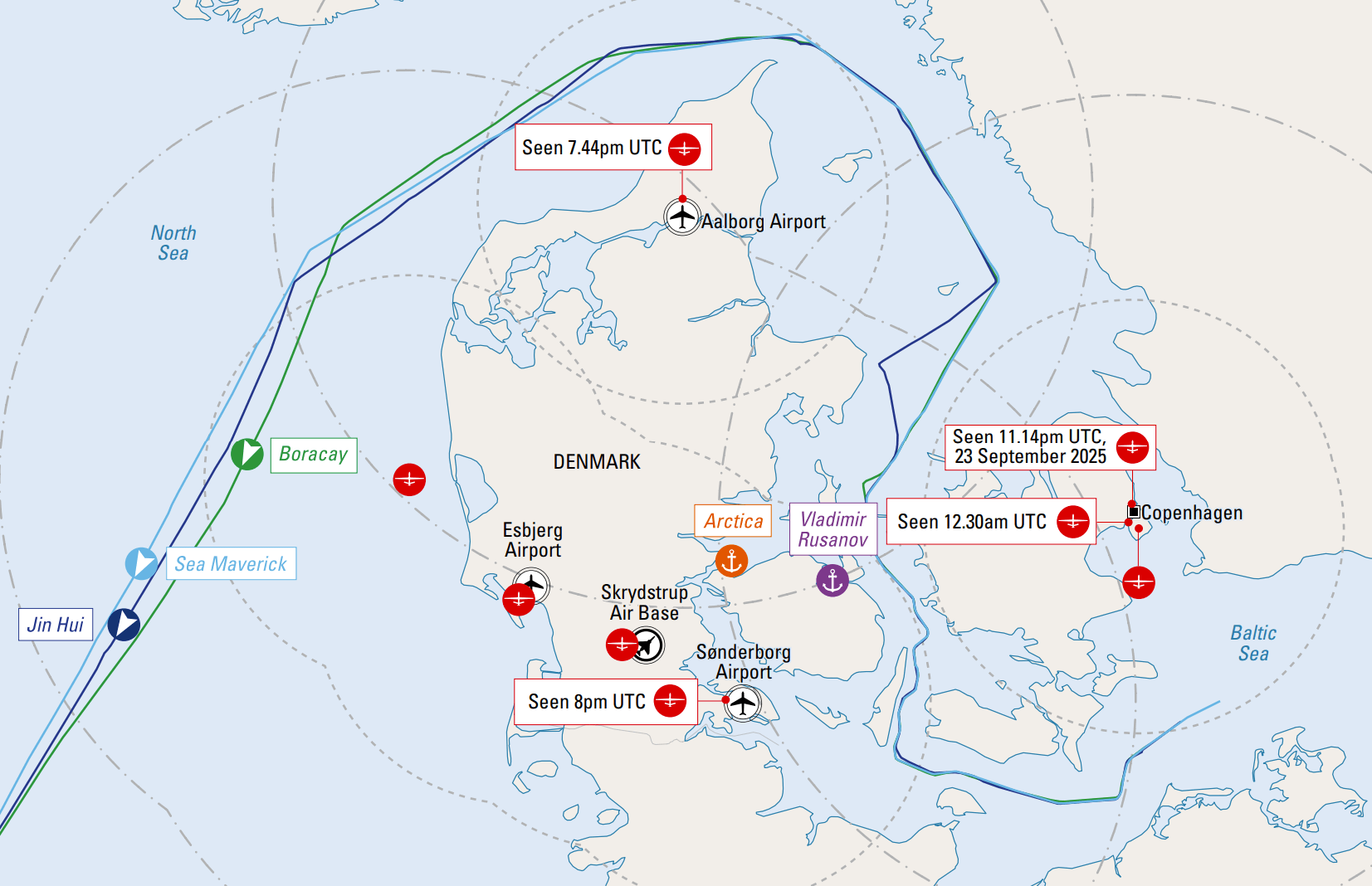
The complex drone incursion suspected to be linked to the Boracay and other Russian vessels, Sept. 23-24, 2025 (IISS)
But IISS' report is a more comprehensive analysis, and it extends beyond anecdotal reports. The think tank described the campaign as a success for Moscow and a "strategic failure" for European air defenses, which were designed to deal with missiles, fighters and bombers. The absence of a response also suggests a failure of coordination and attribution, the report found.
Save for one incident involving the Russian spy ship Zhigulevsk, "[no governments] have, to date, publicly attributed a UAV sighting to Russia or gone as far as to describe a coordinated Russian UAV campaign over Western and Northern Europe," the authors noted. "One reason, European officials have suggested to us as part of our research, is that the relevant governments focused on the national response rather than connecting the dots across Europe."
By carrying out these incursions, Russia likely fulfilled several intelligence objectives, the team said. First, Russia was able to assess how quickly and effectively European militaries and civilian decisionmakers could respond to a drone incursion, useful information for planning covert attacks. Second, it could evaluate the defenses of important sites: half of the documented incursions occurred at military installations, including highly sensitive nuclear-weapons sites. Third, it caused confusion and disruption in countries that support Ukraine. And fourth, it established a routine pattern of airspace violations, habituating Europe to the presence of Russian drones. (Germany's Federal Criminal Police Office puts the number of drone incursion incidents at 1,072 events in 2025 alone).
It also revealed a vulnerability, the researchers said: Russia had to use drones to gather information because it had no better options. If it had better satellite imaging capabilities, or more intelligence agents on the ground, it would likely have used them, IISS suggested.
The trouble going forward, the report concludes, is that the EU does not have a comprehensive way to counter the incursions. It has a drone response policy now, the European Drone Defence Initiative (EDDI), but this framework does not provide a way to counter shipboard launch platforms.

that matters most
Get the latest maritime news delivered to your inbox daily.
"As long as Russian-linked vessels and the shadow fleet can loiter in international waters or European EEZs and launch UAVs with effective impunity, the campaign’s primary enabling mechanism remains intact. The Zhigulevsk incident demonstrated that attribution is possible. The question is whether European governments are prepared to act on it," the authors concluded.