
Report: Hibernia Platform Spill Could Have Caused Serious Casualty
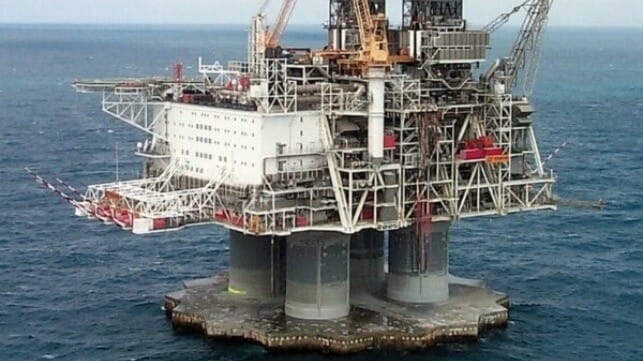
Offshore regulators say that a recent spill aboard the Hibernia oil platform off Canada's eastern shores caused no pollution or injuries - but the outcome could have been much more serious.
On the morning of May 12, the Hibernia platform's crew were preparing to carry out a routine transfer of crude oil to a tanker. At about 1100 hours, workers noticed unusual vibration and noise coming from a utility shaft on the platform and went to investigate. They found that a sludge pump's low point drain had sheared off the pump, releasing about 400 gallons of crude oil into the interior of the platform.
The workers shut off the platform before anything more could happen, and there were no injuries or pollution effects. However, the regulator said that the incident had potential to cause a fire, explosion or fatality.
The incident was reported May 12, and the platform's operator has submitted a preliminary report. The final investigation report is still pending.
Hibernia is the world's largest oil platform by mass, thanks to the gigantic concrete-and-rebar gravity base structure (GBS) holding it in place. It can store about 1.3 million barrels of crude at a time in its storage tanks. It has been producing oil on the Grand Banks off Newfoundland and Labrador for nearly 30 years, and is near the end of its original design lifespan. Operator ExxonMobil says that its life will be extended by drilling new production wells and refurbishing its physical plant. It exports its oil by means of shuttle tanker to a nearby refinery.

that matters most
Get the latest maritime news delivered to your inbox daily.
The installation has had incidents before, notably a 2019 spill that released 32,000 gallons of oil into the sea. Other, smaller spills include 580 gallons of oil-water mix in 2019 and 1,500 gallons of oil in 2013. The operator has paid various fines over the years for these pollution incidents.
Famously, the exploration of the Grand Banks oil reservoirs came at a price. In 1982, the semisubmersible Ocean Ranger was working the area when it was sunk by an extreme storm, at the cost of the lives of all 84 crewmembers (and later, three salvage divers).